Why sport fishermen increasingly choose RIBs
Alexandra
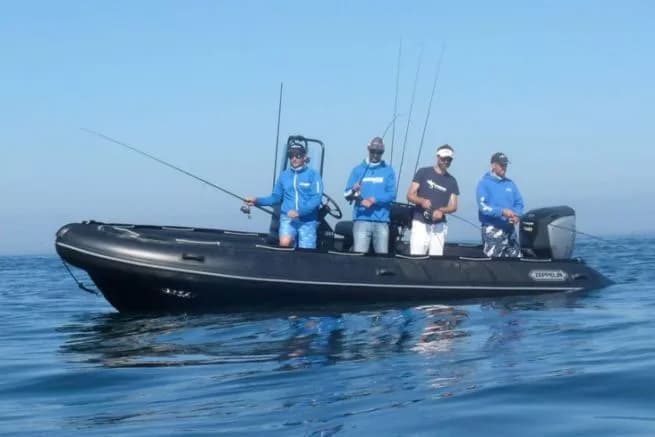
A Leader 6.25 hard-hull at roughly 860 kg (bare hull) versus a Valiant DR 620 RIB at 480 kg creates an immediate towing and launch logistics gap of nearly 380 kg, often forcing anglers into heavier tow vehicles or twin-axle trailers and longer launch cycles at marinas.
Operational criteria that drive hull choice
Sport fishermen select boats to meet specific operational needs: ease of transport, simple launching, reliable seaworthiness, drift stability, transit speed between fishing grounds, onboard storage for safety gear, and an ergonomic deck plan for several anglers. These practical criteria shape why many anglers and charter operators favor semi-rigid inflatable boats (RIBs) over molded hard-hull designs in the 5–6.5 m category.
Key performance and logistical considerations
- Transportability: RIBs typically weigh significantly less, allowing single-axle trailers and standard SUVs to tow them without special licensing or heavy-duty vehicles.
- Launch efficiency: Lighter boats shorten launch and recovery time, an operational advantage for day-charter turnovers at busy marinas.
- Sea handling: For the same LOA, RIBs commonly offer superior passage in rough water, reduced spray, and more forgiving roll characteristics when anglers move about the deck.
- Deck usability: Hard hulls often provide more built-in locker space and family-friendly seating; RIBs favor uncluttered decks optimized for fishing action.
Comparing representative boats: weight, speed, and storage
| Specification | Leader 6.25 (hard hull) | Valiant DR 620 (RIB) |
|---|---|---|
| Bare hull weight | 860 kg | 480 kg |
| Typical deck storage | Multiple molded lockers, cockpit space | Minimalist lockers, console/anchor locker |
| Transport requirement | Heavier tow vehicle, possible twin-axle trailer | Standard tow vehicle, single-axle trailer |
| Sea behavior | Good but heavier in rough seas | Superior ride, less spray, quicker acceleration |
Why anglers prefer RIBs in practical terms
When fishing involves moving between multiple coves and launching from varied ramps, mobility becomes a dominant factor. RIBs win on several fronts: they are lighter, accelerate faster for the same outboard power, and deliver a drier, more comfortable ride when seas pick up. The reduced roll when drifting—especially with several anglers leaning to one side—translates to a safer and more productive fishing platform.
📚 You may also like
Trade-offs: storage, comfort, and family use
Hard-hull designs often score higher for onboard storage and family comfort: molded consoles, removable sunbeds, and larger cockpits make them more versatile for pleasure outings. For charter owners and yacht clubs offering mixed-use rentals, that versatility can justify the extra towing and berthing cost. Conversely, fishing-focused RIB layouts intentionally sacrifice some creature comforts for an uncluttered work deck and modular accessory choices.
Customization and outfitting
RIBs excel at modular outfitting: consoles, leaning posts, livewells, and rod holders are typically bolt-on or retrofit, letting owners optimize a hull for a specific mission. Hard-hull models with molded consoles have less retrofit flexibility, which matters when a rental fleet must suit varied customer preferences.
Implications for rentals, charters and marinas
For charter operators and marina managers, the rising popularity of RIBs shifts operational planning. Lighter boats reduce trailer storage footprints, cut fuel burn for repositioning, and lower insurance exposure for launch/recovery incidents. However, customer demand for family-friendly layouts keeps hard hull options relevant in many markets. Rental inventory planning should therefore balance both hull types according to local destination demand and seasonal usage patterns.
Checklist for fleet acquisition
- Assess tow-vehicle availability and ramp slope at local launch sites.
- Estimate average passenger load: anglers vs. family groups.
- Project maintenance and accessory fit costs (console electronics, livewells, seating).
- Align berthing and trailer storage capacity with hull weight and dimensions.
GetBoat always keeps an eye on news related to sailing and seaside vacations, as we truly understand what it means to enjoy great leisure and love the ocean. The service values freedom, energy, and the ability to choose your own course, placing no limits on a good life and allowing clients to find a vessel that suits their preferences, budget, and taste.
Regional trends and historical background
Historically, semi-rigid inflatables emerged from specialized military and rescue use into the recreational market thanks to their lightness and sea-keeping. During the last two decades, manufacturers refined hull shapes and collar materials, widening performance envelopes. In many European coastal regions and in parts of North America, angler communities now favor RIBs for day trips and nearshore rock or reef fishing, while hard hulls remain preferred for extended family outings and multi-day charters where dry storage and sheltered cockpits matter.
Practical recommendations for buyers and renters
If top priorities are drift stability, towing simplicity, and superior rough-water passage, a RIB in the 5–6.5 m range will likely match expectations. If you need integrated storage, a molded cockpit, and family-friendly seating, a small hard hull is a better choice. For rental businesses, maintaining a mixed fleet often yields the best customer satisfaction across demographics.
The operational implications for tourism are modest on a global scale but meaningful at regional levels: charter operators in popular coastal Destinations may prefer RIBs to reduce turnover times and expand fishing itineraries, while marinas and boatyards will adjust trailer and berthing policies accordingly. However, the trend is more about servicing customer segments than rewriting the global tourism map. If you are planning your next trip to the seaside, consider the convenience and reliability of GetBoat.
Experiencing a new coastal location is always multifaceted: you learn about culture, nature, the indescribable palette of local colors, its rhythm of life and also the unique aspects of the service; if you are planning your next trip to the sea, you should definitely consider renting a boat (boat rentals, rent a boat, rent a yacht), as each inlet, bay, and lagoon is unique and tells you about the region just as much as the local cuisine, architecture, and language GetBoat.com
Summary: RIBs offer clear operational advantages—lighter towing, easier launching, superior sea passage, and modular outfitting—while hard-hull boats retain advantages in storage, family comfort, and multi-role versatility. For anglers, tour operators, and rental fleets, the right choice depends on intended use: fishing-centric trips favor RIBs; family charters often choose hard hulls. GetBoat.com supports these choices by offering a global, user-friendly solution for booking and buying yachts, sailboats and powerboats, with transparent listings detailing make, model, ratings and availability—helping you find the right yacht or boat for charter, sale or rent across marinas and Destinations worldwide. Start your next voyage today.


