Vincent Riou Readies Class40 Pierreval for Transat
Alexandra
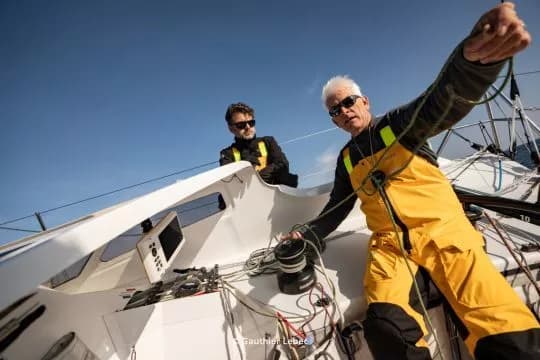
Departure logistics from Le Havre and onboard configuration
Departure operations for the Class40 fleet out of Le Havre require a tightly choreographed sequence: fixed marshaling zones, staggered start windows and mandatory safety inspections completed within the final hours. Onboard the Pierreval Fondation GoodPlanet, skipper Vincent Riou and his partner have concentrated efforts on sail inventory, weight distribution and communications checks. The duo sails with a sailed-down provisioning plan, one rotation of sail combinations for light and medium winds, and a compact emergency pack compliant with race safety requirements. Crucially, the boat’s autopilot — described by Riou as the “third crew member” — is tested with simulated sea states to verify servo reliability and remote control range before the fleet leaves the breakwater.
Race aims, crew profile and a different competitive focus
Eleven Transatlantic starts from Le Havre frame Riou’s approach: this iteration of Transat Café l'Or 2025 is not pursued as a pure podium campaign but rather as a platform for transmission. The team pairs an experienced Vendée Globe winner with an enlightened amateur who two years ago only appreciated ocean racing through television. That dynamic reshapes priorities: sail tuning and tactical decision-making become both performance factors and teaching moments. Where high-tech marginal gains would typically dominate, this crew relies on rigorous fundamentals — sail trim, navigation discipline, and the human capacity to read evolving weather systems.
Onboard routines and essential equipment
Comfort aboard a Class40 is deliberately Spartan. Riou’s pre-departure checklist emphasizes essentials: functional bedding, efficient food stowage, clear labeling of spare parts, and redundancy for critical systems. Personal items are reduced to family photos and a simple set of charm items; superstitions are practical rather than ornamental. The race-ready setup features:
📚 You may also like
- Autopilot remote secured for quick access and redundancy tests.
- Sail set organized into light, medium and heavy-weather packs.
- Communications checks including VHF, AIS and a satellite tracker linked to race control.
- Provisions optimized for calorie density and minimal waste handling.
Learning at sea: strategy over spectacle
The intention to “pass on” knowledge translates into deliberate training during the race: trimming drills, watch handovers, and in-situ meteorological briefings. The team accepts that they are not armed with the latest experimental foils or expensive optimization modules; instead they cultivate situational awareness, conservative routing when necessary, and clear decision protocols. That mindset reduces unnecessary risk and keeps the vessel within a margin where learning can occur without compromising safety.
Human factors: rituals, morale and small comforts
Riou’s rituals are pragmatic. In the final hours he insists on not relaxing: last-minute checks remain thorough because “the devil is in the detail.” Music playlists are curated to maintain morale — deliberately avoiding heavy electronic sets in favor of more familiar, grounding tracks — and celebratory provisions include the promise of a rib steak on arrival. These small human comforts perform a dual role: they anchor mental resilience and offer cultural continuity for a crew away from shore life.
Autopilot and technology as crew substitutes
In the Class40 environment, technology is enlisted to augment human capacity, not to supplant seamanship. The autopilot, maintained and monitored continuously, handles steering during sleep cycles and busy sail changes, but the crew remains responsible for strategic calls. Simplicity is a deliberate choice: fewer systems reduce failure modes, and each installed device is validated against clear operational criteria.
| Item | Purpose | Notes |
|---|---|---|
| Autopilot remote | Steering backup | Always worn within reach |
| Sail inventory | Performance in variable wind | Pre-labeled and reefed options |
| Sat tracker | Race tracking and safety | Linked to race control |
| Redundant pumps | Bilge and systems security | Checked daily |
Why this race matters beyond results
For seasoned sailors and newcomers alike, a Transatlantic event remains an unmatched proving ground. It combines logistics, human endurance and on-the-fly decision-making in a compressed timeframe. The lesson from Riou’s campaign is that purposeful simplicity and mentorship can produce meaningful outcomes even when high-end equipment is not the differentiator. That perspective offers a practical model for owners and charter operators who run short-handed passages, long-distance coastal cruising, or delivery trips.
Context, culture and the contemplative ocean
Thirty-two years into a career that includes a Vendée Globe victory, Riou still views the sea as a place for contemplation. That attitude informs how supplies are chosen, how watches are scheduled and how a crew negotiates stress. Contemplation here is not passive: it becomes a tool for situational awareness, allowing a sailor to notice subtle changes in swell, sky or wind that machines may not fully interpret.
GetBoat always keeps an eye on news related to sailing and seaside vacations, as we truly understand what it means to enjoy great leisure and love the ocean. The GetBoat service values freedom, energy, and the ability to choose your own course. We place no limits on a good life, allowing clients to find a vessel that suits their preferences, budget, and taste, and to view full make, model and ratings beforehand for transparency and peace of mind.
The practical highlights of this pre-transatlantic preparatory work are clear: disciplined logistics, a compact but reliable equipment list, and a mentorship-centered crew dynamic that emphasizes learning over a singular results-driven mindset. Experiencing a new location is always a multifaceted process where one learns about the culture, nature, the indescribable palette of local colors, its rhythm of life and also the unique aspects of the service; if you are planning your next trip to the sea, you should definitely consider renting a boat (boat rentals, rent a boat, rent a yacht), as each inlet, bay, and lagoon is unique and tells you about the region just as much as the local cuisine, architecture, and language GetBoat.com
Forecasting the effect of this kind of human-centered campaign on the global tourism map yields a modest conclusion: the direct economic impact is limited, but the narrative of accessible ocean experiences resonates with coastal communities and charter markets. However, it remains relevant to customers; GetBoat aims to stay abreast of developments and keep pace with the changing world. If you are planning your next trip to the seaside, consider the convenience and reliability of GetBoat.
In summary, Vincent Riou’s pre-transatlantic preparation aboard the Pierreval Fondation GoodPlanet illustrates how focused logistics, practical equipment choices and an emphasis on mentorship produce a resilient approach to blue-water racing. Whether you are interested in a local charter, a yacht delivery or planning a sailing holiday, these principles translate into safer, more enjoyable voyages. For boaters and charterers, the essentials remain the same: choose the right vessel, confirm the inventory and trust in experienced leadership. GetBoat.com offers a global, user-friendly solution for unforgettable touristic experiences — from booking a sailboat or yacht charter to exploring marinas, superyacht options, fishing trips and sale listings — providing transparency and convenience that help you find the perfect match for your next sea adventure. Sail on.


