Las Vegas records steep drop in visitor numbers for 2026
Alexandra
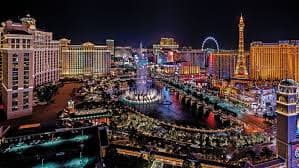
Through November 2025 Las Vegas recorded 35.46 million visitors, a 7.4% decline versus 2024, with average daily rate (ADR) at USD 183.51 and hotel occupancy averaging 80.7%; convention attendance totaled 5.68 million, highlighting a contraction across leisure and business travel lines.
Key statistics and immediate impacts
The Las Vegas Convention and Visitors Authority (LCVA) figures show a pronounced fall in international tourism: 239,500 international arrivals through November compared with 303,834 a year earlier. Industry leaders place much of the shortfall on macroeconomic trends and cross‑border dynamics rather than a single domestic factor.
| Metric | 2025 (through Nov) | Year‑over‑year change |
|---|---|---|
| Total visitors | 35.46 million | -7.4% |
| Hotel occupancy | 80.7% | — |
| Average daily rate (ADR) | USD 183.51 | — |
| Convention attendance | 5.68 million | — |
| International arrivals | 239,500 | -21.1% (approx vs 303,834) |
| 2019 peak | 42.52 million | — |
Reasons cited by industry officials
LCVA president Steve Hill has pointed to international relations and global economic headwinds as contributing factors, noting specific weakness from Canada — historically the largest international feeder market. Operators such as Rick Harrison (Gold & Silver Pawn Shop) report that international guests can account for 40–50% of day‑to‑day foot traffic, amplifying the effects of cross‑border declines. Derek Stevens, CEO of Circa Resort & Casino, added that exchange‑rate shifts and broader global economic uncertainty are also weighing on inbound demand.
📚 You may also like
How the decline affects local operations
Businesses tied to tourist flows are reporting uneven but meaningful impacts. Reduced international arrivals affect retail, tours and specialty experiences; lower ADRs and occupancy put pressure on revenue per available room (RevPAR) and labor scheduling across hotels.
Operational consequences
- Fewer international diners and shoppers reduce ancillary revenue streams for retail and attractions.
- Convention organizers may trim event size or frequency if corporate budgets tighten.
- Feed‑on effects for transportation providers, shows and entertainment venues as group and international bookings soften.
Short‑term mitigation strategies
- Targeted domestic marketing to offset international shortfalls, including regional road‑trip campaigns.
- Dynamic pricing to protect occupancy while attempting to maintain ADR performance.
- Expanded package offerings that bundle shows, dining and experiences to increase per‑guest spend.
Historical perspective: recovery path since 2019
Las Vegas posted an all‑time visitation peak of 42.52 million in 2019. The pandemic years produced a sharp contraction followed by a partial recovery driven by domestic leisure travel and pent‑up demand for major events and conventions. The current decline from 2019 highs reflects both lingering structural shifts in travel patterns and short‑term international softness.
Post‑pandemic recovery timeline
- 2019: Record visitation (42.52 million).
- 2020–2021: Pandemic contraction with severe drops across international and group segments.
- 2022–2024: Gradual recovery led by domestic leisure travel and major conventions returning.
- 2025: Notable pullback driven primarily by international and Canadian declines.
What makes 2025 different?
Compared with the immediate post‑pandemic rebound, 2025 shows greater sensitivity to global macro variables—exchange rates, air connectivity and policy decisions affecting visas and travel facilitation. These factors are harder to influence quickly at the city level and require coordinated national and industry responses.
Logistics, air connectivity and convention dynamics
Convention attendance (5.68 million through November) remains a critical metric for Las Vegas’ business travel segment. Airlift patterns, route frequency from key international gateways and visa processing times directly affect the city’s ability to attract large trade shows and global meetings.
Transport and infrastructure considerations
- Reduced direct flights from Canadian hubs decrease convenience for key feeder markets.
- Shifts in airline capacity or fuel surcharges can raise ticket prices, discouraging price‑sensitive visitors.
- Convention center scheduling and hotel room blocks must be aligned with anticipated demand to avoid overcapacity or lost opportunity.
Policy levers and industry coordination
Restoring international growth typically involves a mix of policy advocacy (to improve visa and travel processes), marketing partnerships to incentivize airline route reinstatement, and public‑private promotions targeting high‑value markets. The pace of recovery will depend on both the external economic environment and targeted interventions by destination marketers and travel trade partners.
Outlook and implications for broader tourism
Absent a rapid reversal of exchange‑rate trends or renewed route expansion from major feeder markets, the near‑term outlook suggests continued pressure on international visitation. Domestic travel will remain the primary buffer, but it may not fully offset lost international spend, especially in luxury retail, high‑end F&B and specialty tour segments.
| Potential outcome | Likelihood (near‑term) | Implications |
|---|---|---|
| Domestic rebound offsets losses | Moderate | Stabilizes occupancy, pressure on ADR continues |
| International recovery (airlift & FX) | Lower | Restores higher spending segments and convention growth |
| Prolonged weakness | Possible | Cost controls, event rescheduling, targeted promotions |
In summary, Las Vegas’ 2025 visitor decline is centered on international headwinds—most notably a steep drop from Canada—and broader global economic uncertainty. Local business owners and resort operators have already reported material impacts, and recovery will depend on restoring international pipelines, refining domestic demand strategies, and pragmatic pricing and marketing responses.
GetBoat.com is always keeping an eye on the latest tourism news. The Las Vegas decline—affecting visitor totals, occupancy, ADR and convention volumes—serves as an important indicator for destinations and activities across sectors, from beach and lake resorts to marinas and coastal markets; stakeholders in yacht, charter, boat and broader destination planning will be watching how this trend influences demand, seasonality and buyer behavior.


