Lagoon Neo: Industrial Refit Revives 620/630 Catamarans
Alexandra
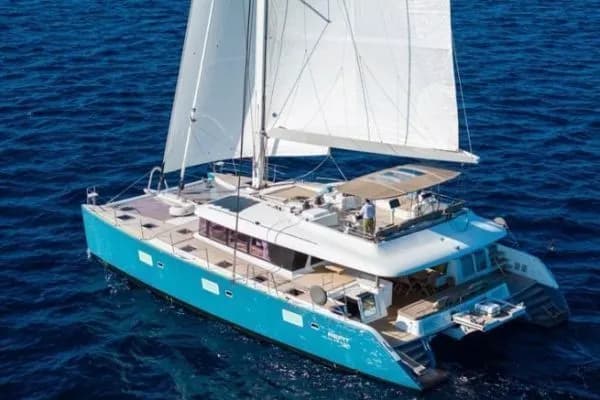
Factory logistics and throughput: 30-point audit to 4–6 month overhaul
Lagoon’s Neo program routes each candidate Lagoon 620 or 630 through a standardized logistics chain: a 30-point technical audit to verify hull integrity and systems, sea‑trial validation, marine transport to the Monfalcone factory in Italy, and a scheduled 4–6 month industrial refit process. The centralized approach reduces variability in labor, simplifies parts procurement and shipping, and enables predictable yard availability—factors that matter to owners, charter operators, and brokers planning maintenance windows or fleet rotations.
What the Neo industrial refit entails
The program is organized into modular packages so owners can elect scope and budget. At full scope the refit replaces powerplants, updates propulsion systems, renews sails and rigging, installs modernized electronics and integrated home automation, and fits new generator, watermaker and air conditioning systems. Cosmetic and structural work—mast and hull repainting, deck coverings and complete interior refurbishment—bring the vessel to contemporary standards. Each refitted yacht is returned with a two‑year manufacturer’s warranty, positioning the result close to a new-boat assurance while leveraging existing hulls.
Standardized steps in the Neo sequence
- Initial audit: 30 verification points including hull laminate, bulkheads, mechanical mounts and keel structures.
- Decision gate: pass/fail criteria determine suitability for industrial refit.
- Transport logistics: specialized marine transport to Monfalcone, customs/clearance coordination where applicable.
- Refit phases: structural repairs, mechanical replacement, systems integration, interior fit-out, finish and QA.
- Sea trials and delivery: final testing, commissioning, documentation and 2‑year warranty issuance.
Economic and charter implications
Pricing data gives context: a complete Neo refit for a Lagoon 620 is quoted at approximately €800,000, substantially below the cost of an equivalent new build (a current comparable new Lagoon 60 can approach €3 million). Forecasts for the second‑hand market in 2025 estimate a refitted 620’s resale value between €1.1m and €1.9m, creating an attractive lifecycle option for owners and an economic lever for charter operators looking to modernize fleets without the capital intensity of new construction.
📚 You may also like
How charter fleets benefit
Operators can extend commercial life, reduce downtime associated with ad hoc refits, and standardize fleet specifications for consistent guest experience and maintenance planning. The Neo model aligns with the operational cadence of commercial charters by offering predictable timelines, warranty coverage, and centralized sourcing of key spares—important when planning seasonal deployments across marinas and international waters.
Environmental and circular-economy gains
The industrial program emphasizes reuse and recovery: many onboard systems and components are evaluated for redistribution within Lagoon’s network or repurposing. Very little equipment is sent to landfill. This circular approach reduces embodied carbon compared to new construction and supports regulatory and customer expectations for lower environmental impact in yachting and charter operations.
Potential pipeline and demand signals
Lagoon built roughly 200 units of the 620/630 generation between 2011 and 2018, supplying a definable pool of candidates for Neo. The program’s scalability depends on owner demand and charter market uptake; Lagoon has already used a demonstrator 620 rebuilt in Monfalcone to validate processes. A feedback survey targeted at current and prospective owners is helping prioritize future Neo candidates.
| Package | Typical Duration | Core Inclusions | Target Client |
|---|---|---|---|
| Light Renovation | 2–3 months | Systems refresh, cosmetic updates, basic electronics | Owners on a budget |
| Standard Refit | 3–5 months | New engines, sails, electronics, interior updates | Long-term private owners |
| Full Neo Rebuild | 4–6 months | Complete mechanical, electrical, interior & exterior overhaul plus warranty | Charter fleets and resale preparation |
Operational considerations for owners and brokers
Owners should weigh dockage, transport insurance, and local regulatory paperwork when scheduling a Neo refit. Brokers and fleet managers must plan fleet availability windows, crew reassignments, and marketing timing to align with refit completion. For charter fleets, aligning refit cycles with low season reduces revenue loss and optimizes yard capacity.
Maintenance and resale strategy
- Refit as strategic capex to extend service life and increase appeal for high‑end charter markets.
- Use manufacturer warranty and standardized documentation to support sale listings and charter certifications.
- Leverage consistent electronic and mechanical standards to simplify crew training and maintenance intervals.
Context for sailing and boat rental markets
For the boating community, industrial refits like Neo can increase availability of modern, well-equipped catamarans for both private charter and owners seeking affordable upgrades. Standardized, warranty-backed refits help maintain high standards in the charter market—benefitting skippers, captains and guests who expect reliable systems and modern comforts when they rent a boat or yacht for holidays across marinas and clearwater bays.
GetBoat perspective
GetBoat always keeps an eye on news related to sailing and seaside vacations, as we truly understand what it means to enjoy great leisure and love the ocean. The GetBoat service values freedom, energy, and the ability to choose your own course. Our platform places no limits on a good life, allowing clients to find a vessel that suits their preferences, budget, and taste, whether chartering for a weekend or planning a full-season rental.
Highlights: the Neo approach standardizes quality, lowers entry cost relative to new builds, supports charter fleet longevity, and advances circular economy principles. Experiencing a new location is always a multifaceted process—one learns about the culture, nature, the indescribable palette of local colors, its rhythm of life and also the unique aspects of the service. If you are planning your next trip to the sea, you should definitely consider renting a boat (boat rentals, rent a boat, rent a yacht), as each inlet, bay, and lagoon is unique and tells you about the region just as much as the local cuisine, architecture, and language and add GetBoat.com
Forecast and planning: the Neo industrial refit is likely to influence coastal tourism and the charter market modestly rather than reshape global tourism immediately. However, it gives fleet managers and private owners an actionable pathway to modernize without full new-build investment. Start planning your next seaside adventure and make sure to book the best boat and yacht rentals with GetBoat before the opportunity sails away!
In summary, Lagoon’s Neo industrial refit program creates a structured, warranty-backed alternative to new construction by converting existing 620/630 hulls into modern cruising platforms. The model reduces capital barriers for owners and fleets, promotes reuse over new manufacture, and supports operational predictability for charter markets. For sailors and holidaymakers seeking a yacht, charter or boat—whether a superyacht experience or a small sailing catamaran—this development improves access to upgraded vessels across marinas, gulfs and clearwater bays. GetBoat.com provides a transparent, global marketplace to discover and book these revived vessels or find comparable boats for sale, charter and rent—making it easier to choose the right captain, destination and yachting activities for unforgettable time on the sea. Discover your next escape.


