Rapid rise in foreign pilgrims to UP’s Buddhist circuit
Alexandra
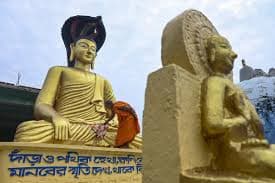
Kushinagar International Airport’s operationalisation is directly linked to Kushinagar accounting for roughly 300,000 of the 440,000 foreign pilgrims who visited Uttar Pradesh’s Buddhist sites in 2025, a nine-fold increase from about 48,000 in 2022.
Recent visitor flows and logistics drivers
Official tallies show foreign arrivals to the state’s Buddhist circuit rose from 48,000 in 2022 to 4.4 lakh in 2025. Improvements in air connectivity, notably the inauguration and scheduled international services at Kushinagar, plus upgraded road links and last-mile transport, reduced transit times and removed logistical barriers that previously constrained pilgrimage itineraries.
Authorities attribute the surge to a package of measures: enhanced airport access, stronger regional branding, multilingual signage, expanded sanitary and hospitality capacity, and systematic crowd-management protocols. The operational readiness of Kushinagar airport particularly eased direct access for Southeast Asian and South Asian visitors, shifting flows away from longer, multi-leg ground or air transfers.
📚 You may also like
Geography of visits within the circuit
Kushinagar emerged as the single most visited site in 2025 with around 300,000 foreign pilgrims. Sarnath drew close to 100,000, while Kapilvastu, Sravasti, Kaushambi, and Sankisa accounted for the remaining share. Seasonal patterns favor the winter months, coinciding with important liturgical dates such as Kathina and Kartik Purnima, which drive peak pilgrimage demand.
Country origin breakdown
Regional monitoring indicates Thailand contributed approximately 30–35% of total international footfall, Sri Lanka about 20–25%, and Japan 10–15%. Other notable source markets included Myanmar, Taiwan, and South Korea.
| Site | Foreign visitors (2025) | Share of total |
|---|---|---|
| Kushinagar | 300,000 | ~68% |
| Sarnath | 100,000 | ~23% |
| Kapilvastu / Sravasti / Kaushambi / Sankisa | 40,000 | ~9% |
Policy, infrastructure and outreach measures
Multiple targeted interventions combined to produce the observed uptick. The most consequential were:
- Airport and air-route development: Scheduled international flights and bilateral route talks prioritised services from Buddhist-majority nations.
- Road and last-mile upgrades: Faster access from airports to shrine complexes and standardized signage in multiple languages.
- Hospitality and sanitation: Expansion of lodging capacity and pragmatic improvements in restrooms and crowd flow at high-demand sites.
- Diplomatic and promotional outreach: Participation in international travel marts and focused engagement with governments in Thailand, Sri Lanka and Japan.
- Monastic and cultural linkages: Sustained exchanges and coordinated events with Bodh Gaya and other nodes of the global Buddhist pilgrimage network.
Operational implications for destination management
Scaling visitor services this quickly creates both opportunities and pressures for destination managers. Benefits include higher local revenues, stronger seasonal employment, and impetus for allied transport and hospitality investment. Challenges focus on sustainable capacity management: protecting heritage sites, mitigating overcrowding during peak ritual dates, and ensuring consistent quality of services in secondary destinations such as Kapilvastu and Sravasti.
Short-term operational priorities
- Refine last-mile shuttle and paratransit services to reduce bottlenecks around shrine precincts.
- Enhance waste-management and sanitation provision timed to pilgrimage peaks.
- Implement multilingual visitor information systems and mobile guidance to disperse crowds.
- Build data collection for real-time flow monitoring to inform dynamic crowd-control measures.
Historical context and evolving demand patterns
Buddhist pilgrimage in the Gangetic plain has long been anchored by a handful of canonical sites—Bodh Gaya, Kushinagar, Sarnath and Kapilvastu—whose religious significance has translated into recurrent pilgrimage circuits for centuries. What changed recently is not the spiritual pull but the accessibility framework: modern airports, better highways, and visa facilitation have transformed multi-day overland circuits into shorter, more frequent international itineraries.
Historically, flows were concentrated around major monsoon- and harvest-season cycles; in the current decade, however, air links have shifted timing toward cooler months and aligned pilgrimage visits with ritual calendars convenient to incoming cohorts from Southeast and East Asia. The renewed prominence of Kushinagar in 2025 mirrors a global pattern where targeted infrastructure unlocks previously latent religious tourism demand.
Outlook for tourism and local economies
If current trends persist, several medium-term outcomes are plausible: diversified tourist products around the core pilgrimage experience (heritage trails, interpretive centers), stronger private-sector investment in hospitality, and potential pressure to regulate commercial activity near sacred precincts. Cross-border cultural diplomacy will likely remain a central lever for sustaining arrivals from key source markets.
Implications for related travel and recreational activities
Although the Buddhist circuit is principally a land-based pilgrimage network, spillovers to riverine and cultural tourism—particularly in Varanasi and the Ganges corridor—may increase demand for local boating excursions and day activities on the river. These complementary services can help lengthen stays and spread economic benefits into adjacent towns and marinas along the navigable stretches of the Ganges.
In summary, the nine-fold rise in foreign visitors to Uttar Pradesh’s Buddhist sites between 2022 and 2025 is a product of coordinated logistics upgrades, targeted diplomatic outreach, and strengthened site-level services. Kushinagar’s new international air link emerged as the decisive factor in redirecting large-scale pilgrim flows, while Sarnath and other sites benefited from regional network effects. Seasonality remains concentrated in the winter months around key ritual observances, and source markets are dominated by Thailand, Sri Lanka and Japan.
GetBoat is always keeping an eye on the latest tourism news and trends; for those tracking shifts in Destinations and activities—whether they involve river boating, coastal beach experiences, or broader regional travel dynamics that may eventually touch lake, sea and gulf itineraries—this development highlights how transport and infrastructure upgrades can rapidly reshape visitor patterns, with implications for hospitality, local sale of services, recreational fishing and waterfront activities. For ongoing coverage and context, visit GetBoat.com.


