How Cruising Kids Find Community at Sea
Alexandra
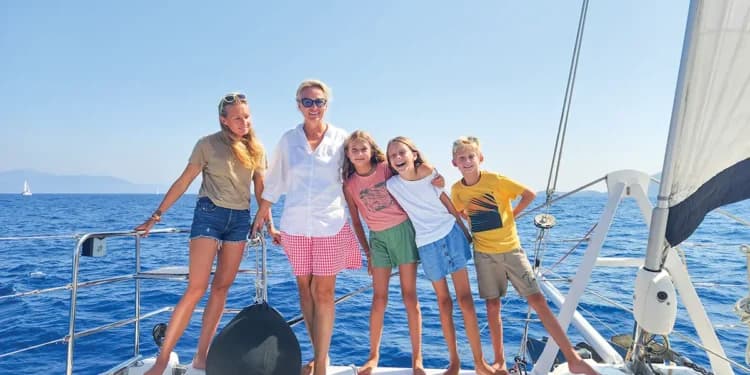
At crowded anchorages and transient marinas, limited shore space and rapid berth turnover create a distinct set of social logistics: children aboard cruising vessels rarely encounter the casual, repeated playmates that form neighborhood friendships on land, so signalling systems and coordinated meetups become essential to creating peer networks afloat.
Growing up afloat: patterns and practical routines
Many children who live and travel on boats experience a day-to-day routine driven by nautical logistics: tide windows, provisioning stops, berth reservations, and weather-driven itinerary changes. For cruising families, schooling, maintenance, and socializing are slotted into passages and port stays, which influences how children learn and make friends. One example described by sailor Kalle Manzano shows how a family shifted to a mobile life during the pandemic and used online schooling to maintain continuity while crossing basins like the Caribbean and Mediterranean.
Formal education on board
Distance-learning programs following the American educational system allow cruising children to stay on track academically while remaining flexible for passages. These programs emphasize independent study, submission of assignments online, and parental oversight. The structure tends to reward self-discipline and adaptability, and many students report a smooth transition back to land-based classrooms due to the rigor and routine of their onboard studies.
📚 You may also like
Skills and resilience learned while maintaining a vessel
Living in a compact, mechanically dependent environment accelerates practical education. Children participating in keeping a boat seaworthy gain hands-on training in multiple trades and sciences.
| Skill | How it’s learned aboard |
|---|---|
| Basic mechanics | Engine maintenance, oil changes, and sail-drive repairs during passages. |
| Systems troubleshooting | Fixing watermakers, pumps, and electrical faults under time constraints. |
| Navigation | Weather routing, tide planning, and celestial navigation for night sailing. |
| Marine ecology | Reef protection, species observation, and stewardship learned at anchorages. |
| Practical crafts | Carpentry, plumbing, and improvisation for small-space living. |
Life lessons beyond the checklist
Beyond technical skills, cruising instills time management, cooperative problem solving, and cross-cultural awareness when families stop in different ports and meet local communities. These soft skills often translate into confidence and resourcefulness that land-raised peers may develop later.
The social challenge: why children miss peers and how crews cope
Open decks and compact living reduce spontaneous play. Biking to a friend’s house or joining neighborhood sports isn’t an option at sea, so shore visits, marina playgrounds, and anchorages become the nodes for social contact. Families have improvised visual cues — laundry on deck, toys in the water — to identify other kids, but these signals are unreliable.
The Kids-Aboard concept: a simple maritime social protocol
To reduce uncertainty and welcome interaction, Kalle Manzano created the Kids‑Aboard! banner: a bright orange flag flown from the mast that explicitly signals "children onboard, visitors welcome." The banner acts as a low-friction social protocol that shortens the reconnaissance phase for parents and children alike and creates safe, pre-vetted opportunities for impromptu play at anchor or on beaches.
Community effects of a visible sign
When multiple vessels display the same signal, anchorages quickly become family-friendly zones. The flag lowers social barriers, encouraging exchanges of toys, shared beach outings, and organized kid-focused meetups. For parents seeking both safety and sociability, a standardized signal reduces awkwardness when approaching another boat and speeds the formation of cross-boat friendships.
Practical checklist for parents considering cruising with children
- Plan berth and anchorage time: choose longer stays where kids can form connections rather than one-night stopovers.
- Carry play gear and flags: floating toys, shore games, and a visible Kids‑Aboard banner help identify your family to others.
- Establish routines: set school hours, chore expectations, and shared watch schedules to balance freedom and safety.
- Network with other cruising families: marinas, social media groups, and local clubs can organize kid-centered events.
- Check safety equipment: lifejackets sized for children, harnesses for deck work, and first-aid kits tailored for family needs.
From a rental and charter perspective, owners and charter operators who cater to families can differentiate their listings by highlighting safety features, toys, and a family-friendly layout. For those renting, specifying that a yacht or catamaran is suitable for children—plus whether a captain is recommended or available—helps match expectations and avoids awkward surprises at check-in.
GetBoat always keeps an eye on news related to sailing and seaside vacations, as the team understands what it means to enjoy great leisure and love the ocean. The platform values freedom, energy, and the ability to choose your own course; it places no limits on a good life, helping users find a vessel to suit preferences, budget, and taste.
Forecast & planning: Small innovations like the Kids‑Aboard flag influence the way families approach cruising by making anchorages friendlier and encouraging longer, more social port calls. Globally this is a niche development rather than a tourism revolution, but for family cruisers it improves the usability of anchorages and could subtly shift demand toward marinas and charter options that promote family amenities. Start planning your next seaside adventure and make sure to book the best boat and yacht rentals with GetBoat before the opportunity sails away!
Highlights: cruising children build practical skills, gain environmental awareness, and form resilient social bonds when protocols like the Kids‑Aboard flag reduce social friction. Experiencing a new location is always a multifaceted process—learning about the culture, nature, the indescribable palette of local colors, its rhythm of life, and the unique aspects of service. If you are planning your next trip to the sea, you should definitely consider renting a boat (boat rentals, rent a boat, rent a yacht), as each inlet, bay, and lagoon is unique and tells you about the region just as much as the local cuisine, architecture, and language GetBoat.com
In summary, the Kids‑Aboard initiative addresses a specific logistical and social gap for cruising families by providing a clear, low-cost signal that fosters connection and safety. Cruising life delivers a unique blend of mechanical, navigational, and ecological learning that complements formal education and builds confidence in young sailors. For travelers interested in chartering or buying vessels—whether a yacht, sailboat, or superyacht—considerations around family amenities, marina availability, and crewed versus skippered charters will shape the experience. Platforms that offer transparent listings, make model and rating information visible, and present options across budgets simplify planning and help ensure memorable moments on the water. Embrace the voyage: yacht, charter, boat, beach, rent, lake, sailing, captain, sale, Destinations, superyacht, activities, yachting, sea, ocean, boating, gulf, water, sunseeker, marinas, clearwater, fishing.


