Jonmeri 40: Design, Performance and Cruising Notes

Founder, TheThinksters.com
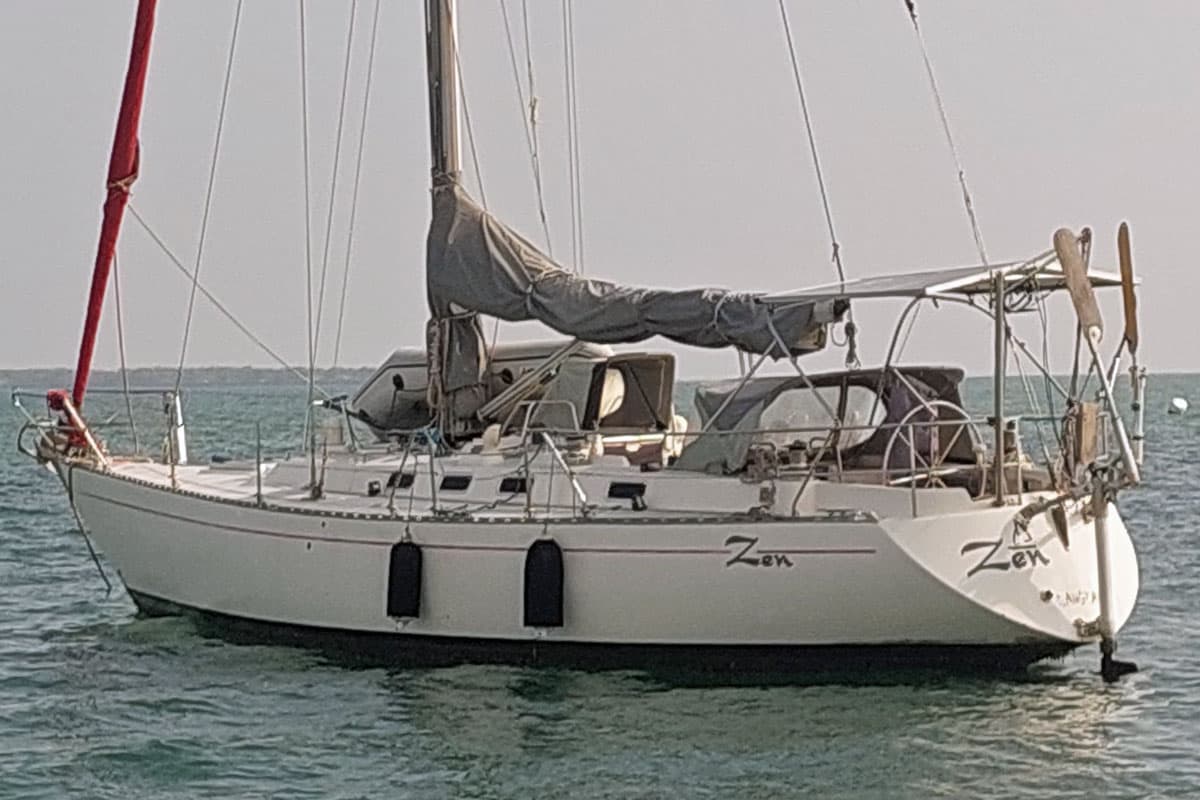
With a standard draft of 2.10 m and a lightship displacement near 8,000 kg, the Jonmeri 40 demands marina berths and channel depths that routinely clear 2.5 m plus adequate onshore lifting capacity (around 9 tonnes) for maintenance and antifouling operations; operators planning coastal charters or long-term moorings must factor in these constraints for route planning and marina selection.
Design & Construction Philosophy
The Jonmeri 40 was produced by Jonmeri Yachts to designs from the Finnish studio J & J Design. The vessel employs a classic late‑1980s approach: a hand‑laid GRP hull with a solid laminate below the waterline and a balsa‑cored deck and topsides. This construction provides notable stiffness and impact resistance, while the cored deck reduces topside weight and improves thermal insulation for high‑latitude cruising.
Structurally, the combination of a deep fin with a bulb keel and a moderately high‑aspect rudder gives the design a clear offshore performance bias. The keel depth increases the righting moment and lateral resistance, enabling the hull to carry a relatively powerful masthead rig without excessive heel or leeway — a configuration that pays dividends on long windward legs and in confused seas.
📚 You may also like
Published Specification: Jonmeri 40 Blueprint
The table below summarizes the standard measurements and dates for the model, essential for owners, brokers, and charter operators who assess berthing and transport logistics.
| Length Overall | 12.20 m (40 ft 0 in) |
| Length Waterline | 9.75 m (32 ft 0 in) |
| Beam | 3.80 m (12 ft 6 in) |
| Draft (Standard) | 2.10 m (6 ft 11 in) |
| Displacement | 8,000 kg (17,637 lbs) |
| Ballast | 3,600 kg (7,937 lbs) |
| Rig Type | Masthead Sloop |
| Hull Material | GRP (Solid Hull) |
| Production Dates | c. 1988 – c. 1993 |
Performance Analysis: Understanding the Design Ratios
Design ratios distill hull form and sail plan into actionable expectations for speed, comfort and safety. The Jonmeri 40's metrics place it among capable offshore cruisers with a leaning toward performance.
| Sail Area/Displacement (SA/D) | 18.5 | Performance cruiser: lively in light airs, responsive under sail. |
| Displacement/Length (D/L) | 223 | Moderate/heavy cruiser balance: seaworthy yet not sluggish. |
| Ballast/Displacement (B/D) | 45% | High stiffness and strong righting moment useful offshore. |
| Capsize Screening Formula (CSF) | 1.75 | Below 2.0: good offshore capsize resistance. |
| Comfort Ratio (Brewer) | 30.7 | Balanced motion: comfortable without excessive mass. |
How Ratios Translate to Handling
The relatively high SA/D suggests the Jonmeri 40 will accelerate in moderate to light breezes and will reward a conservative sail plan adjustment as winds build. The 45% ballast ratio and deep keel reduce roll and improve weatherliness, enabling longer periods on sail in offshore conditions. The CSF well under 2.0 signals a hull form and ballast distribution that favour recovery after a knockdown, an important safety attribute for blue‑water work.
Advanced Analysis & Operational Context
The solid GRP below the waterline delivers impact tolerance and simpler repairability — a practical advantage for cruisers operating in remote anchorages without immediate yard access. Compared with modern epoxy or carbon composites, traditional GRP is heavier but more forgiving to patch and less sensitive to specialised repair techniques; this can reduce both downtime and maintenance logistics for long passages.
On the other hand, the fixed 2.1 m draft imposes operational limits: some shallow coves, sandbars and small marina basins will be off‑limits, and berthing plans should account for tidal windows. For charter fleets or private owners staging cruises in archipelagos with shallow inlets, that trade‑off must be weighed against the superior upwind and seaway performance that the deep keel affords.
Configuration, Layout & Cruising Suitability
Typical Jonmeri 40 interior arrangements place an owner's cabin forward and a large aft cabin, making the boat suitable for two couples on extended passages. Ancillary systems — tankage, galley footprint and navigation station — were designed with long‑range comfort in mind rather than weekend entertaining, reinforcing the model’s identity as a passage‑capable cruiser.
- Advantages: strong stability, good upwind ability, robust GRP construction, comfortable motion.
- Limitations: deeper draft restricts some anchorages, older systems may need refit for modern charter service.
- Operational tips: confirm berth depth before booking, check lifting/haul‑out specs, plan windward passages with reefing strategy.
Maintenance & Ownership Notes
Owners should monitor classic GRP issues such as osmosis and laminate condition, especially after decades afloat. Regular anode replacement, shaft and rudder inspection, and checking core interfaces on the deck will keep the boat operational and reduce costly surprises during a cruise season or charter rotation.
Provide a short forecast on how this news could impact the global tourism and travel map. The Jonmeri 40 itself is a niche classic rather than a market mover; globally insignificant in terms of fleet numbers, it remains relevant to sailors who prioritise seaworthiness over shallow‑water access. Start planning your next seaside adventure and make sure to book the best boat and yacht rentals before the opportunity sails away!
Key highlights: the Jonmeri 40 combines offshore stability (45% ballast ratio), a solid GRP hull for durability, and a performance outlook suited to sustained cruising and passage making. Experiencing a new location is always a multifaceted process — where one learns about the culture, nature, the indescribable palette of local colors, its rhythm of life and also the unique aspects of the service. If you are planning your next trip to the sea, you should definitely consider renting a boat (boat rentals, rent a boat, rent a yacht), as each inlet, bay, and lagoon is unique and tells you about the region just as much as the local cuisine, architecture, and language GetBoat.com
GetBoat always keeps an eye on news related to sailing and seaside vacations; the service values freedom, energy and the ability to choose your own course, offering transparency in listings so customers can view make, model, ratings and detailed descriptions before they commit. That focus helps sailors and charterers match a vessel to their needs — whether a passage‑minded cruiser, a family weekend boat or a small flotilla for friends — and reduces uncertainty in pre‑trip logistics and vessel selection.
In summary, the Jonmeri 40 is a well‑balanced, late‑1980s offshore cruiser offering a blend of seaworthiness and capable performance. Its deep keel and high ballast fraction make it a trustworthy platform for long passages, while the GRP construction simplifies field repairs and maintenance. For those planning coastal or blue‑water trips, consider harbor depths and lifting facilities when scheduling maintenance or berthing. When arranging charters or private purchases — from yacht sale inquiries to short‑term rentals — choose options that align with your itinerary and crew experience. Set your course. The combination of yacht integrity, sensible charter choices and modern booking transparency helps ensure memorable time on the water across sea, ocean, gulf or lake — whether fishing, cruising, yachting or simply soaking up the sun at clearwater marinas.