Israel and India Step Up Bilateral Tourism Cooperation
Alexandra
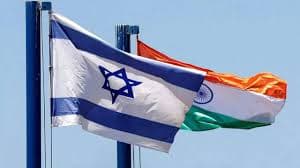
The Israel Ministry of Tourism has allocated 4 million NIS to expand activities in the Indian market and to advance a formal bilateral MoU with the Government of India, conditioned on a parallel Indian allocation and the creation of a joint working group to streamline policy, regulatory alignment, and travel facilitation.
Key components of the new funding and mechanism
The approved package is designed to deliver measurable increases in two-way travel by linking public and private stakeholders across both countries. The mechanism centers on a joint working group that will convene representatives from the Israel Ministry of Tourism, the Ministry of Tourism of India, airlines, local authorities, tourism boards, and private-sector partners to coordinate market entry, product development, and visa facilitation.
Immediate operational priorities
- Establish the joint working group and governance framework.
- Design joint tourism products targeting leisure, family, business, and MICE segments.
- Coordinate with the Population and Immigration Authority to evaluate visa process improvements for Indian visitors.
- Engage airlines and travel trade partners to increase capacity and route frequency.
Stakeholder roles
| Stakeholder | Primary role | Expected output |
|---|---|---|
| Israel Ministry of Tourism | Funding, strategic coordination | Joint MoU, promotional campaigns |
| Ministry of Tourism, Government of India | Reciprocal funding, market access | Approved MoU, regulatory alignment |
| Population and Immigration Authority | Visa policy review | Simplified entry procedures |
| Airlines & travel trade | Capacity and product delivery | Increased flight links, co-branded offers |
Expected outcomes and metrics
Officials project that structured coordination will raise inbound Indian arrivals and diversify tourism offerings. The focus on developing tailored joint products intends to convert growing Indian outbound travel demand into sustained tourism flows to Israel across multiple segments, from leisure and beach breaks to business travel and MICE events.
📚 You may also like
Performance indicators likely to be monitored
- Annual Indian visitor arrivals and nights stayed.
- New air seat capacity and seasonal frequencies.
- Number of co-developed tourism products and joint marketing campaigns.
- Processing times and approval rates for tourist visas.
Official perspectives and policy rationale
Haim Katz, Minister of Tourism, framed the move as a strategic priority that recognizes India as one of the fastest-growing outbound travel markets. The ministry’s approach prioritizes long-term market development by creating a structured framework for collaboration, intended to increase travel flows and deepen people-to-people links.
Galit Hoffman, Consul – Tourism Affairs in India for the Israel Ministry of Tourism, highlighted the importance of dedicated resources to sustain market expansion and the intent to engage Indian travel trade partners and airlines to make Israel more accessible and appealing to Indian travellers.
Short historical context
Bilateral tourism between Israel and India has expanded significantly since the formalization of full diplomatic relations in the early 1990s. Initial flows were modest and often linked to pilgrimage and religious travel. Throughout the 2000s and 2010s, growing economic ties and direct flight routes contributed to broader leisure travel, study and business exchanges.
Israeli destinations gained visibility among Indian tourists for religious and historical sites, while Israel’s coastal cities and resort areas have gradually attracted more leisure visitors. In recent years, targeted marketing, visa facilitation, and expanded air connectivity have driven steady upticks in arrivals, prompting both governments to consider formalized cooperation mechanisms to scale growth strategically.
Implications for marine, coastal and recreational tourism
While the primary emphasis is on overall bilateral tourism growth, the coordinated plan can have tangible effects on marine and coastal tourism sectors in Israel. Increased Indian demand could translate into higher occupancy at marinas, more interest in yacht charters, and growth in shore-based activities along the Mediterranean coast and the Red Sea resort of Eilat.
How the MoU could affect boating and yachting supply chains
- Higher passenger volumes may increase demand for marinas and slip rentals.
- Growth in leisure travel could spur more charter packages and short-term boat rentals tailored to Indian groups.
- Business and MICE travel may generate demand for private yacht hire and luxury superyacht services for events and incentives.
- Expanded routes and seasonality adjustments could encourage operators to optimize fleets for sea, gulf, and coastal excursions.
Risks, constraints and operational challenges
Realizing the plan depends on a parallel financial commitment from India and effective inter-agency coordination. Visa processing improvements require operational changes at immigration checkpoints and IT integration, which are inherently complex and sensitive. Airline capacity decisions will hinge on commercial assessments, and private-sector buy-in is crucial for co-branded offers and product development.
Mitigation steps likely to be required
- Phased implementation with pilot campaigns in key Indian source markets.
- Targeted agreements with carriers to secure initial seat capacity.
- Stakeholder workshops to align product specifications and pricing.
- Monitoring and a results-driven feedback loop to adjust incentives and promotion.
In summary, the 4 million NIS allocation and the proposed bilateral MoU framework establish a concrete, resourced pathway to deepen Israel-India tourism cooperation by aligning policy, streamlining visa procedures, and co-developing travel products. If implemented successfully, the initiative can accelerate arrivals, expand business between tourism operators, and stimulate demand across sectors including coastal activities, marinas, and charter services.
GetBoat keeps a close watch on tourism developments that influence yacht and boat demand in major destinations. This move towards formalized Israel–India cooperation could increase interest in chartering and renting boats, boost visits to marinas in Tel Aviv, Haifa and Eilat, and broaden opportunities for sailing, fishing, and yachting activities. For travellers and operators considering yacht charter, boat rent, beach experiences, or captain-led excursions in these waters, the potential uplift in arrivals may expand choices for superyacht and small-boat offerings across sea and gulf itineraries. For more on how such tourism shifts translate into on-the-water options and charter opportunities, visit GetBoat.com.


