Island Packet 40 — Specs, Behavior and Cruising Character

Founder, TheThinksters.com
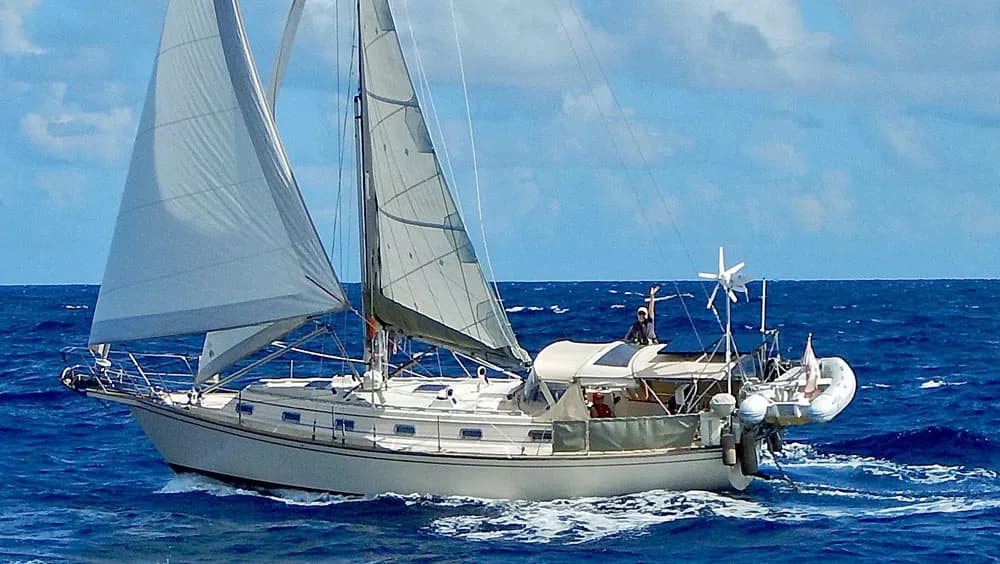
With a displacement of 22,800 lbs, a 4'8" draft and a 10,000 lb internal lead ballast, the Island Packet 40 imposes clear logistical considerations for berthing, haul-out and coastal passage planning: marinas and haulage services must accommodate heavy-displacement hulls and deeper keel profiles while coastal pilots should note the IP40’s long turning circle when assigning berths or manoeuvring channels.
Design & Construction: Hull, Keel and Structural Decisions
Designed by Bob Johnson and built by Island Packet Yachts in Florida between 1992 and 2000, the IP40 is a purpose-built, heavy-displacement cruiser that prioritizes robustness over light-air performance. The hull is solid GRP (fibreglass) with Island Packet’s proprietary "PolyClad" gelcoat, engineered to resist osmosis and reduce long-term maintenance risks. The boat’s integrated one-piece hull-and-keel structure eliminates keel bolts, reducing a major structural leak point and simplifying underwater inspections.
Full Foil Keel: Operational and Safety Impacts
The vessel’s defining feature is the Full Foil Keel, which encapsulates the ballast within the hull and provides a long, stable footprint. Operationally this delivers exceptional directional stability and rudder protection, advantages for offshore voyaging and areas with shallow, debris-prone approaches. The trade-offs are increased wetted surface and drag, producing a larger turning circle and reduced acceleration in light airs—practical factors for harbour master reports and passage planning.
📚 You may also like
Implications for Yacht Charter and Boat Rental Operations
For businesses offering charters or long-term rentals, the IP40’s internal ballast and solid hull reduce maintenance visits and unexpected underwater repairs, but marina allocations should account for its displacement and manoeuvrability limits. In rental fleets, assigning experienced skippers and larger berths can mitigate handling risks while leveraging the boat’s comfort advantages for guests seeking blue-water cruising experiences.
Sailplan, Rig Dimensions and Onboard Layout
The IP40 retains a traditional cutter rig, often fitted with a staysail on a Hoyt boom and geared rack-and-pinion steering. This layout eases short-handed handling and improves sail shape when reefed. Factory rigging figures are useful for sail lofts, charter outfitters and owners comparing sail inventories.
- Total Sail Area: 932 ft² (86.58 m²)
- Mainsail Area: 346 ft² (32.14 m²)
- 100% Foretriangle: 455 ft² (42.27 m²)
- I: 50'10" (15.50 m)
- J: 17'10" (5.44 m)
- P: 44'0" (13.41 m)
- E: 15'9" (4.80 m)
| Feature | Specification & Data |
| LOA (Length Overall) | 41'6" (12.65 m) |
| LWL (Length Waterline) | 34'0" (10.36 m) |
| Beam | 12'11" (3.94 m) |
| Draft | 4'8" (1.42 m) |
| Displacement | 22,800 lbs (10,342 kg) |
| Ballast (Lead) | 10,000 lbs (4,536 kg) |
| Rig Type | Cutter |
| Hull Material | GRP (Fibreglass) |
| Production Dates | 1992 – 2000 |
Performance Analysis: Ratios and Expected Behaviour
Quantitative ratios help translate hull geometry into expected sea-keeping and performance. The IP40’s values reflect a boat built to carry stores and tankage, to sleep comfortably and to ride predictably offshore rather than win regattas.
| Ratio | Value | Interpretation |
| SA/D (Sail Area / Displacement) | 18.57 | Moderate power — adequate in steady breeze, sluggish in light airs without a reacher sail. |
| D/L (Displacement / Length) | 258.6 | Medium-heavy displacement: high load-carrying capacity and steady motion. |
| B/D (Ballast / Displacement) | 43.8% | Very high — strong stiffness and carrying capacity for sail. |
| CSF (Capsize Screening Formula) | 1.81 | Below 2.0 — suitable for offshore passages with low inversion risk. |
| Brewer Motion Comfort Ratio | 34.42 | High motion comfort in a seaway, favours liveaboard comfort. |
Structural Integrity and Practical Maintenance
The internal ballast and thick GRP laminate mean there are no keel bolts to corrode or leak, simplifying maintenance and making the vessel attractive for long-distance voyaging or rental fleets operating in remote marinas. Gelcoat crazing should be monitored, but overall the design delivers a low-maintenance underwater profile compared with bolted-keel alternatives.
Accommodation, Tankage and Cruising Usage
The interior layout focuses on liveaboard comfort: a wide 12'11" beam, generous storage, a U-shaped galley designed for use under heel, and a Pullman-style forward berth that frees up a large private forepeak head and shower.
- Tankage: ~170 gallons (643 litres) of water and ~90 gallons (340 litres) of fuel — exceptional for a 40-footer and enabling extended autonomy offshore.
- Cockpit: Deep, protected and secure for heavy-weather work; high coamings provide back support during long watches or heavy conditions.
- Draft: Shallow for its size at 4'8", opening access to Bahamas-type anchorages and many shallow marinas while still offering offshore seaworthiness.
GetBoat always keeps an eye on developments related to sailing and seaside vacations because understanding hull types, rig choices and provisioning affects how guests experience leisure time at sea. The service values freedom, energy and the ability to choose your own course, and places no limits on a good life: whether clients want a quiet cruise, active sailing or liveaboard comfort, they can find a vessel to match their preferences, budget and taste.
Practical Considerations for Buyers and Charter Operators
Potential owners and charter managers should balance the IP40’s security and tankage against its lower light-air speed and larger handling footprint. For charter itineraries emphasizing comfort, exploration of inlets and prolonged passages, the IP40 is a strong candidate; for short coastal hops or regatta-style offerings, a modern fin-keeled yacht will likely suit customers better.
Forecast on tourism impact: this model and similar heavy-displacement cruisers have limited direct impact on the global tourism map but remain highly relevant for destination-focused, extended-stay sailing experiences; GetBoat aims to stay abreast of these developments and keep pace with the changing world. If you are planning your next trip to the seaside, consider the convenience and reliability of GetBoat.
Highlights: The Island Packet 40 stands out for its safety-centric design, capacious tankage and liveaboard-friendly layout. Experiencing a new location is always a multifaceted process — one learns about the culture, nature, the indescribable palette of local colors, its rhythm of life and the unique aspects of local service. If you are planning your next trip to the sea, you should definitely consider renting a boat (boat rentals, rent a boat, rent a yacht), as each inlet, bay, and lagoon is unique and tells you about the region just as much as the local cuisine, architecture, and language GetBoat.com
Summary: The Island Packet 40 is a deliberate heavy-displacement cruiser optimized for safety, comfort and self-sufficiency rather than top-end speed. Its integrated hull-and-keel, high ballast-to-displacement ratio and thick GRP laminate deliver structural peace of mind for blue-water passage-making and for charterers seeking steady, comfortable platforms. For owners, captains and charter operators the IP40 offers long-range capability, large tankage and predictably gentle motion — ideal for cruising the sea, ocean crossings or languid gulf passages. GetBoat.com supports this theme by offering a transparent, global platform for booking or buying yachts, sailboats and motorboats, providing detailed listings with make, model and ratings so customers can choose vessels that match their needs for sailing, charter and recreational boating — reserve your vessel with confidence and plan your next adventure today.