Century of Casting: Irons Brothers and Yacht Keels
Alexandra
Irons Brothers ships roughly 45% of its 500–700 annual keels to continental Europe, a flow that requires heavy-lift road logistics, port clearance for oversized loads, and coordination with CNC fin fabricators in the Midlands and keel installers worldwide.
Foundry logistics and production footprint
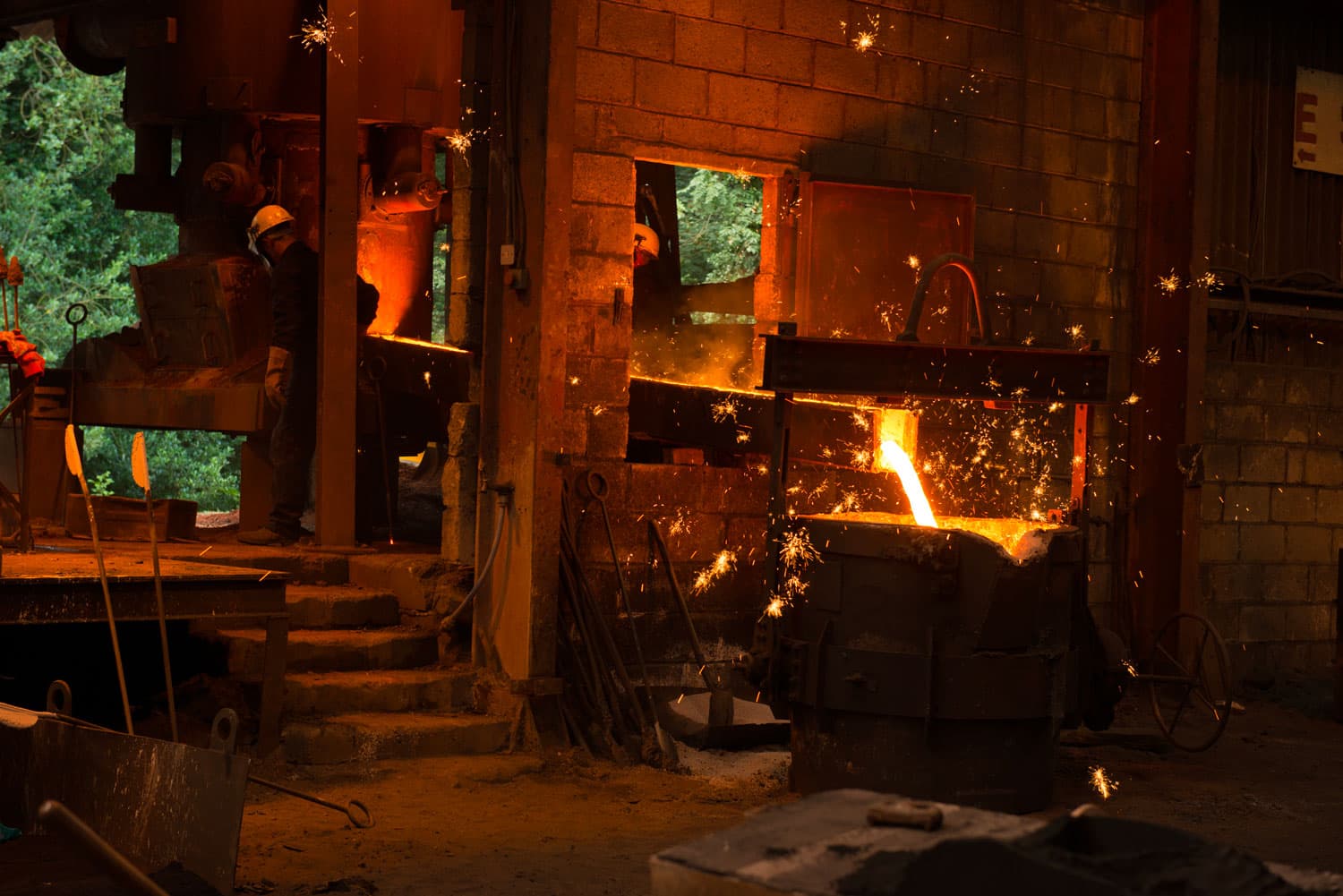
The Irons Brothers site in Cornwall operates on a scale that blends artisanal pattern retention with industrial throughput. The facility melts about 40 tonnes of iron per cupola charge—sufficient for roughly 15 cast-iron keels—and runs a separate lead furnace handling 23-tonne batches. Managing that output means scheduling haulage for finished keels, arranging lorry lifts for 2–30 tonne sacrificial bulbs, and lining up export documentation for deliveries to yards such as Bénéteau, Elan, and Nautor Swan.
Key clients and destinations
- European production builders: Bénéteau, Jeanneau, Dufour, Elan, Hallberg-Rassy
- High-end and racing craft: Oyster, TP52 teams, Open 60 programs, Alex Thomson projects
- Specialist U.S. work: bespoke keels like the two-part keel for Rockport Marine
How keels are made: material choices and process
Keel manufacture at Irons Brothers combines traditional pattern-making with modern finishing. Patterns—often preserved for decades—produce sand-resin molds, into which molten metal is poured. For cast-iron keels the company recycles Grade 17 iron from car brake disks; the cupola heats charges to around 1,320°C (2,408°F). Lead keels are melted to about 320°C (608°F) in an oil-fired furnace and are poured as cleaner ingot-derived metal to ensure alloying with antimony (typically ~3%).
📚 You may also like
| Material | Density | Typical use | Cost sensitivity |
|---|---|---|---|
| Cast Iron | 7,200 kg/m3 | Mass-production keels, economical | Low (scrap-based) |
| Lead (+antimony) | 11,300 kg/m3 | High-performance bulbs, compact ballast | High (LME volatility) |
Why the choice matters
Lead allows smaller keel footprints because of higher density and resists corrosion, but its price follows London Metal Exchange (LME) swings and geopolitical moves—China’s antimony export controls in 2024 significantly spiked costs. Cast iron is cheaper and commonly used for production boats; however, it requires more volume for equivalent ballast.
Case study: the M5 sacrificial tip and operational readiness
The 77m superyacht M5 (ex-Mirabella V) illustrates operational risk management: its lift keel featured a ~30-ton sacrificial tip that sheared off after a collision with a whale. Irons Brothers supplied the original keel and later cast a replacement bulb that was shipped to America and installed by divers—allowing the yacht to remain afloat and continue its voyage with a rapid field repair. Such incidents highlight why charter fleets, owners, and marinas value a reliable foundry supply chain and retained patterns for rapid remanufacture.
Workshop practices and safety
Lead work is handled in sealed workshops with full PPE and regular blood monitoring of staff. Sand-covered floors around the iron cupola prevent violent reactions when molten metal meets moisture. Bolt matrices for lead keels can be poured into the mold or retrofitted during repair work; either approach demands strict QA to ensure structural integrity under offshore loads.
Business model, resilience, and niche expertise
Founded in 1925, Irons Brothers diversified into yachting during the 1960s and now remains family-owned. Management continuity—represented by figures such as chairman Matthew Robinson and managing director Nigel Burt—helps preserve deep pattern archives and bespoke skills. While many UK foundries have closed, the company’s niche—high-tolerance, low-volume specialty castings—keeps it relevant to both production yards and bespoke racing projects.
- Pattern archive ensures fast replacement of discontinued-model keels
- Capability to combine fabricated steel fins with lead bulbs (e.g., fuel-tank keels)
- Diversified castings beyond keels: cannons, waterwheels, artist commissions
Implications for boating, charter and marinas
For operators in the charter and yachting sectors, the existence of a dependable foundry partner reduces downtime after keel damage and supports seaworthiness across fleets. Marinas and captains depend on this supply chain for maintenance windows and seasonal preparation: having a proven supplier who can remanufacture a keel pattern from decades-old drawings is a strategic advantage.
Practical takeaways for skippers and owners
When budgeting for maintenance or buying a used hull consider:
- Availability of replacement patterns for that model
- Whether the keel is lead or cast iron (weight, corrosion, repairability)
- Lead costs exposure to metal markets and potential lead-time on bespoke bulbs
GetBoat always keeps an eye on news related to sailing and seaside vacations, as we truly understand what it means to enjoy great leisure and love the ocean. The GetBoat service values freedom, energy, and the ability to choose your own course; it places no limits on a good life, allowing clients to find a vessel that suits their preferences, budget, and taste. If you are planning your next trip to the sea, you should definitely consider renting a boat (boat rentals, rent a boat, rent a yacht), as each inlet, bay, and lagoon is unique and tells you about the region just as much as the local cuisine, architecture, and language and also the unique aspects of the service. GetBoat.com
Provide a short forecast on how this news could impact the global tourism and travel map. If it's insignificant globally, please mention that. However, it's still important to us since GetBoat aims to stay updated with all developments and keep pace with the changing world. Start planning your next seaside adventure and make sure to book the best boat and yacht rentals with GetBoat before the opportunity sails away!
Irons Brothers demonstrates the hidden infrastructure behind yachting: pattern archives, precision casting, and heavy logistics underpin everything from local day-charters to round-the-world superyacht programs. For charter companies, brokers, and owners, dependable keel supply reduces risk and supports continuity of operation. The foundry’s mix of cast-iron and lead work, plus its experience with complex two-part keels and fuel-tank integrations, keeps it central to modern yacht design and repair.
In summary, the foundry in Cornwall remains a vital node in the marine supply chain: it manages heavy transport and export logistics, controls metallurgical quality, and sustains a library of patterns that benefit owners and yards. Whether you are booking a yacht, arranging a charter, or maintaining a coastal fleet, understanding how keels are produced and supplied helps anticipate downtime, cost exposure, and repair timelines. GetBoat.com connects you to yachts, charters, and boat rentals worldwide with transparent listings of make, model, and ratings—so you can plan ocean trips with confidence, find the right boat for a beach day or a superyacht passage, and enjoy activities from fishing to clearwater cruising. Set sail with confidence.


