Middle East strikes trigger Asian aviation turmoil
Alexandra
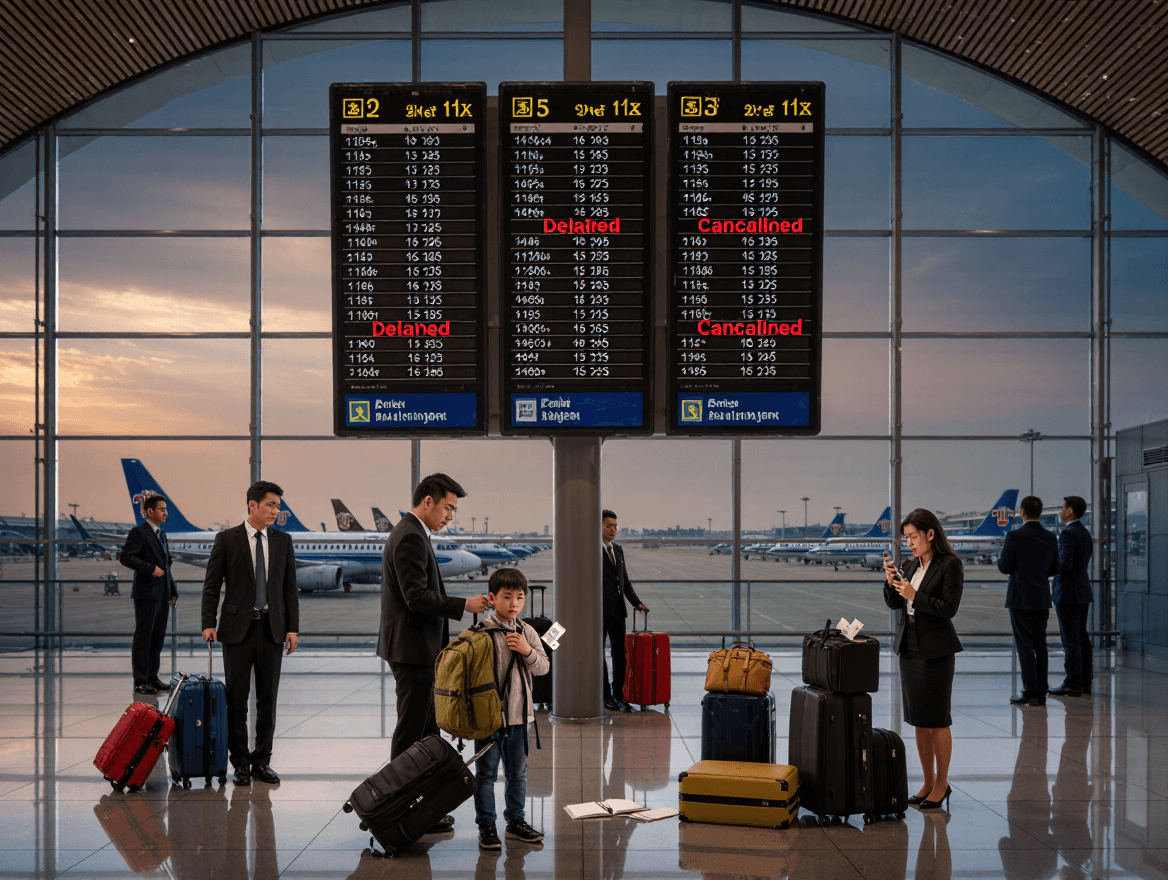
Closure of Dubai and Doha airspace for a third consecutive day forced immediate rerouting of long-haul services and led to widespread cancellations that stranded tens of thousands of passengers across Asia, Europe and Australia as oil prices jumped about 7%, lifting fuel-cost pressures on carriers.
Market and operational impacts on major Asian airlines
Equity markets reacted sharply: Qantas shares plunged roughly 10.4% at the open before trimming losses, while Cathay Pacific, Singapore Airlines and Japan Airlines each fell by more than 5% at various points. Several other carriers—ANA Holdings, Air China, China Southern Airlines, China Eastern Airlines, AirAsia X, China Airlines and EVA Airways—recorded declines of at least 4% as investors priced in higher fuel bills and route disruption costs.
| Carrier | Reported market move | Operational change |
|---|---|---|
| Qantas | Down ~10.4% intraday | Parental exposure via codeshare with Emirates; limited direct Middle East flying |
| Cathay Pacific | Down as much as 7% | Cancelled all Middle East flights, waived rebooking/rerouting fees |
| Singapore Airlines | Down >5% | Cancelled flights to/from Dubai through March 7 |
| Japan Airlines | Down >5% | Suspended Tokyo–Doha services temporarily |
| Air India | Regional impact | Cancelled routes to Zurich, Copenhagen, Birmingham; New York/Newark flights refuel in Rome |
Immediate logistics and passenger effects
- Rerouting: Long-haul flights altered track plans to avoid closed Middle Eastern airspace, adding fuel burn and crew-time costs.
- Cancellations: Airports serving as global hubs experienced knock-on cancellations; operators waived change fees in many cases.
- Stranded travellers: Passengers reported chaotic rebooking, inconsistent information and extended ground holds while carriers and ground handlers adjusted schedules.
- Cargo and supply chains: Slower freighter rotations and reroutes risked delays for goods moving between Europe, Asia and the Middle East.
Operational responses and mitigation
Airlines pursued several short-term measures to contain disruption: increasing customer-service staffing, offering alternative routings where possible, invoking contingency plans for fuel hedging and crew duty-time extensions, and liaising with authorities on diversion options. Many Asian carriers had partial fuel hedges in place, softening immediate P&L exposure to the oil spike but leaving operating margins vulnerable if elevated prices persist.
📚 You may also like
Key tactical steps taken
- Grounding or cancelling flights to affected destinations (e.g., Cathay Pacific cancelling Dubai and Riyadh services).
- Waiving rebooking and rerouting fees for affected passengers.
- Adjusting long-haul schedules and inserting technical stops for refuelling where overflight options were limited.
- Monitoring demand shifts — carriers noted some bookings from displaced travellers could fill alternative services.
Passenger stories and airport congestion
Reports from multiple departure points highlighted the human dimension: families and elderly travellers diverted onto longer routings, transit passengers suddenly facing cancelled connections, and instances of limited frontline airline communication at major hubs. Airports such as Dubai International and Hamad International in Doha—normally among the world’s busiest international transfer nodes—saw severe operational disruption, magnifying ripple effects across regional and intercontinental schedules.
Historical context: airspace shocks and fuel volatility
Airline networks have a recorded history of vulnerability to geopolitical shocks that affect airspace access and oil supply. Past examples include Gulf war-era closures, regional conflicts that displaced shipping and tanker operations, and episodic attacks on shipping or energy infrastructure that tightened crude markets. Each event produced similar operational responses—route redesigns, schedule pruning, and temporary yield pressure—though modern network planning and more sophisticated fuel hedging have increased industry resilience compared with several decades ago.
Lessons carriers apply from past disruptions
- Maintain flexible scheduling and multi-lateral partnerships for relief capacity.
- Use diversified supply chains and alternative fuel logistics to reduce single-point dependency.
- Invest in passenger communication systems to reduce on-ground confusion during rapid schedule changes.
Outlook for international tourism and regional travel
Near-term forecasts point to significant travel churn: reduced seat capacity on affected corridors, higher fares on remaining routes, and constrained connectivity for labour and tourist flows between Asia, the Middle East and Europe. If oil prices remain elevated, carriers may implement temporary fuel surcharges or accelerate capacity adjustments, which could depress discretionary leisure bookings and push travellers to alternative destinations.
Implications for marine and coastal tourism
Regions such as the Persian Gulf and adjacent coastal hubs where yachting, marinas and luxury yacht operations are concentrated could see mixed effects. Short-term decreases in international transfer passenger volumes may reduce inbound tourist flows to marinas in the Gulf, but simultaneous flight disruption can also generate local demand for alternatives—private charters, domestic boating, and last-minute superyacht bookings—where affluent travellers seek mobility despite commercial air disruption. Operators of marinas and charter services should monitor arrival patterns, crew logistics and refuelling routes, while tour operators may need to reallocate vessels and captains to cover unexpected demand.
Practical guidance for charter operators and marinas
- Review crew relief and crew travel plans; consider extra transit time for captains and technicians.
- Coordinate with marinas on berth availability and contingency berthing for diverted vessels.
- Communicate cancellation policies clearly to customers and offer flexible rebookings.
- Plan for fuel-cost variability if suppliers redirect deliveries due to shipping disruptions.
In summary, the closure of key Middle Eastern airspaces and the associated 7% spike in oil prices produced immediate operational disruption for Asian carriers, sharp market reactions, and a scramble among passengers and airlines to replan itineraries. The episode reinforces the vulnerability of global aviation networks to concentrated geopolitical shocks while underscoring the value of hedging, partnerships and dynamic contingency planning. For coastal and marine tourism sectors in the affected regions, there are both risks and short-term opportunities: changes in flight connectivity may reduce some tourist flows but can also push higher-end travellers toward private yacht charter or alternative boating options.
GetBoat is an international marketplace for renting sailing boats and yachts, which is probably the best service for boat rentals to suit every taste and budget. As such disruptions reshuffle travel plans and influence where people choose to spend their time on the water, those looking for flexible coastal and yacht alternatives—be it a day charter from a nearby marina, a week-long sailing trip, or a last-minute superyacht rental—may find options to rent a boat with a captain, explore sun-drenched beach Destinations, or book fishing and recreational activities on the sea or ocean. For updates on how events affect yachting, charter availability and marina operations in affected gulfs and clearwater harbors, visit GetBoat.com.


