DN Worlds 2026: Relocation, Ice Risks and a New Champion
Alexandra
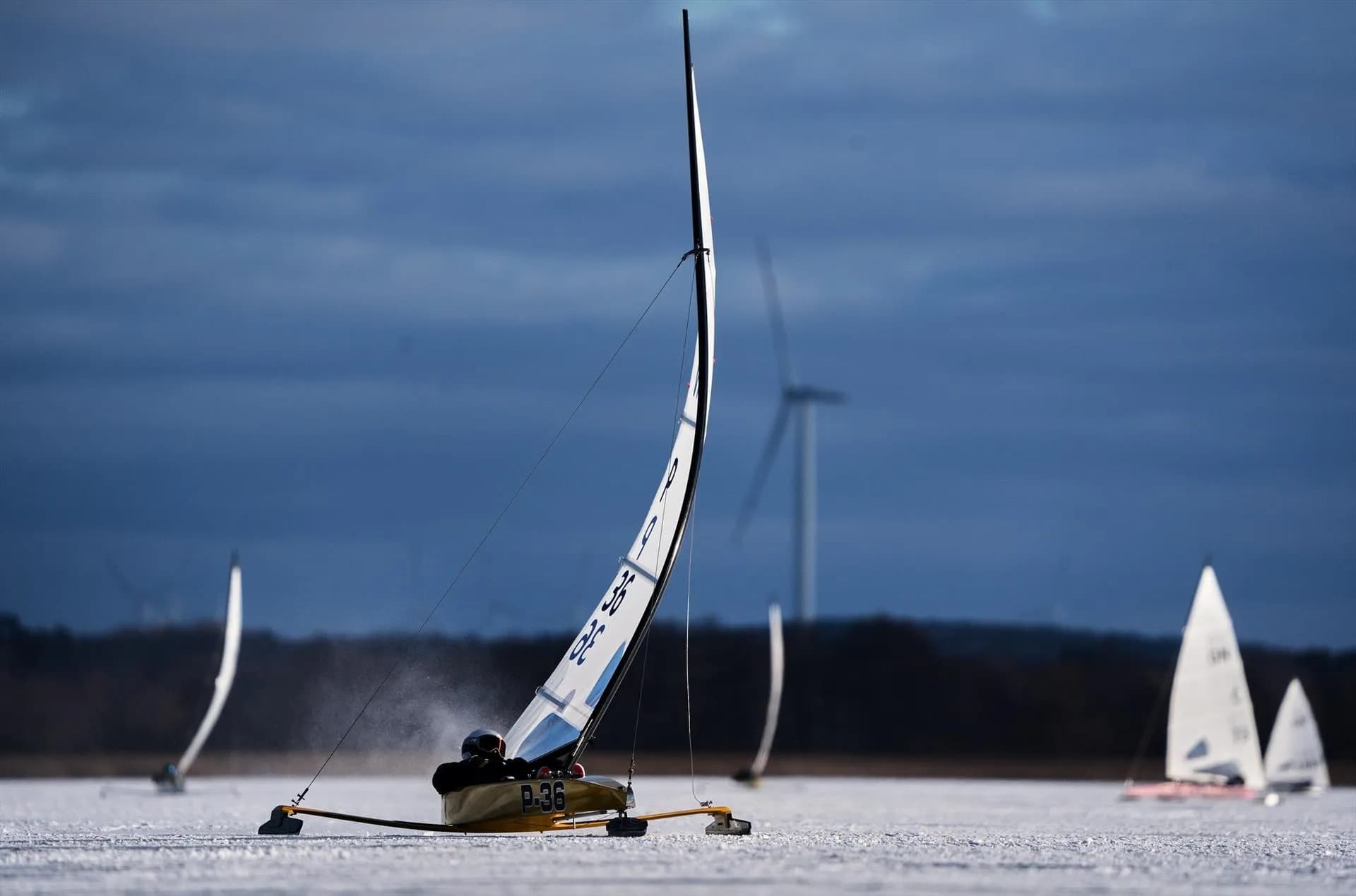
Organisers moved more than 120 DN sleds and support trailers across borders, coordinating customs, truck slots and local hauling crews as the championship caravan shifted from Norrköping, Sweden to the Darlowo/Dąbki region in Poland — a logistic operation that required rapid route planning, ice reconnaissance and contingency warehousing to keep registration, measurement and rigging schedules on track.
Relocation and ice logistics: Sweden to Poland
The start of the event exposed a core operational lesson: contingency logistics in ice sailing are non-negotiable. Initial racing began in Kalmarden Bay near Norrköping where ice was generally thick and snow-free, but numerous deep cracks forced the Race Committee to halt full-series competition. After a rudder was broken when Latvian pilot Madars Alvikis hit a crack, the caravan inspected alternate Swedish sites and then executed a cross-border move to Lake Bukowo in Poland.
Key logistical steps taken:
📚 You may also like
- Rapid site inspections and ice-thickness verification by on-ice teams;
- Coordination with local authorities for temporary parking, shuttle routes and safety crews;
- Re-scheduling of measurement and registration windows to align with the new venue;
- Transport of spares and rigging equipment with prioritized manifesting to ensure minimal downtime.
Risk assessment and race safety
Race Committee decisions showed how safety protocols trump schedule pressures. Ice reconnaissance identified hidden hazard lines; the committee proceeded with a C fleet qualifier only after extended discussion, and then ceased further racing at the Swedish site following equipment damage. The shift to Poland underlined the importance of pre-deployed safety sled teams, emergency extraction plans and conservative race-day thresholds for crack density and ice integrity.
Gold Fleet: tactical shifts, collisions and a comeback
Racing in the Gold Fleet was a balance of raw speed and split-second tactical choices. Rasmus Malin (C-20) took early control with two wins, while multiple-time champion Karolis Jablonskis (P-36) hovered close. A mid-series collision involving Dariusz Kosecki (P-125) that damaged mast fixation reshuffled the leaderboard and opened the door for a dramatic comeback.
Jablonskis produced a remarkable recovery in race three, exploiting wind shifts to climb from the back and take victory. With time running out and wind easing, the Race Committee adjusted the course five times but still managed to launch the decisive fifth race — when the chips were down, precision and judgment determined the outcome.
World Championship podiums
| Fleet | 1st | 2nd | 3rd |
|---|---|---|---|
| World Gold | Rasmus Malin (C-20), Estonia | Karolis Jablonskis (P-36), Poland | Argo Vooremma (C-36), Estonia |
| World Silver | Maxime Bachelin (Z-119), Switzerland | Tom Hogard (S-906), Sweden | Tomas Frisian (S-878), Sweden |
| World Bronze | Laura Banach (P-102), Poland | Bernard Van'tity (Z-124), Switzerland | Kimmo Vilamaa (L-147), Finland |
European Championship: shifting winds and tight margins
The DN European Championship that followed tested sailors with variable breeze and short decision windows. Race Committee lead Arek Ornovski ensured compliance with class rules while reacting to rapid wind changes. The opening European races saw Lukasz Zakrzewski and Rasmus Malin trading top finishes, and ultimately the final race settled the continental medals.
- European Gold — Rasmus Malin secured the title with consistent finishes.
- Zakrzewski grabbed silver by staying steady when others faltered.
- Karolis Jablonskis narrowly missed the podium on points — small margins, big consequences.
European fleet podiums (selected)
| Fleet | 1st | 2nd | 3rd |
|---|---|---|---|
| European Silver | Thomas Huber (G-8), Germany | Thomas Ebler (D-112), Denmark | Oscar Lindell (L-132), Finland |
| European Bronze | Sam Fagerlund (L-69), Finland | Krzysztof Prot (P-442), Poland | Jean-Pierre Comtesse (Z-47), Switzerland |
Women in DN: growth, consistency and inspiration
Female participation continued to rise. Anja Fiedler (G-390) won the women's classification at both World and European events, with Laura Banach (P-102) and Weronika Martynowska (P-379) completing identical podiums. The pattern shows increasing competitiveness and technical parity in a sport long seen as extreme and male-dominated.
Experience vs youth: a memorable Bronze Fleet story
At 82, Jean-Pierre Comtesse demonstrated that experience, equipment management and tactical discipline can still outmatch raw physicality — a lesson useful for any skipper managing gear and crew on a chartered yacht or a weekend rental boat.
In summary, the 2026 DN World and European Championships combined complex logistics, rapid relocation and decisive safety decisions with tight on-ice tactics and historic results. Estonia's Rasmus Malin emerged as a landmark World and European champion after five decisive races, while organisers proved that cross-border moves and dynamic race management are feasible under pressure. The event underscored ties to broader boating activities — from charter planning and captain readiness to marina logistics and equipment sale or rent strategies — and left a clear mark on the winter sailing calendar for yachts, charters, boats, lake racing, sailing captains, destinations, superyacht crews and recreational boating alike: adaptability wins, whether you're on ice or at sea.


