12m hydrogen dayboat in practical terms
Alexandra
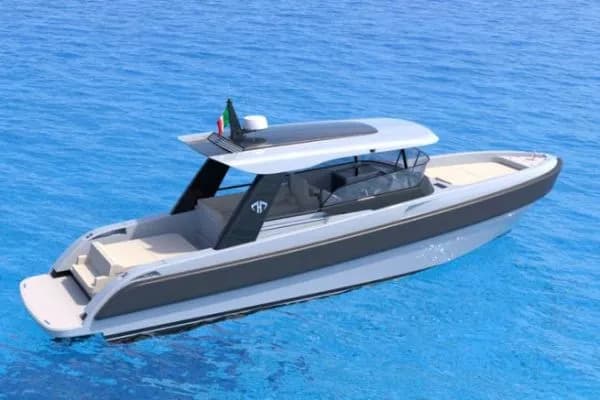
MED Group’s TYKUN H1 integrates four 350‑bar tanks holding a combined 32 kg of hydrogen, a battery bank that drives electric motors, and a fuel cell acting as a range extender — delivering a claimed top speed of 35 knots and an advertised autonomy near 60 nautical miles that depends heavily on cruising profile and refuelling logistics.
How the propulsion package actually works
The TYKUN H1 adopts a battery-first hybrid architecture: the main thrust comes from the battery bank powering electric motors, while a hydrogen fuel cell recharges batteries in operation. In practice this means three usable modes for operators and charter planners:
- Battery-only for short, silent hops (harbor transfers, short scenic trips).
- Battery + fuel cell for extended cruising where the fuel cell maintains battery state-of-charge.
- Shore power recharge as fallback when hydrogen refuelling is unavailable.
Performance vs. practical autonomy
Advertised numbers — 35 knots top speed and ~60 nm range — require context. Cruising at a conservative 20 knots extends practical reach, but sustained 20‑knot runs all day will rapidly consume hydrogen and battery reserves, narrowing margins for detours or waiting at anchor. For charter operators and rentals, that translates to precise trip planning and conservative provisioning.
📚 You may also like
Quick facts table: expected performance envelope
| Parameter | Claimed / Typical |
|---|---|
| Length overall | 12 m |
| Hydrogen storage | 32 kg @ 350 bar (4 tanks) |
| Top speed | 35 knots |
| Typical cruising | ~20 knots |
| Advertised autonomy | ~60 nautical miles (profile-dependent) |
| Refuelling infrastructure | NatPower H network: ~40 points (project partner) |
Logistics and refuelling network implications
The operational reality for captains, charter companies, and rental platforms is governed by the hydrogen infrastructure. With NatPower H cited as a project partner and currently around forty refuelling points, operators must map available stations into route planning. Where hydrogen stations are absent, the H1’s reliance on shore power for recharging becomes the practical alternative — but that requires compatible marina infrastructure and time allocation for recharge.
For boat rental businesses and day‑charter operators, this introduces two planning variables: (1) access to hydrogen refuelling points along popular routes and (2) berth facilities with suitable shore power capacity. Both are supply‑chain and marinas‑infrastructure issues that will evolve as hydrogen adoption grows.
Integration, architecture and safety
MED Group and designer Tommaso Spadolini focused on concealing hydrogen hardware within an aluminum hull without compromising usable volume or the clean lines expected of a dayboat. The deck is raised 10 cm to accommodate natural and forced ventilation; air intakes are routed into the T‑top uprights. The TYKUN H1 uses Type Approved components — hydrogen tanks, batteries, and fuel cell modules — and is designed for assisted or natural ventilation to meet marine classification safety expectations.
- Ventilation strategy: raised deck, T‑top intakes, forced vents.
- Fill time: manufacturer claims under three minutes for hydrogen top‑up.
- Standards: Type Approved equipment validated by classification bodies.
Customization, use cases and fit for charter
The H1’s aluminum construction supports modularity and customization, making it possible to spec boats as yacht tenders, chaseboats for larger yachts, or stand‑alone dayboats for premium charters. For owners and charter companies considering hydrogen units, the decision matrix includes:
- Trip profiles (short scenic vs. long day runs).
- Availability of hydrogen infrastructure and shore power.
- Client expectations: noise levels, instantaneous torque, eco credentials.
- Cost of ownership and operational logistics vs. diesel or pure electric alternatives.
Production timeline and market readiness
MED Group expects a first prototype in late 2026, with construction around eight to ten months. If series production begins, lead times could settle at six to eight months per unit depending on customization. For charter operators and marinas, that timeline signals a gradual integration of hydrogen dayboats into fleets rather than an immediate market shift.
Operational and commercial considerations for rentals
From the standpoint of boat rental platforms, the H1 presents both an opportunity and a set of constraints. Advantages include quieter operation, strong acceleration, and an eco‑friendly marketing angle attractive to environmentally conscious guests. Constraints include limited range at high speed, dependence on a developing hydrogen network, and the need for trained staff to manage hydrogen safety and fueling protocols.
Checklist for operators evaluating the TYKUN H1
- Survey local hydrogen refuelling availability and shore power capacity.
- Assess typical charter routes and average speeds to model realistic autonomy.
- Train captains and crew on hydrogen handling and emergency ventilation procedures.
- Update booking descriptions to explain range and refuelling options to clients.
GetBoat always keeps an eye on news related to sailing and seaside vacations, as we truly understand what it means to enjoy great leisure and love the ocean. The platform values freedom, energy, and the ability to choose your own course, placing no limits on a good life and allowing clients to find a vessel that suits their preferences, budget, and taste. By offering transparent listings with make, model, ratings and detailed specs, the service helps customers select the right craft—whether for a quiet coastal cruise or a high‑energy day on the water.
Short forecast: the TYKUN H1 and similar hydrogen dayboats are unlikely to immediately transform global tourism, given the current sparse refuelling network and the conservative timelines for production. However, the development is relevant to coastal operators and charter companies experimenting with low‑emission propulsion. GetBoat aims to stay abreast of these changes and adapt offerings accordingly. If you are planning your next trip to the seaside, consider the convenience and reliability of GetBoat.
Key highlights to remember: the TYKUN H1 blends a battery-first electric setup with a hydrogen fuel cell range extender, trades absolute range at top speed for quieter, cleaner operation, and requires careful logistics planning around hydrogen refuelling and marina shore power. Experiencing a new coastal destination remains multifaceted — learning local culture, nature, the palette of colors, the rhythm of life and unique service elements — and if you are planning your next trip to the sea, you should definitely consider renting a boat (boat rentals, rent a boat, rent a yacht), as each inlet, bay, and lagoon is unique and tells you about the region just as much as the local cuisine, architecture, and language GetBoat.com
In summary, the TYKUN H1 offers an intriguing balance between performance and low‑emission operation for owners and charter operators willing to manage refuelling logistics and adapt routes to realistic autonomy. For the rental market, it represents a premium, eco‑forward option that may appeal to clients seeking quieter, cleaner boating experiences. Platforms like GetBoat.com provide transparent listings and tools to compare yachts, charters, boats and tenders—helpful whether you plan to rent a small dayboat, a superyacht tender, or a sailboat for a weekend at the beach or on a lake. With clear data on make, model, and ratings, and a global reach across marinas and destinations, GetBoat simplifies booking and sale options for boating activities, yachting and fishing trips, and other sea and gulf experiences — Book your next voyage today. Happy sailing.


