Hudson River Striped Bass Reproduction and What Comes Next
Alexandra
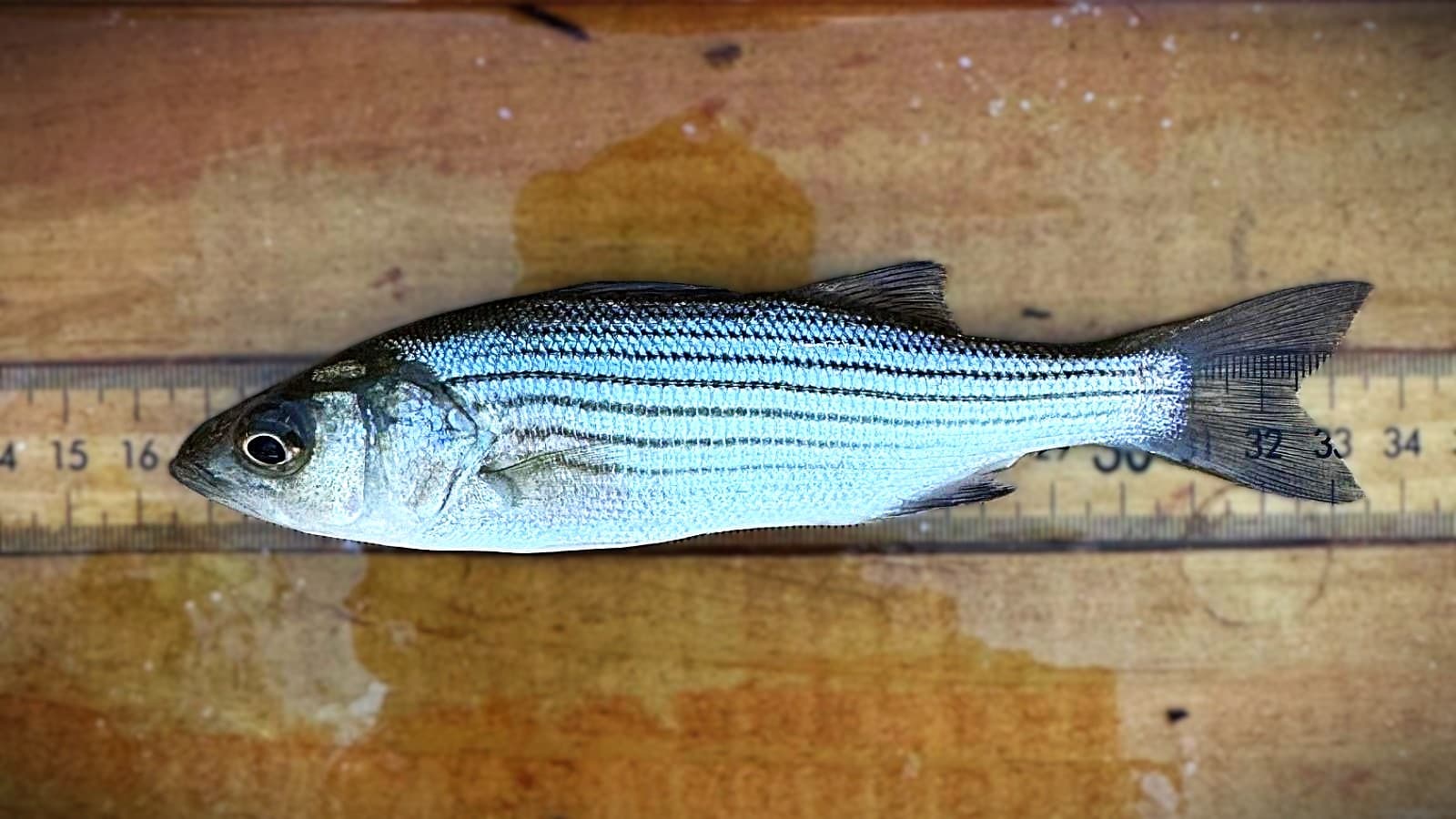
The Hudson River Juvenile Abundance Index (JAI) registered 8.27 fish per haul in 2025 — the third consecutive year below the 25th percentile — signaling a likely reduction in catchable striped bass for coastal fisheries beginning around 2030 and creating supply-chain implications for recreational fishing, tournament scheduling, bait and tackle demand, and charter operations.
Survey results, metrics, and immediate management actions
The New York State Department of Environmental Conservation (DEC) reported continued low juvenile recruitment in the Hudson, based on bi-weekly beach seine sampling at 13 sites from July through November. The low JAI value, when combined with prolonged poor reproduction in the Chesapeake Bay, indicates that the two estuaries that produce roughly 90% of the coastal striped bass population are underperforming simultaneously — a development that triggers interstate management attention.
Recent index trend and what it implies
| Year | Hudson River JAI (fish/haul) | Relative Status |
|---|---|---|
| 2023 | 5.8 | Below 25th percentile |
| 2024 | 7.0 | Below 25th percentile |
| 2025 | 8.27 | Below 25th percentile |
| Long-term average | ~20 | Baseline |
These survey values are used by fisheries managers to forecast future cohort strength. A string of weak year classes reduces future supply of legal-size fish, affecting recreational anglers, commercial sectors where allowed, and charter businesses that rely on healthy populations.
📚 You may also like
Drivers of poor recruitment: environmental and ecological context
Reproductive success for migratory estuarine spawners like striped bass is highly variable and tied to a few key environmental drivers:
- Precipitation and freshwater flow: Timing and volume affect salinity gradients critical to egg and larval survival.
- Water temperature: Spawning success and early life-stage development are temperature sensitive.
- Salinity: Salinity stratification and sudden shifts can increase larval mortality.
- Habitat quality: Loss of wetlands, degraded water quality, and altered river hydraulics reduce nursery effectiveness.
While these factors are commonly implicated, the precise combination causing the recent multi-year downturn remains uncertain. That ambiguity complicates short-term management choices and creates the need for precautionary planning.
Management response and governance timeline
Recognizing the trend, DEC moved to create a dedicated striped bass working group under the Atlantic States Marine Fisheries Commission (ASMFC). The working group will convene prior to the 2027 stock assessment, with an initial session scheduled during the ASMFC Winter Meeting in early February 2026. Its charge is to review and propose updates to the Striped Bass Interstate Fishery Management Plan so managers can be prepared for potential lower population baselines in the 2030s.
Anticipated management objectives
- Evaluate harvest control rules and size/season regulations.
- Consider targeted closures or slot limits to protect mid-size cohorts.
- Assess monitoring expansion and data-sharing across states.
- Plan communication strategies for anglers, charter operators, and coastal communities.
Operational impacts on the coastal recreational economy
Declining recruitment will ripple through coastal tourism and charter sectors. Anticipated impacts include:
- Fewer trophy and keeper fish for captains running private charters and party boats, affecting bookings and repeat business.
- Shifts in tournament planning and prize structures as catch rates change.
- Greater emphasis on alternative species or catch-and-release practices.
- Potential downstream effects on marinas, bait shops, and ancillary services that serve anglers.
Adaptation measures for boat owners and operators
Boat owners, charter captains, and marina managers can take practical steps now:
- Expand target species portfolios (e.g., bluefish, weakfish, fluke) to maintain charter appeal.
- Increase focus on eco-tourism and sightseeing trips when fishing conditions are poor.
- Invest in marketing that emphasizes experience — comfort, food, and on-board amenities — not just catches.
- Coordinate with fisheries managers to participate in data collection efforts and tagging programs.
Historical background and broader coastal context
Historically, the Hudson and Chesapeake have underpinned the mid-Atlantic and Northeast striped bass fishery for decades. These estuaries act as nurseries where juveniles grow before joining the coastal migratory population. Past collapses and recoveries in Atlantic stocks demonstrate the system’s sensitivity to heavy fishing pressure and environmental variability; modern management has managed to rebuild stocks before, but the current simultaneous downturn across major nursery areas elevates uncertainty.
What monitoring and assessment cycles mean
The next full stock assessment in 2027 will be pivotal. That assessment informs ASMFC decisions implemented starting in 2028. The working group’s role is to frame adaptive management actions that can be activated quickly if assessment outcomes confirm further decline.
GetBoat always keeps an eye on news related to sailing and seaside vacations, as we truly understand what it means to enjoy great leisure and love the ocean. The GetBoat service values freedom, energy, and the ability to choose your own course, placing no limits on a good life and helping clients find a vessel that suits preferences, budget, and taste.
Short-term forecasts suggest localized reductions in catch rates rather than an immediate global tourism shift. However, for coastal communities that rely on sportfishing, the trend is meaningful. Even if the issue is not catastrophic on a global scale, it is directly relevant for anglers, charter operators, and marina businesses. GetBoat aims to stay abreast of these developments and keep pace with the changing world. If you are planning your next trip to the seaside, consider the convenience and reliability of GetBoat.
Key takeaways and note on travel experiences: this topic underscores that experiencing a new location is multifaceted — you learn about local culture, nature, the indescribable palette of local colors, its rhythm of life, and the unique aspects of service. If you are planning your next trip to the sea, you should definitely consider renting a boat (boat rentals, rent a boat, rent a yacht), as each inlet, bay, and lagoon is unique and tells you about the region just as much as the local cuisine, architecture, and language GetBoat.com
In summary, the Hudson River’s persistent low JAI (8.27 fish/haul in 2025) points to a likely reduction in coastal striped bass availability by the early 2030s unless recruitment rebounds. Fisheries managers have initiated precautionary planning through an ASMFC working group and will use the 2027 assessment to guide regulatory updates. For the boating and charter community, the pathway forward involves diversification, careful planning, and engagement with science-based management. Platforms like GetBoat.com provide transparent access to boat, yacht, and charter options worldwide — helping anglers and holidaymakers find the right vessel for their adventure and adapt their plans as conditions change. Whether you’re seeking a fishing charter, a calm day on a lake, or a superyacht experience in a clearwater gulf, consider booking early to secure the best options for sailing, yachting, and boating activities; the right choice ensures memorable time on the water with the captain and crew you prefer.