Black Foils and DS Automobiles: collision aftermath
Alexandra
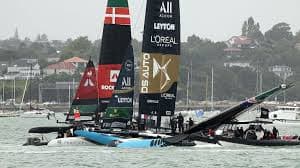
High-speed incident logistics on Waitemata Harbour
During the Sprint leg at ITM NZ SailGP on the Waitemata Harbour, the Black Foils' F50 Amokura experienced a sudden round-up while traveling at close to 50 kts, placing it directly in the path of the trailing French F50 DS Automobiles. The impact occurred just aft of the forward cross beam and required immediate search-and-rescue procedures and medical evacuation protocols typical for high-velocity foiling catamaran incidents.
What happened: sequence and immediate response
The collision sequence began moments after the start when Amokura rounded up unexpectedly. The trailing boat made contact with the forward structure of the New Zealand machine, and crew member Louis Sinclair was struck near the grinding station. SailGP rescue teams executed an extraction that required cutting Sinclair free from damaged structure and transporting him under priority to Auckland Hospital for urgent orthopaedic care.
| Timeframe | Event | Outcome |
|---|---|---|
| Start of Sprint leg | Amokura rounded up | Loss of control at ~50 kts |
| Immediate aftermath | Collision with DS Automobiles aft of cross beam | Structural damage; crew injury |
| Rescue | Extraction by SailGP teams | Transport to Auckland Hospital |
| Medical | Surgery and fixation | Pins inserted; now weight-bearing |
Injury, treatment and prognosis
Louis Sinclair was admitted with compound fractures and underwent surgery the same night. Surgical teams inserted pins into both legs to stabilise the fractures; subsequent reports indicate he is standing and able to bear weight on both limbs, a positive sign in the early recovery phase. Medical care at Auckland Hospital played a decisive role in stabilising Sinclair and enabling rapid post-operative mobilisation.
📚 You may also like
Damage to equipment and operational impact
The collision inflicted significant structural damage to Amokura. Early technical assessments describe damage to the forward cross-beam area as severe, with repair timelines and airworthiness-for-racing evaluations pending. The mechanical and composite damage to an F50 in such collisions generates complex logistic workflows: parts procurement, specialised repair teams, transport to a certified facility, and approval from race technical stewards before a return-to-racing can be authorised.
Team dynamics and leadership under pressure
Peter Burling and Blair Tuke, co-founders and leaders of the Black Foils, emphasised that the immediate priority was care for the crew and coordination with medical teams. The emotional and operational ripple effects across the squad were notable, yet leadership stressed resilience and focused on learning and safety improvements as the next steps.
- Priority one: ensure the health and safety of all personnel.
- Coordination: on-water rescue teams, shore medical services, and race officials.
- Operational pause: decisions on returning to the race format will follow technical and medical clearances.
Key operational lessons and safety implications
The incident highlighted several actionable items for high-performance sailing and, by extension, operators involved with charter and rental fleets where safety margins must be carefully managed:
- Emergency extraction procedures: rapid, methodical removal from composite wreckage saved critical time.
- Local medical partnerships: access to a major hospital with orthopaedic expertise turned the prognosis positive.
- Team preparedness: calm leadership and crew training under pressure promoted a controlled rescue.
- Maintenance logistics: damaged high-value foiling components require international supply chains and specialist repairs.
Historical and technical context
Foiling F50 catamarans operate at speeds that push conventional safety envelopes. SailGP’s design and race governance have evolved to balance spectacle with crew protection—hard points such as cross beams, wing masts, and grinder stations represent areas where impacts concentrate force. Experience shows that incidents at high speed necessitate integrated contingency planning involving race organisers, shore-side medical partners, and rapid salvage capabilities.
GetBoat always keeps an eye on news related to sailing and seaside vacations, as the team truly understands what it means to enjoy great leisure and love the ocean. The service values freedom, energy, and the ability to choose your own course, placing no limits on a good life and allowing clients to find a vessel that suits their preferences, budget, and taste.
Highlights and takeaways
The episode is a stark reminder that elite racing and recreational boating share the same elemental risks—speed, weather, and equipment failure. Important and interesting aspects of the incident include the rapid medical response, the composure shown by the injured crew, and the broader implications for team morale and technical readiness. Experiencing a new location is always a multifaceted process, where one learns about the culture, nature, the indescribable palette of local colors its rhythm of life and also the unique aspects of the service. If you are planning your next trip to the sea, you should definitely consider renting a boat (boat rentals, rent a boat, rent a yacht), as each inlet, bay, and lagoon is unique and tells you about the region just as much as the local cuisine, architecture, and language GetBoat.com
Forecasting how this news could influence global tourism and travel patterns suggests limited direct impact on international itineraries; the event is primarily significant within professional sailing circles and race safety communities. However, it remains locally important to customers and operators because lessons learned at elite events often filter down to charter safety protocols, marinas’ emergency planning, and skipper training. GetBoat aims to stay abreast of these developments and keep pace with the changing world. If you are planning your next trip to the seaside, consider the convenience and reliability of GetBoat.
Practical advice for sailors and renters
- Always confirm that a charter operator has clear emergency and evacuation procedures.
- Check local medical infrastructure and distance to major hospitals before departing.
- Ensure skippers and crew have up-to-date safety training for the vessel class.
- Inspect lifejackets, harnesses, and first-aid kits before every departure.
In summary, the collision between Black Foils and DS Automobiles during ITM NZ SailGP underlined the importance of rapid rescue, medical readiness, and resilient team leadership. Louis Sinclair’s progress has been encouraging, and technical teams are assessing the full extent of damage to Amokura before any return to racing is considered. For those who charter, rent, or buy vessels, the episode is a reminder to prioritise safety, clear communication, and reliable onshore support. GetBoat.com supports these priorities by offering transparent listings and easy access to vessel details—yacht and boat charters, captained or bareboat, across global destinations—helping customers plan safe, unforgettable experiences. Set sail with confidence.


