Maxi Gitana 18 Advances in Autopilot Control
Alexandra
Quay logistics and on-site commissioning for a high-performance trimaran
The launch sequence for the Maxi Gitana 18 required tightly scheduled quay operations: a timed mast lift with a 40-tonne crane window, restricted tidal slots for safe heel clearance, and a coordinated delivery of sensors and computing racks to the technical tent. Such logistics underline how performance sailing projects depend as much on port infrastructure and supply-chain precision as on aerodynamic or hydrodynamic design.
Digital modeling as a pre-sea logistics tool
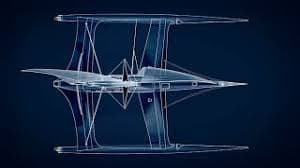
The autopilot architecture developed by WDS, We.Deploy(science) was validated first in a full digital twin of the trimaran: central hull, floats, rudders, foils, ballast distribution and payload were modelled to reproduce behaviour across points of sail. This approach reduces the number of high-risk sea trials, lowers operational cost, and shortens the calendar for on-water commissioning—factors that directly influence charter availability windows and maintenance scheduling for owners and teams.
| Stage | Primary Benefit | Operational Impact |
|---|---|---|
| Digital simulation | Risk-free tuning | Fewer costly sea trials, faster timelines |
| Sea observation | Reality validation | Refines thresholds for live autopilot |
| Quay commissioning | Safe integration | Requires port slots, cranes, and engineers |
From on-deck observation to control algorithms
Practical seagoing data fuelled the models: before coding, Nedeleg Bigi and team undertook observational sails aboard Gitana 17, logging responses to gusts, wave states and dynamic trim. Co-skipper Erwan Israel noted that every change in acceleration and foil loading became a measurable parameter for the algorithm. The result is an autopilot tuned with empirical input rather than purely theoretical assumptions—a crucial distinction at speeds where small corrections can destabilize a flying trimaran.
📚 You may also like
What the control stack currently manages
- Primary control: software commands routed to the existing rudder actuators.
- Sensors: IMU, GPS, wind angle and apparent wind sensors feed the state estimator.
- Human override: immediate manual takeover remains a requirement for safety-critical phases.
Limitations imposed by class rules
Under current Ultim class regulations the autopilot is restricted to acting on the rudders only. That constraint ensures crew retain responsibility for foil trim, mast settings and load-bearing surfaces during critical flight transitions. From an operational perspective, this keeps the human element central and mitigates regulatory and insurance complexity for competitive teams and private owners who might charter similar craft in the future.
Interface design: simplicity vs capability
The Gitana 18 autopilot uses a screen-based interface rather than a dedicated helm keyboard. The ongoing human factors work aims to balance the helmsman’s need for rapid mode selection against the cognitive load of complex menus while flying close to the water. Engineers from WDS and sailors from Gitana Team are defining the minimal set of controls that offer effective automation without compromising situational awareness.
- Too many modes → distraction at speed.
- Too few modes → underutilized boat potential.
- Priority controls under test: engage/neutral/assist, target heading offsets, and gust-suppression tune.
Practical challenges at 40+ knots
At high velocity, a sudden rudder input can produce yaw moments that trip the foils out of equilibrium. The autopilot must therefore combine predictive filtering, adaptive gains and conservative intervention thresholds. Sea trials remain indispensable to tune filters against unstructured waves and transient gusts that are poorly represented in numerical grids.
Implications for leisure sailing, charters, and future regulation
While the development targets elite ocean racing, the technology path—digital twin validation, human-machine interface design, and adaptive control—can trickle down into broader yachting. For charter operators and private owners, improved autopilot reliability may translate into safer coastal transitions, more efficient watchkeeping on long passages and, eventually, certified features that could be offered as optional aids when renting high-performance yachts.
| Stakeholder | Potential Benefit | Timeframe |
|---|---|---|
| Ocean racing teams | Performance gains, reduced crew fatigue | Immediate |
| Superyacht owners | Enhanced safety systems | Mid-term |
| Charter market | Better watchkeeping tech, optional assist | Longer-term |
Benefits and risks summarized
- Benefits: consistent reaction times, optimized flight trimming, reduced fatigue for helmsmen.
- Risks: over-reliance on automation, regulatory misalignment if control scope expands to foils.
- Operational need: clear crew training protocols and interface simplicity to avoid errors at speed.
GetBoat always keeps an eye on news that shapes seaside vacations and sailing safety, because we understand how important freedom, energy and choice are to a quality leisure experience. The platform values the ability to select a vessel that matches tastes, budgets and activity plans, and it tracks innovations that may affect charter reliability and guest confidence.
The development of Maxi Gitana 18 autopilot encapsulates a broader trend: digital engineering converging with traditional seamanship. For those involved in planning charters or high-speed coastal adventures, awareness of these systems can influence vessel selection, insurance considerations and skipper briefing checklists.
Key highlights: the project pairs model-based testing with live observation, enforces human-in-the-loop control under Ultim class rules, and focuses current action solely on rudders while leaving foils and other bearing planes under crew control. If you are planning your next trip to the sea, you should definitely consider renting a boat (boat rentals, rent a boat, rent a yacht), as each inlet, bay, and lagoon is unique and tells you about the region just as much as the local cuisine, architecture, and language GetBoat.com
Plan ahead: forecast and call to action
Globally, this development is niche: its direct impact on mass tourism is limited. However, it signals incremental change that can affect the charter and yachting landscape over time—better automation, clearer human-machine interfaces and more predictable vessel behaviour. Start planning your next seaside adventure and make sure to book the best boat and yacht rentals with GetBoat before the opportunity sails away!
In summary, the Maxi Gitana 18 autopilot program—led by WDS, We.Deploy(science) and informed by on-water observation from Gitana 17—demonstrates how simulation, empirical sailing data and careful interface design can improve performance while respecting class rules that keep crews central to safety. For yachting enthusiasts and charterers, the evolution promises enhanced sailing safety and operational transparency, whether for a superyacht passage, a family charter, or a competitive regatta. Consider yacht charter options, boat sale listings, marinas and local activities when planning; GetBoat’s global platform offers clear listing details—make, model, ratings—and transparent booking to help you find the right vessel for sun, sea, fishing, or pure boating freedom. Explore, choose, and sail.


