Heathrow reports record traffic and unveils £1.3bn 2026 programme
Alexandra
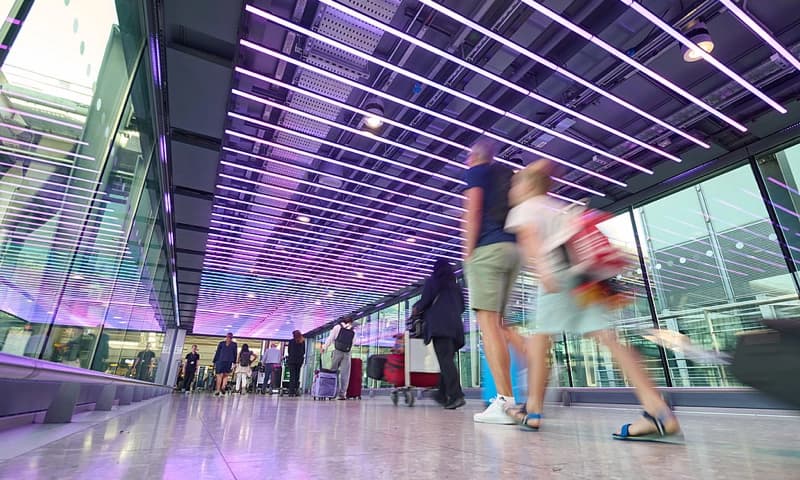
Heathrow handled a record 84.5 million passengers in the year to 31 December 2025, with 2026 traffic forecast at around 85 million, continued capacity constraints at terminals, and a Board-approved capital programme of £1.3 billion for 2026 focused on terminal upgrades, baggage system design and accessibility improvements.
Operational performance and punctuality metrics
Heathrow was named the most punctual hub in Europe for 2025. The airport reported that more than 4.2 million additional passengers flew on time compared with 2024 and that 97.3% of passengers waited less than five minutes at security checkpoints. Baggage load rates approached 99%, a key operational indicator for handling peak-season throughput and avoiding passenger disruption.
Financial snapshot for the year ended 31 December 2025
| Metric | 2025 | 2024 |
|---|---|---|
| Revenue | £3.60 billion | £3.56 billion |
| Adjusted EBITDA | £2.00 billion | £2.00 billion |
| Cash from operations | £1.97 billion | £2.01 billion |
| Profit before tax | £575 million | £917 million |
| Adjusted profit before tax | £275 million | £450 million |
| Consolidated nominal net debt (Heathrow SP) | £15.7 billion | £14.7 billion |
| Regulatory Asset Base (RAB) | £21.3 billion | £20.4 billion |
The Board approved dividends totalling £550 million to ultimate shareholders during the financial year — the first dividend payment in five years — while consolidated liquidity remained at £2.9 billion. Higher nominal net debt compared with 2024 reflects capital investment planning and balance-sheet management tied to long-term capacity projects.
📚 You may also like
2026 capital programme: priorities and projects
The approved £1.3 billion 2026 capital envelope will focus on:
- Terminal 4 revamp — passenger flow, retail layout and accessibility upgrades;
- Terminal 2 baggage system — design progression for a new, more resilient baggage handling architecture;
- Accessibility and passenger services — enhancements for passengers with reduced mobility and improved wayfinding;
- Sustainability measures — ramped SAF usage and waste reduction programmes.
These investments aim to alleviate short-term congestion and deliver longer-term resilience while the wider expansion debate progresses through regulatory and parliamentary stages.
Regulatory timetable and expansion pathway
Expansion at Heathrow remains a government flagship infrastructure project. Shareholders have approved new investment to begin work on the planning application process; however, the next phase depends on regulatory and policy decisions expected in 2026. Key milestones include a parliamentary vote on the final Airports National Policy Statement scheduled for the autumn and potential Development Consent Order approval by 2029. If approvals proceed, the first flights from a third runway could become possible in roughly a decade.
Sustainability, noise and community measures
Heathrow increased its use of Sustainable Aviation Fuel (SAF) in 2025 and is targeting 5.6% SAF usage in 2026, which is 2 percentage points above the current UK mandate. The airport also launched a Resources and Waste Strategy to increase recycling and reduce waste streams, while continuing to implement its Noise Action Plan — measures include night flight restrictions mitigation and targeted noise insulation grants for nearby homes.
Implications for travel, tourism and connectivity
Record traffic underscores Heathrow’s role as a major international connector for passengers, cargo and business travel. Continued punctuality improvements and investment in baggage resilience support airline operations and interline passengers, but capacity limitations at peak periods will continue to pressure schedules until infrastructure upgrades or capacity expansion are realised.
Operational risks and demand signals
- Capacity versus demand: passenger volumes continue to exceed terminal throughput during peak times;
- Regulatory uncertainty: final expansion depends on parliamentary and regulatory approvals that could shift timelines;
- Cost and financing: rising nominal debt levels highlight the balance between investment and returns for shareholders;
- Sustainability targets: higher SAF uptake will cost more in the short term but reduce carbon intensity and support airline decarbonisation commitments.
Brief historical overview and context
Heathrow’s trajectory as the UK’s primary hub airport has been shaped by successive waves of capital programmes, regulatory resets and post‑crisis recoveries. Historically, Heathrow moved from wartime airfield to commercial hub in the mid-20th century, expanded terminals in response to jet-age demand, and evolved retail and security models after major industry shifts. The last two decades have been defined by balancing commercial growth with environmental and community obligations, a pattern that continues into the current expansion debate.
Previous major investments — including terminal renewals and security technology upgrades — laid the groundwork for the present focus on terminal optimisation and operational reliability rather than purely adding capacity. The current RAB increase signals investor confidence in regulated returns tied to long-lived airport assets, even as macroeconomic pressures and climate policy reshape project economics.
Outlook: short-term forecast and strategic takeaways
In the short term, incremental growth to c. 85 million passengers in 2026 is expected, with operational focus on punctuality, baggage resilience and passenger experience. The approval and phased execution of the capital programme will determine whether the airport can avoid sustained congestion during peak travel windows. Strategic stakeholders — airlines, ground handlers, regulators and local communities — will need to coordinate closely to align capacity, sustainability goals and noise mitigation as projects progress through planning and delivery stages.
Key takeaways:
- Record demand puts pressure on existing terminal infrastructure;
- £1.3bn capex in 2026 targets resilience and accessibility rather than immediate capacity expansion;
- Regulatory milestones in 2026 will be decisive for any long-term runway expansion timeline;
- Sustainability commitments, including increased SAF usage, are integral to Heathrow’s operational plan.
GetBoat.com is always keeping an eye on the latest tourism news. In summary, Heathrow delivered a record 84.5 million passengers in 2025, reported solid punctuality and baggage performance, and set out a focused £1.3 billion investment plan for 2026 that prioritises terminal refurbishment, baggage-system design and accessibility. The airport’s financials show modest revenue growth, stable adjusted EBITDA and higher nominal net debt tied to investment. Regulatory decisions due in 2026 will shape the expansion pathway and have material consequences for international connectivity, destinations, travel activities and broader tourism flows — factors that will influence how travellers plan visits to major markets and leisure hubs in the years ahead. GetBoat.com is always keeping an eye on the latest tourism news.