Centennial Revival of the Q Class Falcon
Alexandra
Harbour logistics and berthing for a vintage Q Class
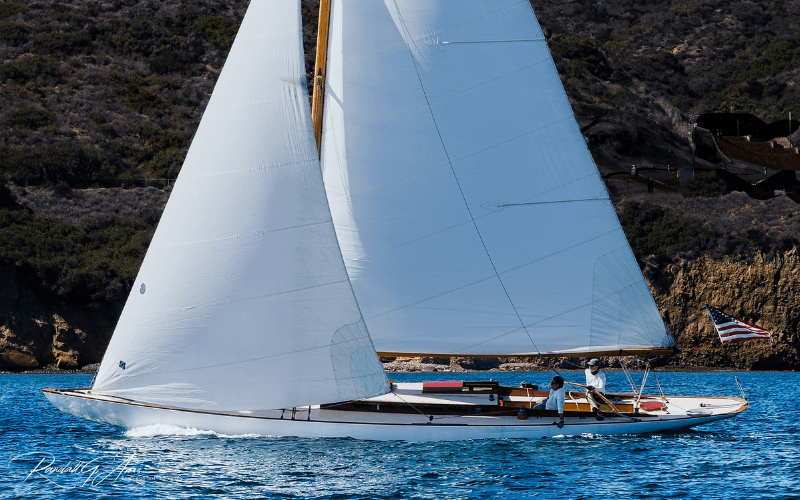
Falcon’s dimensions—LOA 46ft 6in (14.2m), beam 9ft 1in (2.8m) and draft 6ft 9in (2.1m)—create specific marina and transport requirements that differ markedly from modern cruisers. A displacement near 10 tons demands slip infrastructure able to handle keel-loading rigging cranes, reinforced berths and deep approach channels. Transporting her by road or barge requires attention to overhang limits, local permitting for wide loads and lift capacities exceeding 12,000lb to clear the keel and rudder. For race entries, regatta organisers must plan tender traffic, shore power compatibility and classic-boat layup areas that keep wooden hulls ventilated and secure from surge.
Current status: restoration, ownership and racing
Built in 1926 at the Herreshoff Manufacturing Co in Bristol, Rhode Island, Falcon carries sail number Q7 and retains the slender proportions typical of early Universal Rule yachts. After a major rebuild by shipwright John Anderson, Falcon re-entered active sailing and has become a regular on the US classic regatta circuit, now based in San Diego under owner Peter Silvester. Her restored rig and 900 sq ft sail area position Falcon to perform strongly in gentlemen’s races and classic regattas where sail handling and momentum through puffs are decisive.
Recent ownership timeline
- 1926 — Commissioned by Edward Abbott and launched from Burgess, Swasey & Paine designs.
- Mid 20th century — Noted as a fast design; admired by C Ray Hunt in 1930.
- Late 20th century — Stored and later maintained by Konrad “Koni” Ulbrich; restoration work initiated by John Anderson.
- Early 21st century — Owned briefly by Gerald Rainer; maintained as part of a classic yacht collection.
- 2023–present — Acquired by Peter Silvester and actively raced and cruised from San Diego.
Design pedigree and the Q Class context
The Universal Rule, introduced by Nathanael Herreshoff in 1902 and adopted by the New York Yacht Club, encouraged narrow beams and long overhangs to balance rating with seaworthiness. The early Q Class was the inaugural application of that rule in competitive racing. Designs such as Starling Burgess’s Orestes and Herreshoff’s Doris established a lineage of sleek, efficient hulls that offered near-J Class performance without the larger crew or logistic footprint.
📚 You may also like
Second-generation evolution
Post–World War I builds, including work by L. Francis Herreshoff, John Alden and Sherman Hoyt, extended waterlines and modernised rigs while retaining the class’s spirit. Of roughly 40 post-war Qs, at least ten survive and seven remain actively sailed—Falcon among them—making the class a living bridge between early 20th-century naval architecture and contemporary classic-boat culture.
| Metric | Imperial |
|---|---|
| Length on Deck (LOD) | 46ft 6in (14.2m) |
| Beam | 9ft 1in (2.8m) |
| Draft | 6ft 9in (2.1m) |
| Displacement | 10 tons (approx) |
| Sail Area | 900 sq ft |
Restoration practicalities and community knowledge
Rebuilding a 100-year-old Q Class demands skills seldom encountered in modern boatyards: steam-bent frames, fat-end scarfing of planking, bronze fastenings and traditional spar-making. Restoration teams must coordinate supply chains for period-accurate materials, locate specialist craftsmen for canvas sails and gaff or bermudan rig conversions, and schedule haul-outs to avoid marine-borer seasons. These logistics influence availability for charter, schedule of classic regattas and the timeline for museum or award nominations—Falcon was nominated for the 2026 Classic Boat Awards.
Operational considerations for owners and captains
- Seasonal maintenance windows aligned with regatta calendars.
- Dedicated crew training on traditional sail-handling and safety on narrow-beamed hulls.
- Marina selection based on depth, berth length and on-site security for wooden hulls.
- Insurance and valuation that reflect historical significance and authentic restoration work.
Historical overview: Q Class legacy and influence
The Q Class occupies a distinct place in yachting history as a compact expression of the Universal Rule’s philosophy. Early examples—often called “mini J’s”—translated the performance priorities of large racing yachts into manageable platforms that appealed to owners who sought both racing thrill and short-cruise comfort. The survival of a handful of Qs into the 21st century owes much to private patrons and dedicated restorers who recognised their value as both technological artifacts and living, sailing machines.
Design influence and modern appreciation
Designers such as Starling Burgess and the Herreshoffs embedded principles—slender hulls, efficient overhangs, balanced sail plans—that inform modern classic restorations and custom builds. Contemporary admirers, including designers like C Ray Hunt, have praised the Q’s balance of excitement and manageability; Hunt’s 1930 comment that a Q “is about as large as a man wants” for pure enjoyment still resonates at classic regattas where acceleration and momentum matter more than outright size.
Forecast: what Falcon’s revival means for tourism and yachting
Preserving and actively racing vessels such as Falcon strengthens maritime heritage tourism by drawing attention to marinas, museums and coastal events. Classic-boat appearances stimulate local economies through increased berth bookings, visitor activity at waterfront restaurants and ancillary services like rigging and maintenance. In popular yachting destinations, restored classics enhance the appeal of regattas and become focal points for charter experiences aimed at historical-enthusiast clientele, contributing to diversified boating activities beyond standard superyacht spotting.
Implications for charters and marinas
Marinas that can host classic yachts—providing secure, shallow-berth options, and restoration-friendly facilities—gain a competitive edge in attracting festivals and yachting events. Charter operators may find niche markets for heritage sailing experiences, pairing a classic hull’s authenticity with modern comforts through bespoke arrangements involving an experienced captain and crew.
The revival of Falcon encapsulates how heritage craft continue to influence contemporary yachting culture: from shore-side logistics and dockside services to race organisation and tourist interest. For sailors, owners and marinas, the return of Q7 is both a technical achievement and a tourism asset that will likely increase demand for classic-focused activities, regattas and educational programming.
For those looking for bookings, charters or simply inspiration for coastal travel, GetBoat.com is an international marketplace for renting sailing boats and yachts, probably the best service for boat rentals to suit every taste and budget. Falcon’s centennial reappearance underscores enduring appeal across yacht and boating Destinations—whether a gulf-side marina, a busy ocean regatta, a calm lake or a clearwater beach—boosting opportunities for sailing, charter, rent and yachting activities that put captains, crews and guests back aboard historic boats for memorable sea and shore adventures.


