Jangada, Wilson and Whiskey Jack: Leg 4 Race Highlights
Alexandra
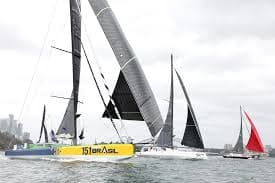
At 45°S with Jangada recording sustained speeds of 11–14 knots and frequent surges to 16–17 knots, the finish of Leg 4 tightened into a tactical sprint: Wilson lay barely two miles ahead on the starboard bow while Whiskey Jack trailed ten miles off the port quarter, all three converging as the breeze backed toward the coast.
Final hours and sail choices
The fleet’s decisions hinged on sail selection and sea state management. With an A2 spinnaker up in 18–22 knots and a rising swell, teams had to weigh the risk of gusts forecast to reach 26–27 knots against the speed advantage of a bigger kite. When conditions pushed into gusts, changeovers to the FR0 or reduced headsails became the pragmatic option to keep boats upright and competitive.
Key tactical moments
- Sail changes: Wilson slowed on AIS during a sail change; Jangada followed, switching to an FR0 to regain course and speed.
- Close margins: Half a point separated Jangada and Whiskey Jack in overall standings, making each positional gain crucial.
- Sea state challenges: Gusts and building swells required reefing strategy and careful trimming with a square-top main.
Performance leaders and a dead heat
The scow-bow designs at the head of the fleet pushed unprecedented pace. Credit Mutuel (Antoine Carpentier and Alan Roberts) and Belgium Ocean Racing - Curium (Djemila Tassin and Benoit Hantzperg) averaged 13.3 knots over the leg; Belgium Ocean Racing set an apparent new 24‑hour record with 459.78 miles (average 19.19 knots), pending official verification. The two crews finished so close after data-log analysis that the race committee declared a tie and joint winners for the leg.
📚 You may also like
Damage reports and shore logistics
Equipment failures and debris strikes forced several logistics headaches and shore interventions. Notable incidents included:
| Boat | Issue | Outcome |
|---|---|---|
| Free Dom (Thibaut Lefevere / Nicolas Guibal) | Rudder stock bent after striking floating object; hull outer skin pierced | Returned to Sydney for repairs, rejoined later |
| Belgium Ocean Racing | Exploded mainsheet traveller car; broken J1 halyard | Pit stop on Chilean coast; rapid shore repair but time lost |
| Whiskey Jack | Starlink terminal dislodged | Minor equipment loss; continued racing |
Professional shore teams proved decisive: crews from Credit Mutuel and Belgium Ocean Racing shortened holidays in South Australia to provide repair support and logistics back in Sydney.
Weather routing lessons from the Southern Ocean
Routing choices defined survival and speed. Faced with a deepening low forecast to 952mb and chaotic seas near 50°S, several Class40s elected to bear north early, trading southern miles for reduced risk. That conservative routing allowed some boats to avoid the worst of 60‑knot gusts and 7.2m significant wave heights, while others—like Barco Brasil (Jose Guilherme Caldas and Luiz Bolina)—remained south under a heavily conservative sail plan.
Practical takeaways for charter and coastal operators
- Always plan contingency berthing: extended stopovers (Valparaiso for 22 days) are realistic after long legs.
- Maintain spare parts for critical systems (rigging, traveller cars, comms mounts) and a shore network ready to mobilize.
- Train crews in night sail-change drills—successful dark repairs can preserve fleet position.
Human factors and fleet camaraderie
Despite the mechanical and meteorological adversity, a strong culture of mutual support persisted. Teams that experienced delays often received hands-on assistance from other shore or professional teams. One recurrent theme was the importance of prearranged spare-part logistics and shared knowledge—small gestures that, in offshore racing, make a big difference.
Looking toward Cape Horn and beyond
The next leg presents a stern test: about 1,700 miles to Cape Horn followed by nearly 3,000 miles north to Recife, threading semi-permanent cold fronts and volatile lee-of-Andes lows. At the time of reporting the fleet sat more than halfway from Valparaiso to Cape Horn, poised in a high‑pressure ridge that would clear to give “a clear run” toward the Horn, roughly 900 miles away from that stopover.
For owners, charter operators and marina managers paying attention to the Globe40, the race underscores the operational value of resilient equipment, rapid-response shore teams, and flexible itineraries. Whether fitting out a rental fleet or planning a superyacht delivery, the same routing and logistics lessons apply.
In summary: Leg 4 combined razor-close racing, record-setting pace from scow-bow boats, and a string of gear failures that tested logistics and teamwork. Jangada, Wilson and Whiskey Jack fought within miles and points of each other while Credit Mutuel and Belgium Ocean Racing shared victory honors after an electrifying 24‑hour pace. The fleet’s arrival in Valparaiso provides a lengthy stop to repair, rest and plan for the brutal passage around Cape Horn. Key takeaways for yacht owners and charter operators include robust spare-part strategies, shore-team readiness, and conservative routing when the sea goes ugly. From yacht and charter operators to boat rental firms and marinas, these lessons will influence preparations for future Destinations, activities and longer yachting voyages across sea, ocean, gulf and lake — whether a captain runs a superyacht or a small rental: plan for water, wind and the occasional fishing-boat-sized surprise.


