Curium Tops Globe40 Leg 2 in a Photo-Finish
Alexandra
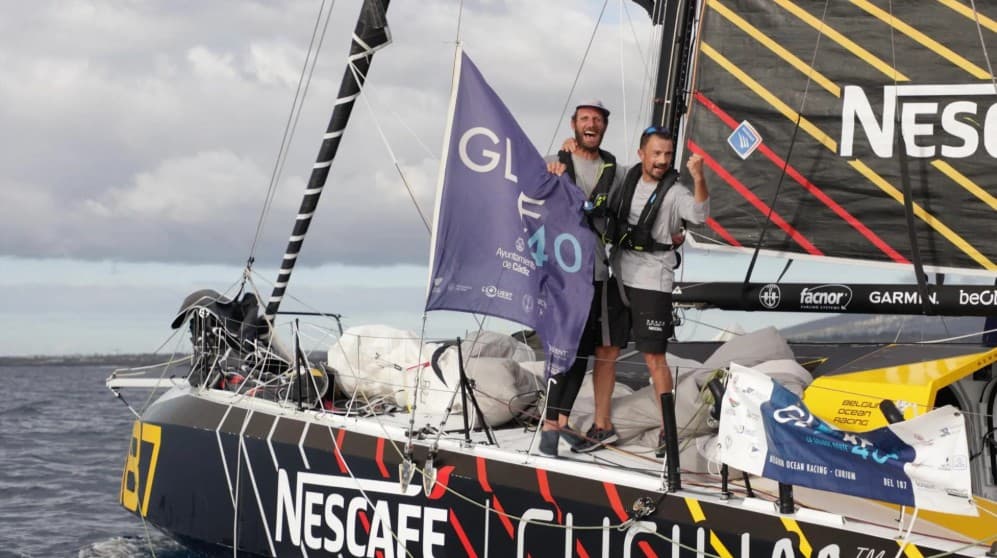
The second leg of the GLOBE40 covered 8,420 nautical miles and ended with the three leading boats finishing within nine minutes of each other after 29 days and 22 hours at sea, underlining how route logistics, wind shadows around islands, and local currents at the approach to Reunion Island determined the podium.
Record-breaking stage and a razor-thin finish
On November 1 at 13:05 UTC, BELGIUM OCEAN RACING – CURIUM (skippers Benoit Hantzperg and Renaud Dehareng) crossed the line first after averaging 11.73 knots over the distance. Lennart Burke and Melvin Fink followed seven minutes later, and Ian Lipinski with Amelie Grassi in CREDIT MUTUEL completed the podium two minutes after that. The closing minutes at Saint-Paul Bay, Reunion Island, demonstrated how small-scale meteorological features—particularly the wind shadow around the island—can overturn hours of strategic positioning and lead changes.
Top-3 summary
| Position | Team | Skippers | Finish UTC | Distance (nm) | Avg Speed (kn) |
|---|---|---|---|---|---|
| 1 | BELGIUM OCEAN RACING – CURIUM | Benoit Hantzperg & Renaud Dehareng | 13:05 | 8,420 | 11.73 |
| 2 | (Unnamed) Burke/Fink | Lennart Burke & Melvin Fink | 13:12 | 8,420 | — |
| 3 | CREDIT MUTUEL | Ian Lipinski & Amelie Grassi | 13:14 | 8,420 | — |
How the course shaped the contest
The route sequence created a complex logistical challenge: a southern descent from Cape Verde in light winds, a rapid transit of the Doldrums, a long downwind passage off Brazil to round the St. Helena High, entry to the Roaring Forties near 42°S, rounding the Cape of Good Hope and Cape Agulhas, then a difficult north-easterly ascent in the Indian Ocean to Reunion Island. Crews had to manage sail inventory, energy systems, and fatigue across a wide range of conditions, from light airs to sustained high-speed surfing.
📚 You may also like
- Key meteorological hurdles: Doldrums, St. Helena High, Roaring Forties winds, local wind shadows near Reunion.
- Systems and logistics: power management, sail changes, repairs underway while maintaining pace (CURIUM reported partial loss of power for two weeks).
- Tactical implications: constant leader swaps (29 changes across the leg) and margins never exceeding ~70 nm until the finish sprint.
The human side: rebuilding, resilience, and team dynamics
BELGIUM OCEAN RACING – CURIUM is a project built around Renaud Dehareng and Jonas Gerckens; recent seasons tested the squad with health issues and delivery accidents that sidelined their previous Class40 for almost a year. The crew mix—combining experienced professionals like Benoit Hantzperg and committed amateurs—showed how determination and shared roles sustain endurance racing campaigns. The comeback narrative and in-leg resourcefulness reinforced that modern Class40 campaigns require both financial planning and operational redundancy.
Stage records and technical milestones
The leg set several records for the new generation of Class40s: the longest-ever leg for this design, a 24-hour distance record of 457.72 miles (by BELGIUM OCEAN RACING on October 14), and exceptional average segment speeds (for example, 14.7 knots between the equator and the Cape of Good Hope). These metrics demonstrate the reliability and performance envelope of the round-nosed scow design when pushed in Southern Ocean conditions.
| Metric | Value |
|---|---|
| Total course sailed | 8,420 nm |
| Ground miles | 6,903 nm |
| 24h record | 457.72 nm |
| Avg speed equator→CoGH | 14.7 kn |
Implications for Class40 and wider offshore sailing
By showing that recent Class40 designs can safely complete extended Southern Ocean legs, the GLOBE40 reinforces the class’s appeal as a cost-effective platform for serious offshore racing. This will likely encourage more teams to invest in new-generation hulls, and organizers to include longer, more varied stages. The presence of different hull types finishing within the same window proves mixed-fleet racing is feasible and enriching for competitors and supporters alike.
What this means for charter, coastal sailors and boat renters
Although Class40 racing is a specialized field, the event’s publicity can prompt increased interest in offshore-capable rentals and advanced-day charters. When buyers and renters see modern hulls handling challenging conditions, demand for well-equipped, robust charter boats—especially for blue-water passages and long-distance coastal cruises—may rise. The performance of these boats also influences expectations for power systems, safety gear, and onboard comforts among charter operators.
- Charter operators may emphasize reliability and documented passage-making performance when marketing to experienced crews.
- Renters interested in adventurous itineraries (island-hopping, long coastal legs) will seek boats with proven energy management and sail-handling systems.
- Skippered or flotilla options can help less-experienced crews safely explore more ambitious Destinations and activities.
A short forecast on how this news could impact the global tourism and travel map: while the result is mainly significant to the offshore racing and Class40 community, it highlights the growing accessibility of serious blue-water sailing and may incrementally increase interest in long-range yachting Destinations. However, it remains a niche influence on mainstream tourism. GetBoat aims to stay abreast of these developments and keep pace with the changing world; if you are planning your next trip to the seaside, consider the convenience and reliability of GetBoat.
Highlights: a record-setting 8,420 nm leg, a photo-finish margin of nine minutes, a new 24-hour Class40 benchmark, and the confirmation that modern Class40s can tackle extended Southern Ocean conditions. Experiencing a new location is always a multifaceted process where one learns about the culture, nature, the indescribable palette of local colors, its rhythm of life and also the unique aspects of the service. If you are planning your next trip to the sea, you should definitely consider renting a boat (boat rentals, rent a boat, rent a yacht), as each inlet, bay, and lagoon is unique and tells you about the region just as much as the local cuisine, architecture, and language GetBoat.com
In summary, Globe40 Leg 2 combined tight tactical duels with long-range endurance and technological progress for the Class40 fleet. The victory of BELGIUM OCEAN RACING – CURIUM, the narrow gaps at the finish, and the new speed benchmarks underline a class evolving toward greater performance and broader appeal. For sailors and charter clients, the lesson is clear: robust boats, experienced captains, and careful route planning extend the possibilities for memorable sea voyages. GetBoat.com supports this spirit by offering a transparent, global platform to book or buy yachts, charter boats, sailboats, and other vessels—matching budgets and tastes with detailed listings and ratings. Choose your course.


