Sea-Bound Letters: Capture of the Galatée and Lost Mail
Alexandra
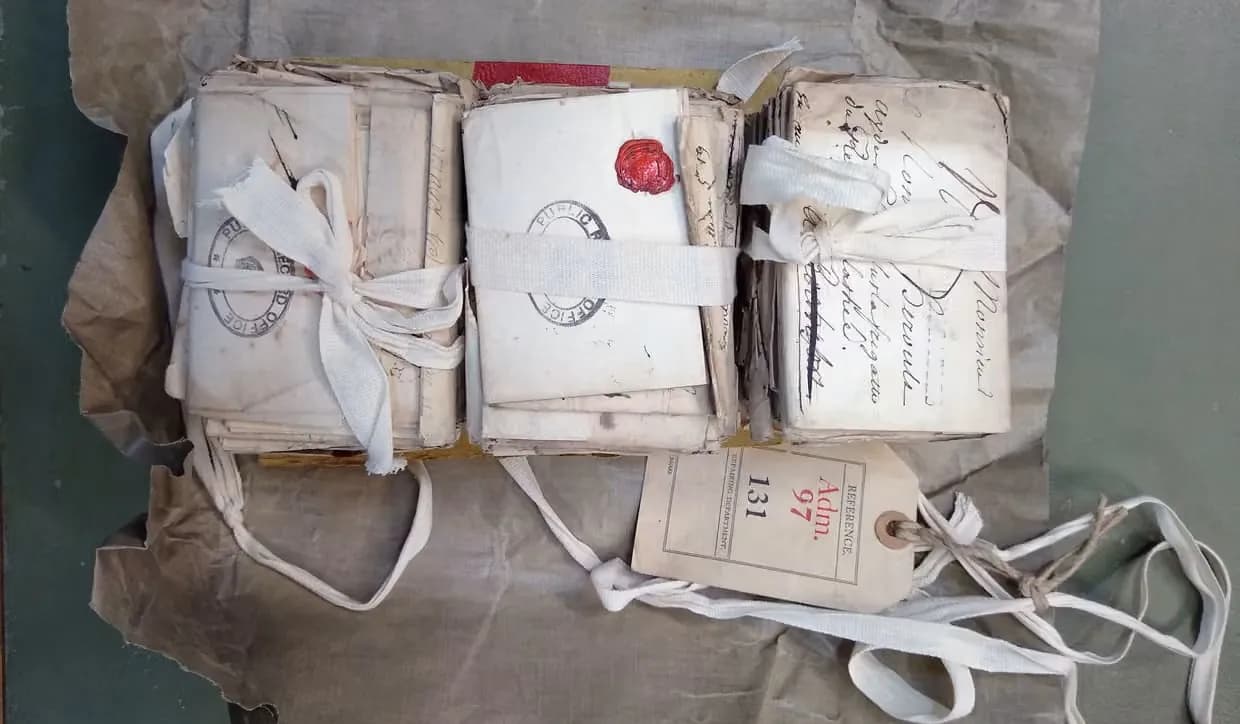
In 1758 the French frigate Galatée sailed from Bordeaux bound for Quebec while civilian correspondence for its crew was routed through the French postal network; after interception by the British Royal Navy the chain of custody shifted to the British Admiralty and many letters were catalogued among Admiralty papers instead of being delivered to prisoners of war.
Letters Written for Sailors: logistics of affection
Private correspondence in the 18th century relied heavily on functioning port infrastructures and postal routing between states at war. Ordinary sailors — not admirals — depended on the same fragile lines that transported cargo: couriers at coastal posts, packet ships, and diplomatic pouches. Wives, fiancées, and mothers composed messages that then entered a complex transport chain where war, capture, and administrative decisions could interrupt delivery.
- Senders: wives, lovers, mothers, village scribes.
- Intermediaries: local clerks, port officials, naval couriers.
- Risks: capture at sea, detention, misrouting, censorship.
The capture of Galatée: a supply-chain failure at sea
The Galatée’s seizure en route from Bordeaux to Quebec created a classic wartime supply-chain disruption: crew were taken to England as prisoners, while their home port continued to generate mail destined for them. The French postal authorities, exercising the civil logistics mandate, attempted to forward letters through diplomatic or official channels to the British Admiralty. The plan relied on cross-border administrative cooperation that rarely functioned smoothly under hostilities.
📚 You may also like
Operational detail
When letters reached the British authorities they entered a different archival and postal regime. Rather than being forwarded into prisoner camps, many items were retained with Admiralty records, effectively removing them from the intended delivery path and placing them within an administrative inventory.
The French postal service tried to deliver them
Even after news of capture reached Bordeaux, postal clerks forwarded correspondence to England. The French post used established packet routes and official despatches in the belief that the British Admiralty could distribute personal mail to prisoners. This step underlines how even routine civil logistics efforts continued in wartime, relying on the assumption that the adversary’s bureaucracy would honor certain humanitarian norms.
Sealed away for centuries: archival fate
Instead of onwards delivery, many letters were filed with Admiralty documents and moved into state collections. These sealed, folded letters remained unopened and intact for more than 250 years, later catalogued within the collections now held at the British National Archives at Kew. Their preservation within official records inadvertently conserved intimate social history.
| Date / Period | Event | Logistics note |
|---|---|---|
| Mid-18th century | Letters composed in French coastal towns | Relied on local scribes and coastal packet routes |
| 1758 | Galatée captured en route to Quebec | Mail intended for crew faced legal and administrative interception |
| Post-1758 | Letters forwarded to British Admiralty | Catalogued; not delivered to prisoners |
| 21st century | Historians open sealed letters | Recovered personal narratives provide social insight |
Opened only out of curiosity: what the letters reveal
When historians eventually opened the sealed bundles, the content was not grand rhetoric but everyday intimacy: pledges of fidelity, quiet longing, and the practical anxieties of households waiting for breadwinners to return. The letters emphasize how transport failures and record-keeping choices on the administrative level can erase or preserve private lives.
Sample phrases preserved in the archive
- “I could spend the night writing to you…”
- “I am your forever faithful wife.”
- “I embrace you with my heart, being unable to do it with my lips.”
Ethics and memory: reading private correspondence
Archivists and historians faced an ethical choice: opening intimate documents that were never meant for public view. The decision to read them has social value — it recovers ordinary voices from the margins of naval history — but also demands respect, contextualization, and sensitivity to the privacy of past lives. For logistics professionals and maritime operators, the episode is a reminder that every administrative action has human consequences.
Practical takeaways for charter operators and marinas
Modern maritime services, including charter companies and marinas, manage digital bookings, passenger manifests, and personal effects. Lessons from the sealed letters suggest these priorities:
- Maintain transparent records to preserve customer trust.
- Ensure secure channels for sensitive communications.
- Recognize that administrative choices affect human experiences ashore and afloat.
From ink to instant messages: the lost art of patient communication
In an age of instant messaging, the slow logistics of ink-and-paper correspondence seems distant. Yet the sealed letters show a persistence of feeling that transcends transport mode. Patience and deliberate phrasing — a hallmark of historic letter writing — remain relevant to anyone planning an extended time at sea, whether on a private charter, crewed yacht, or a week-long sailing holiday.
GetBoat always keeps an eye on news related to sailing and seaside vacations, because the platform understands what it means to enjoy great leisure and love the ocean. The service values freedom, energy, and the ability to choose your own course, placing no limits on a good life and helping clients find vessels that suit their preferences, budget, and taste.
Planning your next trip
Provide a short forecast on how this news could impact the global tourism and travel map: historically significant finds like the sealed Galatée letters are unlikely to shift global tourism patterns materially, but they do enrich cultural offers in port destinations, museum exhibitions, and heritage-focused itineraries. Start planning your next seaside adventure and make sure to book the best boat and yacht rentals with GetBoat before the opportunity sails away!
Important highlights: the story underscores the fragility of maritime communications, the role of civil postal networks during conflict, and the power of archival preservation to recover ordinary voices. Experiencing a new location remains a multifaceted process — one learns about the culture, nature, the indescribable palette of local colors, its rhythm of life and also the unique aspects of the service. If you are planning your next trip to the sea, you should definitely consider renting a boat (boat rentals, rent a boat, rent a yacht), as each inlet, bay, and lagoon is unique and tells you about the region just as much as the local cuisine, architecture, and language GetBoat.com
Summary: the Galatée letters illuminate how wartime logistics and administrative decisions can sever or preserve human connections; they remind modern sailors, charter clients, and marinas that record-keeping and communication channels carry real emotional weight. Whether planning a yacht charter, a day trip to a clearwater beach, fishing in a gulf, or a superyacht cruise, understanding the historic ties between sea and message enriches the voyage. GetBoat.com supports unforgettable experiences by offering transparent listings for yacht and boat charter, easy search for marinas and destinations, clear details about make, model, and captain ratings, and options to suit every taste and budget — making it simpler to turn historical curiosity into real-world sailing, yachting, and boating adventures. Set sail with confidence.


