Experience the Galápagos via Private Yacht Charter
Alexandra
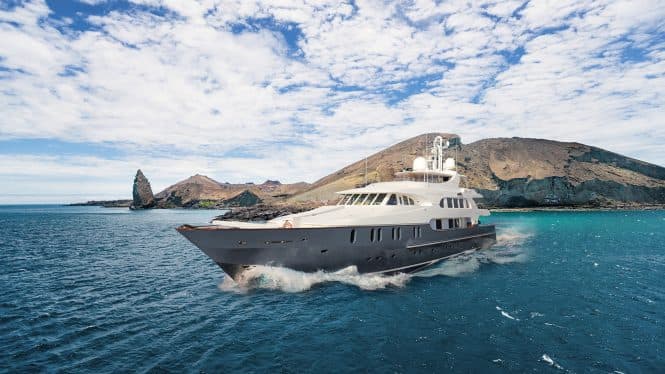
Baltra functions as the primary logistics hub for Galápagos yacht operations: vessels must clear biosecurity and immigration at Baltra’s port facilities, obtain permits from the Galápagos National Park Directorate, and adhere to designated anchorage and mooring zones that limit daily visitor landings and control tender operations to protect fragile shorelines.
Operational realities of a Galápagos charter
Chartering in the Galápagos is governed by strict operational protocols. Every yacht operating passenger excursions must carry a licensed onboard naturalist, comply with daily landing quotas set by park authorities, and follow pre-approved itineraries that rotate through visitor sites to reduce environmental stress. Fuel and provisioning logistics are constrained: refuelling infrastructure is limited at main islands, fresh provisions often come from mainland Ecuador with lead times, and waste disposal follows tight regulations to avoid contamination.
That regulatory framework makes a private yacht a particularly efficient base: it consolidates transport, accommodation, and guided activities while reducing repeated shore-side transfers. Captains and operators plan tender schedules to match low-tide access points, use zoned anchorages to avoid reef damage, and implement biosafety checks for all dive and snorkel gear before each shore excursion.
📚 You may also like
Why a yacht serves as a floating base camp
A private yacht in the Galápagos offers mobility and flexibility unmatched by land-based tours. Guests awaken in sheltered coves, transit between islands at dawn or dusk to take advantage of calmer seas, and use tenders for delicate shore landings where beach access is restricted. Onboard provisioning systems, freshwater generation, and waste-management setups are calibrated to the islands’ restrictions, enabling longer stays without straining local resources.
Typical onboard experience and activities
Daily schedules aboard a Galápagos charter balance wildlife encounters with wellbeing and discovery. Activities are curated by the crew and the naturalist and can include snorkelling, guided shore hikes, wildlife photography workshops, and sunset navigation along lava-carved shores.
- Morning: snorkeling or diving in protected coves (turtles, rays, penguins)
- Midday: beach hikes and naturalist-led shore walks among endemic species
- Afternoon: inflatable tender explorations, birdwatching, or free-diving
- Evening: local gastronomy tastings, stargazing and onboard talks
Wellness, culture and culinary options ashore
Beyond marine encounters, charters often incorporate wellness and cultural elements: yoga on deck at sunrise, spa treatments arranged at coastal lodges, or cooking sessions with Ecuadorian chefs using island-grown produce. These additions provide a deeper sense of place and complement the naturalist-led discovery of volcanic landscapes and endemic fauna.
Suggested route: following geological evolution
A commonly recommended itinerary traces islands from older to younger formations to illustrate geological and biological succession. A practical route often starts at Santa Cruz for tortoise populations and provisioning, moves south to Floreana for historical sites and flamingo lagoons, crosses west to Isabela and Fernandina for dramatic volcanic terrain, then skirts northern islets—Seymour Norte and Mosquera—before returning through Baltra.
| Island | Highlights | Permitted Activities |
|---|---|---|
| Santa Cruz | Giant tortoises, highland farms | Guided hikes, cultural visits |
| Floreana | Historic Post Office Bay, flamingo lagoons | Beach landings, snorkeling |
| Isabela | Volcanic flows, Galápagos penguins | Scuba diving, lagoon tours |
| Fernandina | Pristine lava fields, marine iguanas | Restricted landings, wildlife observation |
Practical checklist for charter guests
- Valid passport and any island permits supplied by the operator
- Approved reef-safe sunscreen and cleaned dive/snorkel gear per biosecurity rules
- Lightweight layered clothing, swimwear, and a good sun hat
- Camera with waterproof case and spare batteries
- Respectful behavior around wildlife and adherence to naturalist instructions
Sustainability measures and citizen science
Conservation is central to modern Galápagos charters. Many yachts adopt additional measures beyond mandatory rules: removal of single-use plastics, use of low-emission propulsion where possible, and onboard participation in data collection for research programs. Guests can contribute by logging sightings, photographing species for monitoring projects, or supporting local sustainable farms for catering supplies.
Operators coordinate with park authorities to ensure that every landing follows a minimal impact protocol: designated paths, limits on group sizes, and strict no-feeding rules for wildlife. These practices preserve the archipelago’s role as a living laboratory while allowing meaningful visitor experiences.
Safety and crew expertise
Experienced captains and crews familiar with archipelago currents, tides and microclimates are essential. Local crewmembers and certified naturalists provide navigation knowledge and interpretive guidance that maximizes safety and the quality of encounters. Emergency evacuation plans are coordinated with island airstrips and regional medical services when necessary.
GetBoat always keeps an eye on news related to sailing and seaside vacations, as we truly understand what it means to enjoy great leisure and love the ocean. The platform values freedom, energy, and the ability to choose your own course while helping guests find vessels that match preferences, budget, and taste.
Start planning your next seaside adventure and make sure to book the best boat and yacht rentals with GetBoat before the opportunity sails away! Provide a short forecast: this news and emphasis on sustainable, regulated charters reinforces niche expedition-style cruising in the global tourism map rather than altering mass-market travel trends; it will remain a specialized but growing segment as interest in conservation-minded travel rises.
Highlights: the Galápagos itinerary offers an exceptional mix of wildlife, volcanic landscapes and cultural touchpoints; understanding the islands’ landing quotas, biosecurity protocols, and limited provisioning options is critical for a smooth voyage; combining onboard wellness, local cuisine, and citizen science elevates the experience. Experiencing a new location here means engaging with culture, nature, local rhythms and services; if you are planning your next trip to the sea, you should definitely consider renting a boat (boat rentals, rent a boat, rent a yacht), as each inlet, bay, and lagoon is unique and tells you about the region just as much as the local cuisine, architecture, and language GetBoat.com
In summary, Galápagos yacht charters succeed because they align logistics, regulation and conservation with high-quality guest experiences: the yacht functions as a mobile base, regulated itineraries protect the islands, and well-trained crews deliver both safety and interpretation. For travelers seeking immersive marine life encounters, tailored expeditions, or a blend of relaxation and discovery, the charter model delivers unrivalled access to the archipelago’s islands, beaches and lagoons. Platforms that offer transparent listings—showing vessel details, crew qualifications and guest ratings—help match travelers to the right yacht for their needs. Whether you choose a motor yacht, sailing yacht or expedition vessel, chartering in the Galápagos invites meaningful engagement with sea, sun and wildlife — yacht, charter, boat, beach, rent, lake, sailing, captain, sale, destinations, superyacht, activities, yachting, sea, ocean, boating, gulf, water, sunseeker, marinas, clearwater, fishing — Sail responsibly.