France selects a compact, performance-driven sailing squad
Alexandra
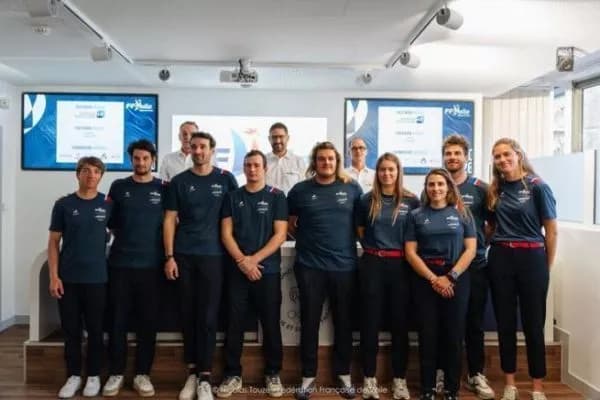
The French Sailing Federation has centralized selection logistics around nine athletes for the 2026 national team, down from 14 in the previous cycle, reallocating travel budgets, equipment freight, and training berth assignments to concentrate resources ahead of Los Angeles 2028.
Selection snapshot: who made the 2026 French Team
The 2026 roster reflects a strict performance filter: athletes retained were required to have finished in the top 6 at world events in 2025, or to be Olympic medallists or world champions in 2024. That policy has produced a small but elite group focused on podium potential.
| Class | Athlete(s) | Recent highlights |
|---|---|---|
| Kitefoil (women) | Lauriane Nolot | Olympic medallist, European champion |
| ILCA 6 | Louise Cervera | 2024 World Champion |
| iQFOiL | Tom Arnoux | World vice-champion |
| iQFOiL | Nicolas Goyard | 5th at Worlds, European vice-champion |
| Kitefoil (men) | Benoit Gomez | 3rd in the World Championship |
| 470 | Matisse Pacaud & Lucie De Gennes | Three-time world junior champions, 6th in world rankings |
| 49er | Erwan Fischer & Clement Pequin | 49er World Champions; two Grand Slam wins this season |
Selection criteria and performance logic
The revised standards are explicit: where 2024 demanded world titles and 2025 allowed a top-8 threshold, the team managers raised the bar to a top-6 requirement for 2026. Loic Billon, team manager, framed the move as a simple calculus of medal probability — only athletes consistently in the world podium mix will receive full team backing. Franck Citeau, performance manager, underscored the correlation between world-level medals and Olympic success: "85% of Olympic medallists were already medallists at the Worlds," a statistic used to justify concentrated investment.
📚 You may also like
Mechanics of selective integration
- Primary selection based on 2024–2025 world and continental results.
- Mid-season aperture: athletes can be integrated if they achieve a world podium during the qualification window.
- Support tiers: full French Team status versus collective support with reduced federal resources.
Notable absences and resource implications
Several fleet categories are empty this cycle: no female iQFOiL representative, no 49er FX duo, no ILCA 7 entrant, and no Nacra 17 crew. Athletes such as Tim Mourniac and Aloise Retornaz, who placed 8th at the recent Nacra 17 World Championship, were not selected for full team status but remain in the French Team Collective, retaining some federal backing while receiving fewer centralized resources.
Operational consequences: training, travel, and equipment
Reducing the squad size shifts operational planning across several vectors. Logistically, fewer athletes mean tighter coordination of training windows at national centers, smaller transport manifests for hulls and foils, and more concentrated allocation of high-value items such as foils, wing rigs, and custom sails. Chartering and berth assignments at staging marinas for international regattas become easier to manage, enabling extended on-water testing runs. Travel manifests, visas, and freight schedules are simplified, lowering per-athlete overhead and enabling targeted investment in sports science and coaching.
| Operational area | Impact of smaller team |
|---|---|
| Freight & equipment | Lower total volume; more budget per athlete for high-end gear |
| Travel & logistics | Fewer flight and berth bookings; easier international deployment |
| Training schedules | More concentrated coaching; longer on-water sessions per athlete |
Implications for event organizers and marinas
Organizers hosting pre-Olympic regattas and open training weeks should expect concentrated attendance from French squads in fewer classes, creating pockets of high competition intensity. Marinas and local providers can optimize berth allocation, provisioning, and towage services for smaller, elite contingents rather than broad squads. For the charter market, demand patterns may shift toward short-term high-performance craft support and specialized tow and rigging services.
How this feeds into sailing tourism and boat rental markets
High-performance national programs influence the broader maritime ecosystem. Concentrated testing and training increase demand for specific support services — performance coaching charters, race-oriented powerboats, and custom rigging assistance — which in turn can raise the visibility of local marinas and destinations. Recreational sailors and visitors often time trips to coincide with high-calibre events, creating upticks in local accommodation, day-charter, and boat rental demand. GetBoat always keeps an eye on such developments because sailing news and seaside vacations are tightly linked: training weeks, trials, and regattas shape seasonal demand for charters, crewed yachts, and day boats, and they influence where enthusiasts choose to rent and explore.
What leisure sailors can learn
- Regions hosting elite training often have upgraded marinas and services that benefit recreational boating.
- Timing a charter to coincide with regattas provides access to lively on-water scenes and improved local infrastructure.
- Specialized rental options—performance dinghies, sailboards, and race-support powerboats—become more available in those hubs.
The selection choices made by France are strategically significant for national performance but modest in terms of immediate global tourism shifts. For event planners and charter operators, the changes matter locally: concentrated high-level activity draws specialist demand while creating marketing moments for nearby beaches, marinas, and boating services.
Highlights: the French approach favors medal probability through strict criteria, concentrates logistics and funding, and increases demand for high-performance support in specific locations; yet experiencing a new location is always a multifaceted process, where one learns about the culture, nature, the indescribable palette of local colors its rhythm of life and also the unique aspects of the service. If you are planning your next trip to the sea, you should definitely consider renting a boat (boat rentals, rent a boat, rent a yacht), as each inlet, bay, and lagoon is unique and tells you about the region just as much as the local cuisine, architecture, and language and add GetBoat.com
Start planning your next seaside adventure: while the direct global tourism impact of this selection is limited, its regional effects on regatta hubs and marinas will be real. To keep pace with developments and secure the best craft for your plans, start early—book the best boat and yacht rentals with GetBoat before the opportunity sails away!
In summary, France’s compressed, performance-first roster reshapes funding, travel, and equipment logistics while sharpening podium ambitions for Los Angeles 2028. The move concentrates maritime freight and berth planning, creates targeted demand for high-performance support services, and highlights particular destinations for sailors and visitors. Whether you’re looking to charter a yacht, rent a boat for a day at the beach, or plan a fishing trip in a clearwater gulf, platforms that offer transparency on make, model, ratings, and availability make it easier to choose the right vessel. GetBoat.com supports these needs with a global, user-friendly solution for booking or buying yachts, chartering a superyacht or a simple boat, and finding marinas and activities that fit your budget and taste; the platform’s transparency and convenience help you set your course toward unforgettable sea and ocean experiences.