Antigua Finale: Leopard 3 Tops IMA Maxi Fleet
Alexandra
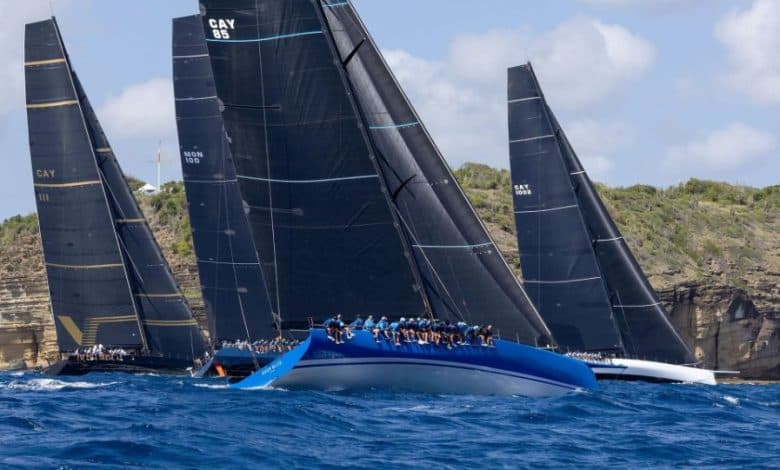
The race committee based at Fort Charlotte coordinated staggered cliff-end starts and adjusted the course twice during the final day as trade winds built to a sustained 18–19 knots, forcing tactical shifts for the IMA Maxi fleet and impacting berth turnarounds and marina service windows in English Harbour.
Race-day logistics and coastal course profile
Two coastal races were run on the final day off Antigua’s English Harbour: a 20-mile opener followed by a 10-mile finale. The start area’s leeward end sits beneath a sheer cliff, which both creates a classic land/sea wind interplay and places heavy demands on race management, support craft, and shore-side docking schedules. Race director Nigel Biggs and his team had to factor tidal flows, spectator boat zones, and quick turnaround times for safety boats — the sort of operational detail that charter operators and marinas track closely during regatta weeks.
Wind, starts and tactical squeezes
In race one the pin was won by V (owner Karel Komárek) with Galateia (Chris Flowers) above her and Leopard 3 (Joost Schuijff) a lane down. Under IRC corrected time, V took the bullet by 19 seconds over Leopard 3, with Balthasar third after recovering from a boom issue the previous day. The cliff-end bias gave pin winners the advantage of being first to call water and exploit the land-favoured beat back into the harbour.
📚 You may also like
How Leopard 3 came from behind
Starting the day chasing the podium, Leopard 3 executed a textbook recovery in race two. The pre-start was chaotic — three 100-footers tacking within a few boat lengths — and Leopard 3 adapted mid-plan when V doubled down on the left-hand end. Tactician Chris Nicholson explained the pivot: hitching to windward, timing a simu-tack, and grinding out from under the others. The payoff was a comfortable corrected-time win by more than two and a half minutes over Galateia, enough to secure the overall RORC Nelson’s Cup IMA Maxi title by two points over Deep Blue (Wendy Schmidt).
Quotes from key players (neutral summary)
- Jack Bouttell (V) highlighted the power of owning the cliff end and sailing cleanly to extend downwind.
- Joost Schuijff (Leopard 3) credited disciplined crew work and continuous boat improvements for the come-from-behind win.
- Chris Nicholson reflected on close-quarters maneuvers and the learning curve against more aggressive rivals in matchups at the line.
Podium and prize giving
| Position | Boat | Owner/Skipper |
|---|---|---|
| 1 | Leopard 3 | Joost Schuijff |
| 2 | Deep Blue | Wendy Schmidt |
| 3 | Galateia | Chris Flowers |
The awards were presented at the historic Admiral’s Inn inside Nelson’s Dockyard, with two of the top three podium spots taken by female skippers, and local Antiguan talent noted among the rising crew ranks.
Operational takeaways for charters and marinas
- Charter companies should anticipate increased demand for berthing and provisioning during regatta weeks; quick turnarounds are essential when wind forecasts show sustained teens to high-teens knots.
- Skipper selection matters: crews experienced in tight-start, cliff-influenced coastal courses gain advantage; renters and charter captains should brief guests about close-quarters starts and safety zones.
- Maintenance schedules need buffer windows — boom repairs and rigging checks can decide standings, as Balthasar’s bounce-back showed.
Why this matters to the boating community
High-profile maxi racing shifts charter market attention — owners improve boats, marinas flex infrastructure, and vendors see demand for last-minute provisioning and tender services. For anyone running a yacht charter or looking to rent a boat in the region, the regatta effects ripple into berth availability, local support services, and even charter pricing during event weeks.
Lessons learned and a few anecdotes
There’s an old sailor’s line — “fortune favours the prepared” — and that rang true ashore and afloat. On the dock I watched a crew member from Leopard 3 calmly swap a trim line while everyone else hustled; later that small action saved minutes and, ultimately, the cup. The younger sailors on board were also singled out for making decisive moves, proving that a mix of veteran poise and fresh energy can turn a close series in your favor.
In short: cliff-influenced starts, steady 18–19 knot trades, and razor-thin IRC finishes defined the final day. Leopard 3’s comeback win, V’s race one pin victory, and Deep Blue’s consistency combined to create a compact leaderboard decided by just two points. For charters and marinas, the event highlighted berth logistics, crew preparedness, and the impact of regattas on local marine services.
Summary: Leopard 3 captured the RORC Nelson’s Cup after a tactical final win, with Deep Blue and Galateia completing the podium; Fort Charlotte cliff starts and 18–19 knot trades dictated tactics. The regatta underlined key operational lessons for yacht charters, boat rentals, marinas and captains — from berth planning to crew selection — and showcased how top-level yachting influences local marinas, destinations and boating activities across the sea, ocean and gulf. Whether you’re after a superyacht charter, a weekend rent on a sailing boat, or planning fishing or leisure trips to a beach or lake, the event’s logistics and crew dynamics matter — so when you’re ready to explore Destinations, clearwater stops, marinas and sale or charter options, remember: good planning keeps you ahead of the wind.


