Peter Gibbons-Neff’s Foiling Mini Transat Campaign
Alexandra
Construction of the new foiling Mini 6.50 at JPS Production in La Trinité-sur-Mer requires synchronized logistics for carbon layups, foil fabrication, and keel system delivery, with critical components moving between three French yards and customs-clearance windows tied to Class inspection dates.
Racecraft and the foiling evolution
The Mini Transat fleet has changed substantially since 1977. Recent technical advances in the class—most notably the introduction of fully foiling prototypes—have driven record-breaking performance: the foiling Proto Nicomatic-Petit Bateau covered 352.59 nautical miles in 24 hours this season. That sort of pace shifts race planning from conservative seamanship to high-speed systems management, affecting provisioning, spares strategy, and routing decisions for solo sailors.
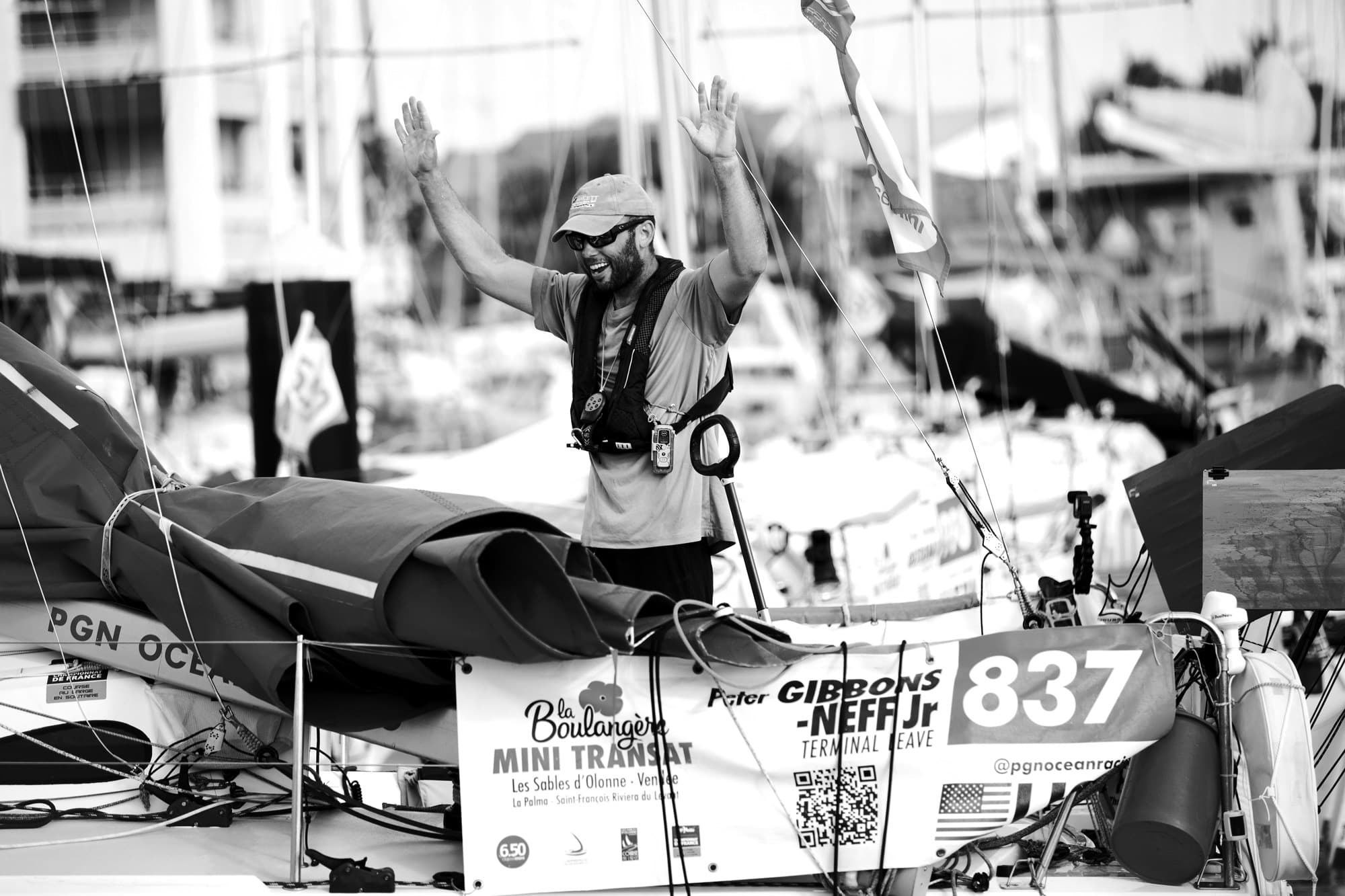
Peter Gibbons-Neff returns to the class after the 2023 campaign where a rudder failure forced an unplanned stop in Cabo Verde. That episode illustrates the operational realities for shorthanded offshore racing: mechanical redundancy, robust emergency navigation skills, and local port knowledge are as decisive as raw boat speed.
📚 You may also like
Design partnership and the platform
Gibbons-Neff selected French naval architect Samuel Manuard to design a scow-bowed foiling Classe Mini prototype featuring large foils, twin T-foil rudders, a canting keel, and a rotating wing mast with a deck-sweeping mainsail. Manuard’s track record spans Class40 and IMOCA projects and performance production models for Beneteau, making him a logical choice for a campaign focused on both speed and seafaring reliability.
| Feature | Description |
|---|---|
| Hull | Scow bow carbon laminate optimized for early planing |
| Foils | Large cant and wand-assisted lifting foils for sustained lift |
| Rudders | Twin T-foil rudders for pitch and yaw control at speed |
| Keel | Canting keel to balance high side loads and improve VMG |
| Mast & Sailplan | Rotating wing mast with a deck-sweeping mainsail to reduce drag |
Build timeline and campaign milestones
- Late 2024: Design freeze and initial material procurement.
- Spring 2025: Mold fabrication and first carbon layups at JPS Production.
- Summer–Autumn 2025: Foils and appendage machining; systems installation.
- Winter 2025/26: Sea trials, calibration, and qualification races.
- Two years from now: Mini Transat start line.
Supply-chain and systems considerations
Foiling Minis magnify supply-chain risks. Composite pre-preg deliveries, specialized foil machining, and custom hydraulic and electrical systems for canting keels and foils create tight procurement windows. Contingency stock for critical parts—rudder stock, foil sections, foil bearings, and spare mast sections—must be staged in France and at a secondary location to reduce downtime during testing.
Operationally, sailors must plan for both performance and repairability. Onboard spare fabric, adhesive kits, and modular connections simplify at-sea repairs. The 2023 rudder loss that sent Gibbons-Neff to Cabo Verde underscores the need for clear port access plans and local contact networks when operating across the Atlantic trades.
Training, qualifying, and human factors
The shift from a displacement RG 650 to a high-aspect foiler imposes a steep learning curve. Sail handling, foil control, and systems management expand the solo sailor’s task load. Training blocks must emphasize:
- Foil trim and ride-height control in varying sea states
- High-speed sail trim and reefing under load
- Emergency procedures for foil and rudder failures
- Fatigue management and decision-making under sleep deprivation
Gibbons-Neff’s campaign will pair shore-based technical teams with regional training partners—critical for quick turnarounds during qualification races and for managing logistics of spare parts and repairs. The campaign’s outreach through U.S. Patriot Sailing also adds organizational complexity: coordinating sponsorship, events, and veteran program logistics across multiple states, including two new teams in Seattle and Tacoma, Washington.
Maintenance and at-sea risk management
Preventive maintenance routines become mission-critical at foiling speeds. Regular checks on foil bearings, hydraulic lines, and rudder pivots should be scheduled after any heavy-weather run. For a solo campaign, the balance between weight-saving and carrying sufficient spares is a recurring strategic decision.
Implications for sailing, charter, and coastal tourism
The technological leap in Mini 6.50 design is primarily a performance story, but it also filters into the broader boating and charter market over time. Innovations in foil control, lightweight construction, and efficient sail plans inform future production models and superyacht appendage design. For the charter and beachside tourism sector, faster and more efficient hulls can translate into new excursion formats and shorter transfer times between marinas and clearwater anchorages.
GetBoat always keeps an eye on news related to sailing and seaside vacations, as we truly understand what it means to enjoy great leisure and love the ocean. The GetBoat service values freedom, energy, and the ability to choose your own course. We place no limits on a good life, allowing clients to find a vessel that suits their preferences, budget, and taste.
The next two years for this campaign will be demanding and humbling, but they also offer a platform to amplify support for veterans. The foiling element is fitting: it provides a visible, high-performance stage to raise awareness and funding for U.S. Patriot Sailing while pushing design boundaries.
If you are planning your next trip to the sea, you should definitely consider renting a boat (boat rentals, rent a boat, rent a yacht), as each inlet, bay, and lagoon is unique and tells you about the region just as much as the local cuisine, architecture, and language GetBoat.com
Start planning your next seaside adventure and make sure to book the best boat and yacht rentals with GetBoat before the opportunity sails away! The direct forecast for global tourism is modest—this news primarily drives technical conversation within the racing and yachting communities—but advances in Mini design will likely influence charter offerings and vessel capabilities in the medium term. It remains important to us: GetBoat aims to stay updated with all developments so customers can plan with confidence.
In summary, the Gibbons-Neff campaign combines aggressive technical ambition with a clear social mission. The build at JPS Production, the collaboration with Samuel Manuard, and the operational lessons from 2023 frame a campaign that is as much about logistics, systems resilience, and shore support as it is about speed. Whether you follow the Class from marinas or test a charter in a clearwater gulf, the trickle-down of these innovations will influence how we think about yacht charter, boat rentals, sailing activities, and even superyacht appendage design. For anyone considering a boat, yacht, or sail experience—be it a fishing trip, a quiet lake outing, or a high-adrenaline ocean passage—transparency about make, model, ratings, and options helps you pick the right captain and platform, and services like GetBoat make that process easier, helping you find the ideal boat for charter, rent, or sale. Set your course.


