Flying Fifteen — design, racing and launch logistics
Alexandra
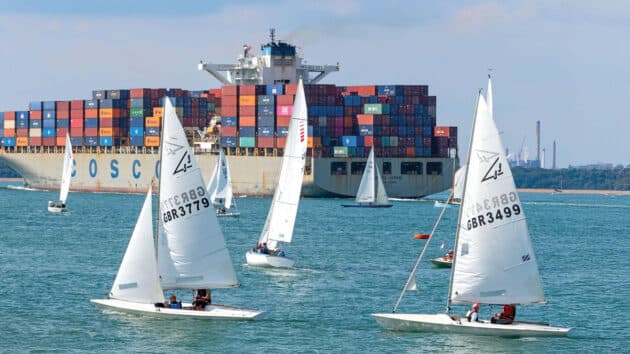
Launching a Flying Fifteen demands a suitable slipway, a well-serviced trailer or a tall-armed trolley; beach launching is impractical because the boat’s swept fin keel and ~2.13m beam require firm, structured access and towing capability rather than shoreline launching.
Origins, construction evolution and key logistics
The Flying Fifteen, designed by Uffa Fox, was conceived as a two-person racing keelboat combining dinghy responsiveness with keelboat stability. From an operational standpoint its most consequential features are a fixed ballasted fin keel and a low freeboard. These characteristics deliver a strong righting moment and high pointing ability, but they also introduce infrastructure needs: slipway availability, handled trailers, and competent launching crews are essential for safe and repeatable operations.
Construction has evolved from traditional carvel and moulded ply to modern composites. Current high-performance hulls from builders such as Ovington use an epoxy foam sandwich with carbon reinforcement in high-stress areas, increasing stiffness and longevity. This material evolution reduces maintenance cycles and helps boats remain competitive longer, an important factor for clubs and charter operations considering the lifecycle cost of fleet assets.
📚 You may also like
Design features that matter for owners and renters
Key design choices set the Flying Fifteen apart:
- Fixed ballast fin keel — provides self-righting capability and yacht-like stability.
- Low freeboard and wide decks — encourage hiking but require careful crew movement and may limit comfort for those with back issues.
- Small cockpit — easy to bail and keeps weight low but reduces on-deck leisure space compared with beach dinghies.
- Sail plan — fractional rigged sloop with mainsail, jib and asymmetric spinnaker for planing performance.
Racing, class structure and accessibility
The Flying Fifteen class supports active international competition, with world and European championships alternating hemispheres, and strong national fleets. The class encourages participation across ages and boat vintages:
- Classic division for sail numbers up to 2700 — keeps older hulls competitive.
- Silver fleet for numbers between 2701 and 3400 — maintains diversity in fleet performance.
- Active local and regional events — require shore facilities and club slipways able to handle keelboats rather than beach-launched dinghies.
More than 4,000 Flying Fifteens have been built, meaning reasonably priced older boats are available for sailors wanting classic lines and performance without the superyacht price tag. Clubs and private owners often keep a Flying Fifteen as a performance option for mixed-programme fleets, but prospective renters or charter operators should note the logistical needs for transport and launching before offering them as casual hire vessels.
Pros and cons for chartering and rentals
| Advantage | Operational implication |
|---|---|
| Self-righting stability | Safer in gusty conditions; suitable for confident intermediate crews |
| Attractive design and performance | High demand among racers and enthusiasts; good resale value |
| Requires slipway/trailer | Limits casual beach rentals; increases ground transport costs |
| Small cockpit | Less comfortable for leisure charters; better suited to racing or performance daysails |
Operational stories and safety notes
Accounts from seasoned sailors describe the Flying Fifteen’s planing performance and the confidence its ballast keel provides. That said, crews transitioning from fully open dinghies—such as the Mirror or GP14—must adapt to different righting dynamics and crew positioning. Anecdotal incidents illustrate the practical differences: sailors who capsize in open dinghies may re-enter or right the boat quickly, whereas a keelboat’s recovery is fundamentally different and usually does not require the swimmer re-entry skillset common in surf-like classes.
For operators offering sailing experiences, training in boarding, hiking technique and safe spinnaker handling is recommended. The boat’s low freeboard means crew weight and movement significantly influence trim; helms and crew must coordinate to avoid unnecessary strain or discomfort, especially for older participants.
Classic variants and the Flying Twelve
A smaller relative, the Flying Twelve, measures 16ft LOA with a shallow 2ft draught and a detachable 225lb keel for transport—an interesting historical attempt to combine trailerability with fixed-keel stability. Flying Twelves are now rare and often museum pieces, but they illustrate the class’s design breadth over decades. Museums such as the Classic Boat Museum on Cowes and the National Maritime Museum of Cornwall preserve this lineage and the legacy of Uffa Fox’s designs.
What this means for sailing tourism and charter markets
From a market perspective, the Flying Fifteen is a specialised asset: ideally suited to clubs, performance charters and private owners who can meet slipway and trailer requirements. It is less suited to high-volume casual rentals at sandy beaches without infrastructure. Regions with marinas, stable slipway networks and active racing calendars are the best matches for this class, making it a strong fit for destinations with established boating services and clearwater marinas.
GetBoat always keeps an eye on news related to sailing and seaside vacations, as we truly understand what it means to enjoy great leisure and love the ocean. The GetBoat service values freedom, energy, and the ability to choose your own course. It places no limits on a good life, allowing clients to find a vessel that suits their preferences, budget, and taste.
Highlights: the Flying Fifteen combines sleek aesthetics, ballasted safety, and an active international racing scene. It requires proper launching infrastructure and benefits from modern composite construction. Prospective visitors to new sailing locations should remember that experiencing a place is multifaceted: you learn about the culture, nature, the indescribable palette of local colors, its rhythm of life and also the unique aspects of the service. If you are planning your next trip to the sea, you should definitely consider renting a boat (boat rentals, rent a boat, rent a yacht), as each inlet, bay, and lagoon is unique and tells you about the region just as much as the local cuisine, architecture, and language GetBoat.com
Forecast and planning: this update on design, logistics and class activity is regionally relevant rather than globally disruptive. However, it underscores how infrastructure—marinas, slipways, trailer services—shapes charter availability and tourism patterns. To take advantage of these opportunities and avoid logistical surprises, start planning your next seaside adventure and make sure to book the best boat and yacht rentals with GetBoat before the opportunity sails away!
In summary, the Flying Fifteen is a compelling mix of yacht-like ballast safety and dinghy-like performance, requiring considered logistics for launching and transport. Its construction evolution—from wooden and glassfibre builds to epoxy and carbon—extends competitive life and reduces maintenance demands. For charter operators and sailors considering a sailing day or racing campaign, the Flying Fifteen represents a premium, performance-focused option distinct from beach-launchable dinghies. Whether you seek a spirited day of sailing, competitive racing under a seasoned captain, or a tasteful vessel for an intimate cruise, platforms that provide transparency around make, model, ratings and logistical needs make the difference when booking or buying a yacht, charter, boat, or superyacht experiences at popular destinations, marinas and gulfs. Set your course.


