Exploring King Kong (1933) - The Timeless Classic That Revolutionized Cinema
Alexandra
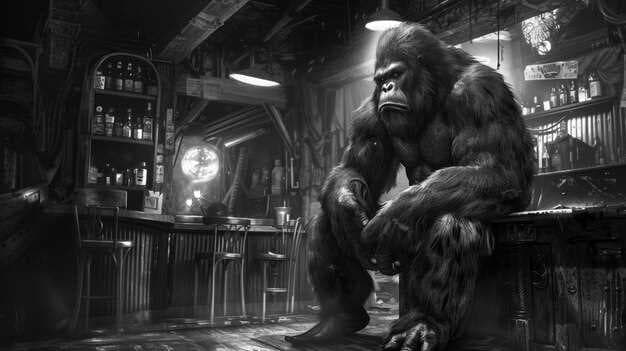
The original King Kong released in 1933 stands as a monumental achievement in cinematic history, possessing a profound legacy that continues to resonate in the film industry today. With its dynamic storytelling and groundbreaking special effects, this piece of work not only defined its era but also established a gold standard for the action-adventure genre. The origins of its captivating plot unfold in the thrilling atmosphere of a remote island, where filmmakers and actors venture beyond the realms of imagination to bring to life a beautiful yet disturbing tale of man's hubris against nature’s ferocity.
Filmed with a variety of mechanical innovations and artistic ingenuity, King Kong delves into the eighth wonder of the world, portraying a colossal creature that embodies both terror and empathy. The film’s narrative arc follows the expedition from Hollywood to Skull Island, where a monstrous yet magnificent beast the titular Kong challenges both the protagonists' actions and moral compasses. The actions of the crew, led by the daring filmmaker Carl Denham, provoke a series of events that culminate in a tragic violation of nature's sanctum, leaving audiences to ponder the consequences of their endeavors.
In the decades following its release, critical analyses, such as those penned by critics like Roger Ebert and contemporary scholars, have strengthened the film's status as a criterion of excellence in cinematic arts. From the haunting sounds capturing the creature’s ferocity to the detailed sets that echo a bygone era, King Kong has not only aged gracefully but has also influenced subsequent filmmakers, including Peter Jackson, who brought his own rendition of this iconic story in the 21st century. Herein lies the magic of King Kong–it is more than an animated adventure; it is a beautiful tapestry woven with themes of survival, loss, and the profound connection between humanity and the creatures that dwell in the fathoms of our imagination.
📚 You may also like
Artistic Innovations in King Kong
The 1933 film King Kong is often described as a landmark in cinematic history, primarily due to its groundbreaking artistic innovations. One of the most notable techniques employed in the film is stop-motion animation, which was championed by special effects master Willis O'Brien. His approach created a seamless integration between the monstrous ape and the living world, allowing audiences to suspend disbelief as they watched Kong interact with various sets. This innovative technique remains influential in the realm of special effects and animation, showcasing the potential of visual storytelling.
In addition to stop-motion, King Kong introduced innovative sound design, which was revolutionary for its time. The choice of an orchestral score elevated the emotional stakes of the narrative. The music, composed by Max Steiner, used motifs that corresponded to the characters' actions and the unfolding drama. Steiner's contribution set a new standard for film scores, suggesting that a film's emotional impact could be significantly enhanced through a carefully crafted musical theme.
The film also featured creative set designs that contributed to its fantastical atmosphere. From the towering skyscrapers of New York to the eerie jungle of Skull Island, the sets provided a striking contrast that amplified the narrative. Art directors like Merian C. Cooper and Ernest B. Schoedsack constructed environments that felt both vast and intricate, inviting viewers to immerse themselves in Kong's world. This attention to detail made the sets a character in their own right, adding depth to the storytelling experience.
Another artistic innovation found in King Kong is the use of miniature models. The filmmakers ingeniously used miniatures for airplanes, ships, and even the iconic Empire State Building. This clever blending of different scales created a dynamic visual tapestry. These miniatures allowed for thrilling action sequences that suspended audiences’ disbelief while remaining a common practice in the genre, often referenced in later films like Jurassic Park.
Furthermore, King Kong's prologue introduces the narrative in an engaging manner, drawing the audience into the story before the monstrous action begins. It sets the tone, establishing the conflict between nature and man, which resonates with viewers even today. Leonard Maltin and Roger Ebert both admired this structure, identifying it as a crucial element that intertwined human emotions with the grandeur of the cinematic spectacle.
In terms of character development, Kong himself can be viewed as a powerful symbol of the struggles faced by those who are marginalized or misunderstood. His relationship with the female lead, Ann Darrow, portrayed by actress Fay Wray, adds a layer of complexity to the film. Critics have remarked on the emotional connection that exists between the beast and the beauty, suggesting that it reflects broader societal themes applicable to every generation.
Additionally, the film's ability to evoke a range of emotions demonstrates the power of visual storytelling. Viewers experience tension, awe, and ultimately tragedy as they witness Kong's eventual demise. This emotional rollercoaster resonates across cultures and generations, making it a timeless classic. The film's influence can still be seen in contemporary cinema, as directors like Peter Jackson have sought to recapture its magic in their own versions.
In conclusion, the artistic innovations in King Kong have left a lasting impact on both audiences and filmmakers. From pioneering special effects to a riveting score, every element was meticulously crafted to enhance the overall experience. As new technologies emerge, the foundational principles established in King Kong will likely remain a guiding force in the evolution of cinema. The movie's ability to integrate style, emotion, and groundbreaking techniques ensures its status as a revered piece of cinematic history.
How Stop-Motion Animation Changed Filmmaking
The advent of stop-motion animation in the early 20th century created a revolution in filmmaking that continues to impact the industry today. Scholars have noted how techniques developed during this period allowed filmmakers to craft more believable fantasy worlds without the constraints of physical limitations. One of the most prominent examples is the work of Willis O'Brien on *King Kong (1933)*, which showcased the potential of this animation style.
This process involves capturing a series of images frame by frame, with objects or characters slightly repositioned between each shot. When projected at normal speed, these still images create the illusion of movement. Another pivotal project in this realm was the collaboration between the Dejavvi Bros and Grant Eagan, who utilized stop-motion techniques to breathe life into their storytelling, effectively connecting living creatures with the audiences' emotions.
Unsurprisingly, the success of films that employed stop-motion led to an influx of similar projects. In the realm of exploration within cinema, this technique represented a significant difference from traditional filming styles. Locations such as Ontario became iconic backdrops for exquisite scenes, adding a magical quality that captivated viewers. The inescapable charm of these films persists, often calling back to the edenic landscapes they portrayed.
Ruth Eggert notes in her reviews that stop-motion animation offered a fresh way to visualize stories that would have seemed impossible otherwise. This included majestic creatures like King Kong, as well as dead and mythical beings that now had a platform to thrive on screen. What’s fascinating is how this unique method became a favored technique among female filmmakers, adding another layer to its dynamic history.
Today, movies that continue to utilize stop-motion, such as those produced by Laika and other studios, demonstrate the enduring legacy of this art form. The meticulous process can be labor-intensive, often stretching over several days, yet the results are undeniably cool. Director Henry Selick, for instance, emphasizes the craftsmanship involved, suggesting that every frame is a testament to the collective love and dedication of those behind the scenes.
The significance of stop-motion is further highlighted when examined alongside its exploitation in various genres. The evolution from its early use in horror films, where tree-monsters and other creatures roamed, to family-friendly narratives indicates its adaptability. In every edition of a stop-motion film, a new facet of storytelling is explored, engaging audiences in ways that live-action cannot achieve alone.
Critics like Cynthia Warner have pointed out that the impact of stop-motion animation goes beyond mere entertainment. It offers a clean narrative style that allows filmmakers to push boundaries and experiment with visual storytelling. The graphical advantages of manipulating objects frame by frame not only enhance fantasy elements but also elevate the emotional stakes of the stories being portrayed.
In conclusion, the innovation of stop-motion animation has certainly shaped the landscape of filmmaking. It has opened the gates to remarkable narratives and visually compelling experiences, making it an invaluable tool for filmmakers. Today, as audiences continue to immerse themselves into these fantastical realms, the legacy of stop-motion, pioneered in the early 20th century, remains alive and thriving.
The Role of Miniatures in Creating the Film's Landscapes
In the realm of cinematic innovation, miniatures played a pivotal role in creating the breathtaking landscapes seen in "King Kong" (1933). As filmmakers like Merian C. Cooper and Ernest B. Schoedsack engaged with the technical limitations of their time, they turned to miniatures to craft the film's elaborate jungle settings and iconic Skull Island. This decision not only showcased the dynamic capabilities of special effects but also set a precedent for future movies.
The use of miniatures allowed for a level of mechanical precision in depicting monstrous creatures and their environments. For instance, the famous sequences featuring dinosaurs were constructed on a scale that made them appear both gargantuan and terrifying on the big screen. As a result, audiences could immerse themselves in a thrilling narrative that earned rave reviews, including Ebert's commentary on its innovative visuals.
- Skull Island: A detailed miniature model that portrayed a fictional paradise.
- Dino Encounters: Miniaturized dinosaurs that created tension and excitement.
- Kong's Climb: A towering representation of the Empire State Building for the climax.
Another notable aspect is the role of lighting and forced perspective techniques that complemented the miniatures. By hitting the right angles and ensuring that shadows fell in a certain way, the filmmakers were able to blur the lines between the mechanical landscapes and the living actors on screen. This meticulous attention to detail made the action sequences more believable to audiences, with many emotions deriving from the interactions between King Kong and his environment.
Over the years, this approach to miniature work has influenced numerous films, making it an essential element in cinema history. Scholars like Haflidason have suggested that the film's effective use of miniatures not only highlighted the chasms of creativity but also mirrored modern filmmaking's reliance on CGI. The similarities between these approaches showcase how advancements can coexist and enhance storytelling.
In addition, miniatures held a theatrical quality that gave them an artistic flair. Frank Capra, a contemporaneous filmmaker, once noted that the more authentic the visuals, the more impactful the narrative arcs become. This principle rings true in "King Kong," where settings created with precision played a significant role in character development, notably with Kong as both a destructive force and a misunderstood creature.
Haver's commentary on the film points to its groundbreaking nature; while the action is undoubtedly thrilling, the troubling aspects around representation remind viewers of the era's challenging narratives. Despite the detrimental stereotypes that surfaced, the technical prowess of miniatures offers a unique lens to appreciate the artistic achievements of the time. "King Kong" stands not only as a horror classic but as an altar to innovation in film craft.


