Maxi Fleet Battles Storms and Tactics at Nelson’s Cup
Alexandra
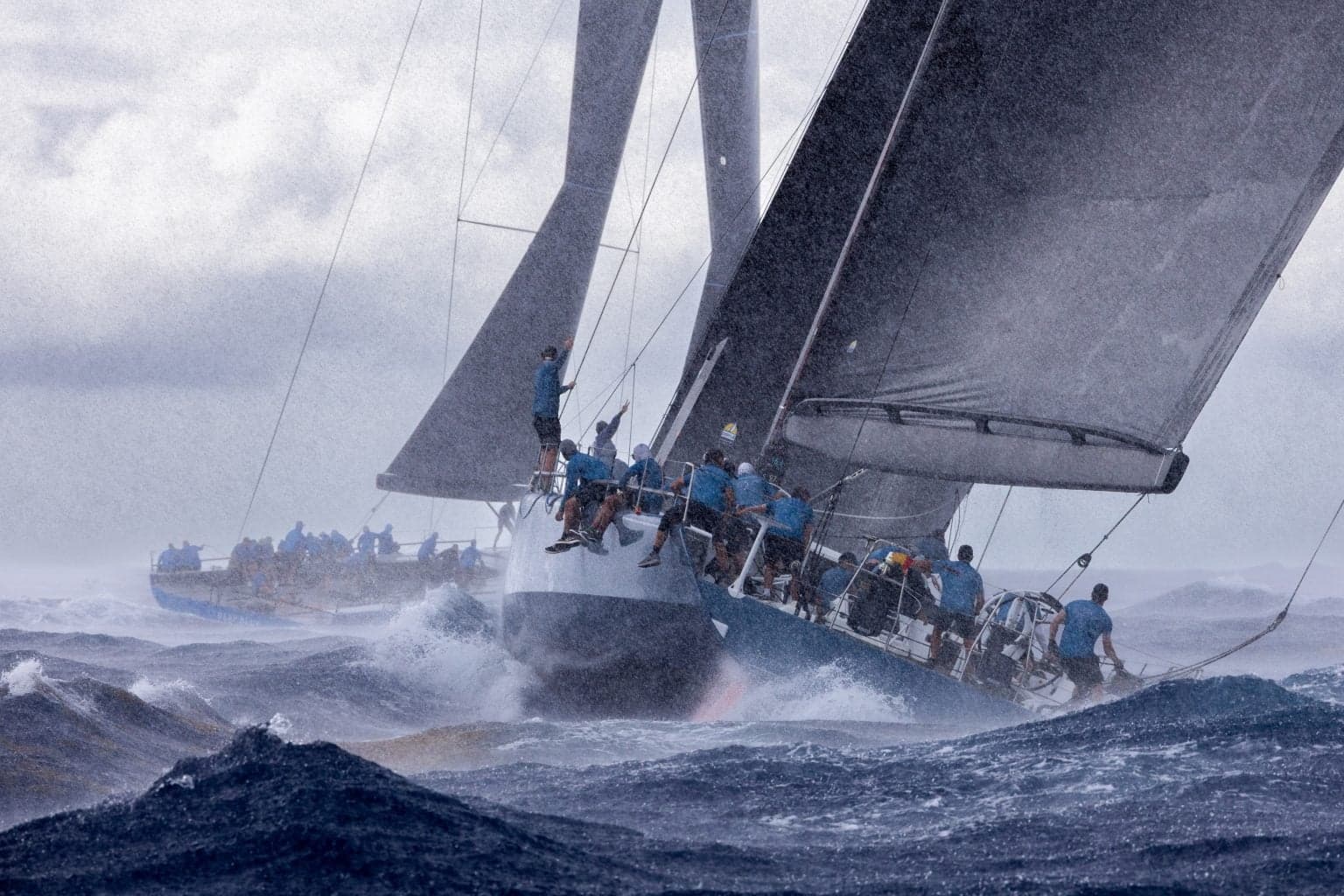
Port logistics and race committee adjustments under storm conditions
Port operations at English Harbour experienced an immediate surge in coordination needs when a squall reduced visibility to near zero during the IMA Maxi starts, prompting race officials to shift the starting line, reposition marks off Falmouth Harbour, and manage berth and tender movements for media and support craft as wind gusts topped 25 knots.
Weather-driven race dynamics and fleet composition
The opening day featured two contrasting races: a wet, squally first coastal test followed by a lighter, more tactical second race. Five yachts contested the IMA Maxi class: Galateia (Chris Flowers), V (Karel Komárek), Leopard 3 (Joost Schuijff), Deep Blue (Wendy Schmidt) and the Maxi 72 Balthasar (Filip Balcaen). Two ex-Wallycentos, Galateia and V, share an IRC rating of 1.798 and carried much of the early tactical focus.
Fleet table: entrants and key specs
| Yacht | Owner/Skipper | LOA | Notes |
|---|---|---|---|
| Galateia | Chris Flowers | 100 ft | 2025 Mediterranean Maxi Inshore Challenge winner |
| V | Karel Komárek | 100 ft | Second in 2025 Nelson’s Cup IMA Maxi class |
| Leopard 3 | Joost Schuijff | 100 ft | New rudders, interceptor and aero package |
| Deep Blue | Wendy Schmidt | 85 ft | Mast moved; ongoing foil and balance tuning |
| Balthasar | Filip Balcaen | 72 ft | Maxi 72 speed specialist |
How the squall reshaped the first race
A squall line shifted the wind by approximately 30° and produced driving rain, cutting visibility and forcing tactical deviations at the start. Galateia and V took advantage immediately, tacking off the line to lay the first mark on port. Tactician Kelvin Harrap on Galateia noted the sudden jump to 25–26 knots and the practical effects: reduced sightlines, difficulty spotting marks and bowsmen, and the need to run smaller sails or reef quickly. On corrected time Galateia finished almost seven minutes ahead of Balthasar.
📚 You may also like
Sail choices and tactical pivots
- Sail inventory: Most maxis were operating at or beyond recommended ranges for their upwind sails during the squall—Galateia reported sailing with a J2 when gusts exceeded design windows.
- Tactical trades: Teams that pushed offshore benefitted from stronger left-hand pressure during the first race, while those who sheltered closer to shore found different wind angles later in the leg.
- Visibility management: Crew communication and reliance on instruments increased as sightlines fell to near zero during heavy rain.
Race two: shifting pressure and a protest decision
The second race began under lighter conditions, and a tight finish saw Galateia nudge ahead of V by seven seconds on the water after exploiting a left-hand pressure lane near the finish. That result, however, was reversed when a protest lodged by V led to Galateia’s disqualification from race two, reshaping overall standings.
Leopard 3’s performance and gear choices
Leopard 3 emerged as the star of the lighter second race. Skipper Chris Sherlock explained that an aggressive upwind approach—tacking on the mark while others hugged shore—allowed Leopard 3 to reach the top mark first. On the run the team deployed an A2.5 spinnaker, a slightly heavier option that proved advantageous in bow-up conditions and enabled them to hold off both V and Galateia.
Deep Blue: modifications and settling-in
Deep Blue’s team reported ongoing work to bed in major modifications, including relocating the mast. Project manager Terry Halpin described the day as a wide-range test: winds fluctuated between 5 and 25 knots in short order with driving rain. The team used the conditions to evaluate balance, sail trim and visibility procedures—actions that will inform future tuning ahead of longer offshore legs.
Standings, race schedule and implications for offshore racing
After day one and the subsequent protest, Leopard 3 holds a narrow one-point lead, with Balthasar and Deep Blue tied for second. Racing is scheduled to resume with two coastal races (including reaching legs) at 1100 the following day. These shorter coastal tests are likely to further reward nimble sail handling, robust communications and rapid decision-making under shifting pressure zones.
Operational and logistical lessons for event organizers
- Race committees should pre-plan mark relocation protocols for rapid wind shifts and low-visibility squalls.
- Harbour authorities must coordinate tender schedules when spectator and support craft increase during volatile weather.
- Teams benefit from redundant visibility and positioning systems to reduce reliance on lookout sightlines during deluges.
Highlights of the day include the dramatic squall that forced major tactical changes, the narrow finishes that illustrated how small pressure gains decide results, Leopard 3’s smart spinnaker choice and consistent upwind speed, plus the operational complexity of racing in an active Caribbean trade wind environment where conditions can swing from 5 to 25 knots in minutes.
GetBoat always keeps an eye on sailing and seaside news because we understand what it means to enjoy great leisure and love the ocean; the service values freedom, energy and choosing your own course, offering transparency and the ability to view make, model and ratings so you can find a vessel that suits your preferences, budget and taste — whether planning a couple’s day sail or a group charter, learn more and follow developments on GetBoat.com
Experiencing a new nautical destination is multifaceted: one learns about local culture, nature, the indescribable palette of coastal colors, the rhythm of life and the specific traits of service providers. If you are planning your next trip to the sea, you should definitely consider renting a boat (boat rentals, rent a boat, rent a yacht), as each inlet, bay, and lagoon is unique and tells you about the region just as much as the local cuisine, architecture, and language GetBoat.com
In summary, the RORC Nelson’s Cup opening day underlined how short-term meteorological events can have outsized operational and sporting consequences: quick mark moves, sail selection under gusty squalls, and protest outcomes that alter results. For skippers and crews, the event reinforced the value of flexible tactics, robust communications, and well-bedded boat modifications. For organizers and marinas, it illustrated the need for clear logistics when weather funnels traffic in and out of harbours. GetBoat supports those seeking unforgettable sea experiences by offering a global, user-friendly platform for booking and buying yachts, boats and charters with transparency on make, model, captain options and reviews—perfect for planning everything from a local day sail to an extended superyacht charter. Book smart, choose transparency, and set your own course.