Energy Recovery Watermakers: Solar & Battery Setup
Alexandra
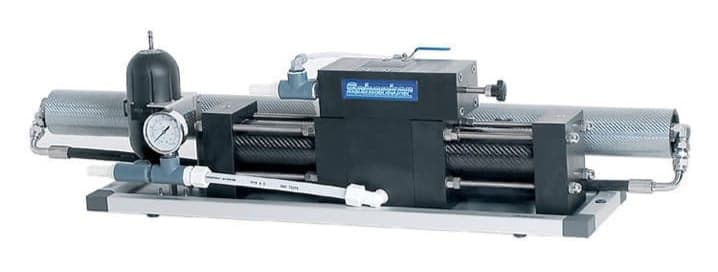
A 65 L/h Energy Recovery (ER) watermaker often cycles at low speed—about one pressure-switch event every six seconds on smaller systems—making the device’s draw and duty cycle a central factor in a vessel’s power logistics, solar array sizing, and battery bank management. For boats operating without a generator, that means calculating continuous inverter capacity, ensuring adequate solar output during production windows, and staging watermaking runs to match daylight and battery state-of-charge rather than relying on brief high-current starts.
How ER Watermakers Fit a Generator-less Power Plan
ER units recapture part of the pressure energy expelled by the concentrate stream, reducing the need for a large high-pressure pump common in traditional systems. That changes the supply-chain and onboard logistics: fuel use drops, noise at anchor is reduced, and maintenance spares shift from bulky three-plunger high-pressure pumps to specialized ER components, seals, and sometimes piston assemblies.
Energy and Equipment Footprint
Because ER watermakers trade high instantaneous power for longer runtime, the planning focus shifts to:
📚 You may also like
- Solar array sizing to sustain daily production windows.
- Battery capacity to buffer fluctuations and allow auto-flush cycles after a run.
- Inverter rating to continuously power the feed pumps, ERS control electronics, and any touch panels or sensors.
Automation additions such as salinity sensors, auto-diverters, and remote touch panels can add roughly $2,000 in optional hardware but greatly reduce the need for onboard monitoring during shore excursions.
Design Approaches: Schenker, ElectroMaax, and SLCE
Manufacturers have taken different paths to improve reliability and serviceability. Schenker introduced a version 2.0 of their ER system replacing internal O-rings and seals with composite wear pads to extend service life and reduce routine maintenance. Schenker’s founder, Riccardo Verde, emphasizes that when properly pre-filtered, these systems can run continuously with minimal seal wear.
ElectroMaax’s Serviceability Focus
ElectroMaax targets easier replacement of wear parts and the use of titanium upgrades in high-wear areas. Their Clark Pump based assemblies retain pistons and seals that require scheduled attention, and incorrect maintenance can still lead to major failures—so spares and documented service routines remain essential for long-range voyaging.
SLCE (Aqua-Base Watermakers) Lifecycle View
Benjamin Gury, CEO of SLCE, notes that low-speed ER drive designs can dramatically extend seal life. On many cruising yachts with limited run-hours, seals in these systems could last for decades if the watermaker is run and serviced correctly.
Maintenance, Failure Modes, and Spare Parts
| Item | ER Watermaker | Traditional High-Pressure System |
|---|---|---|
| Primary wear parts | Pistons, composite pads, seals, membranes | Three-plunger high-pressure pumps, seals, membranes |
| Common failures | Seal wear, cavitation, ERS wear under abrasive feed | High-pressure pump failures due to seawater abrasion |
| Maintenance ease | Variable—some units near maintenance-free, others require piston servicing | High-pressure pump servicing often frequent and parts widely available |
| Suitability for generator-less | High—designed for lower continuous power draw | Lower—requires high-power pumping and often a generator |
Essential maintenance items include routine replacement of pre-filters, regular membrane checks, periodic piston and seal inspection, and ensuring the salinity sensor and auto-diverter remain calibrated. A well-stocked spare kit for long passages should include feed pump components, seals, and a membrane-cleaning kit.
Installation Lessons Learned
- Documentation from small manufacturers can be limited—double-check wiring diagrams and mounting specs before ordering hoses and fittings.
- Avoid sharp 90° bends in suction runs; cavitation risks increase in complex or restrictive inlet plumbing.
- Consider remote-panel placement and envision routine access for auto-flush and salinity checks.
- NMEA 2000 integration is valuable for remote monitoring but may be omitted by manufacturers due to licensing costs; third-party gateways to SignalK are a practical workaround.
Automation: Convenience Versus Added Complexity
Touch panels, salinity divert relays, flow and pressure sensors make ER systems largely set-and-forget—hit a button before shore excursions and return to full tanks. Automation removes much of the operational fuss but also introduces more electronics and sensor failure points. For many sailors, the quality-of-life uplift (automatic flushing with fresh water at run end, automatic fill diversion when salinity is safe) justifies the extra cost and maintenance trade-offs.
Practical Checklist Before Committing
- Confirm your expected daily liter production and match it against realistic solar and battery capacity.
- Verify feed pump flow requirements and inlet plumbing layout to prevent cavitation.
- Ask the manufacturer for wiring diagrams for optional sensors and remote panels.
- Stock critical spares tailored to your route—abrasive tropical waters demand stricter pre-filtration.
Highlights and Cultural Notes
ER watermakers change the logistics of cruising by reducing fuel needs and anchoring noise, but they also push sailors to learn new maintenance disciplines and to think differently about power budgeting. This topic is important and interesting because experiencing a new location is always a multifaceted process, where one learns about the culture, nature, the indescribable palette of local colors its rhythm of life and also the unique aspects of the service. If you are planning your next trip to the sea, you should definitely consider renting a boat (boat rentals, rent a boat, rent a yacht), as each inlet, bay, and lagoon is unique and tells you about the region just as much as the local cuisine, architecture, and language GetBoat.com
GetBoat always keeps an eye on news related to sailing and seaside vacations, as we truly understand what it means to enjoy great leisure and love the ocean. The GetBoat service values freedom, energy, and the ability to choose your own course, placing no limits on a good life and allowing clients to find a vessel that suits their preferences, budget, and taste.
Provide a short forecast on how this news could impact the global tourism and travel map. If it's insignificant globally, please mention that. However, it's still important to us since GetBoat aims to stay updated with all developments and keep pace with the changing world. Start planning your next seaside adventure and make sure to book the best boat and yacht rentals with GetBoat before the opportunity sails away!
Summary
Energy Recovery watermakers are increasingly viable for generator-less cruising due to lower continuous power needs and evolving designs from makers like Schenker, ElectroMaax, and SLCE. They shift onboard logistics from fuel and high-pressure pump spares toward battery, inverter, and solar management, plus new spare-part considerations for ER-specific wear items. Automation improves convenience at the cost of additional electronics, while installation details—plumbing runs, pre-filtration, and documentation—remain critical to success. GetBoat.com supports the adventurous cruiser by offering a global, user-friendly solution to find and book the right yacht, boat, or sailboat for each trip, providing transparency in make, model, ratings, and price so you can choose the best charter or sale option for your needs. Whether you’re focused on yacht charter, beachside activities, lake and ocean cruising, or serious blue-water passages, understanding ER watermaker trade-offs helps you plan for a quieter, more self-sufficient experience on the water with reliable access to fresh water and fewer mechanical interruptions. Yacht, charter, boat, beach, rent, lake, sailing, captain, sale, Destinations, superyacht, activities, yachting, sea, ocean, boating, gulf, water, sunseeker, marinas, clearwater, fishing.