How to Choose an Electric Motor for Your Boat
Alexandra
Marinas must plan for an additional charging load measured in kilowatt-hours as battery-powered boats require between 15–50 kWh for typical day-cruising and 50–160 kWh for extended motoring; that translates into shore-power upgrades, dedicated high-current outlets, and safe storage and transport procedures for lithium-ion batteries.
Electric propulsion and marina logistics
Switching from diesel to electric changes the logistics chain for every owner and marina operator. Instead of refuelling with diesel, boats require periodic recharging stations, careful load balancing across docks, and compliance with regulations governing the carriage and handling of large battery banks. Boatowners should factor the weight and volume of batteries into displacement calculations and berthing plans—an extra 200–600 kg of battery capacity alters trim and fuel-replacement planning.
For charter operators and marinas that cater to tourists, provision of 16A, 32A and 63A shore power, plus rated EV-style DC fast charging for marine batteries, becomes a competitive differentiator. Hydrogeneration and solar can reduce shore-power demand, but reliable shore charging remains vital for guaranteed turnarounds in charter cycles.
📚 You may also like
How electric motors compare to diesel in everyday use
Electric systems deliver higher instant torque and quieter operation; a 12–15 kW electric motor can perform like a 25–30 hp diesel for manoeuvring at harbour speeds. That responsiveness improves handling under power and reduces noise and smell—attributes highly valued by rental guests seeking a relaxed seaside experience.
Limitations remain: range under continuous power is measured in tens, not hundreds, of nautical miles. For crossing long distances or heavy-weather escapes, diesel or hybrid solutions provide redundancy. Many sailors adopt a mixed mindset: use wind when available, supplement with electric for inlets and harbour runs, and rely on a generator or smaller diesel as a range extender only when needed.
Pros and cons at a glance
- Pros: Silent operation, low vibration, instant torque, lower local emissions, regenerative potential.
- Cons: Upfront cost, weight and space for batteries, limited continuous range, marina charging infrastructure requirements.
Key manufacturers and system characteristics
Several manufacturers have established clear niches. Systems differ in how they integrate hydrogeneration, standardised voltage ecosystems, and whether batteries and inverters are supplied in-house or sourced externally. Below is a concise comparison.
| Manufacturer | Type / Power | Hydrogeneration | Voltage | Indicative Price |
|---|---|---|---|---|
| Oceanvolt | Shaft & saildrive, 6–45 kW | Servoprop variable pitch (high yield) | 48V | 12 kW shaft + 15.6 kWh ≈ £24,000+ |
| Torqeedo | Pods & inboards, 3–100 kW | Yes (integrated systems) | Integrated system voltages | Cruise pod ~£8,700 (12 kW pod ~example) |
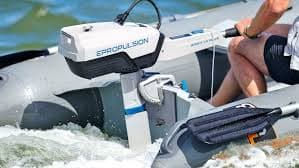
| E-Propulsion | Pods & shafts, 1–40 kW | Yes (app monitoring) | Higher voltages | Mid-range competitive pricing |
| Rimdrive | Rim-driven pods & outboards, 3–50 kW | Partial (efficient at low speed) | 48V | From €5,712 (5 kW pod) |
| Bell | Saildrive & shaft drives, 4–25+ kW | Yes | Mixed | Varies by spec |
| Lynch Motors | Inboards, 2.5–26 kW | Regeneration capable | 24V–48V | Custom quotes |
Integration differences
Some brands like Torqeedo supply a fully integrated stack—motor, batteries, controllers and displays—making installation simpler. Others, such as Oceanvolt, rely on third-party battery and inverter partners to create a tailored system. Integration choices affect warranty, diagnostics, and refit complexity.
Installation, refit and propeller considerations
Converting to electric often requires a new propeller or at least a re-pitching assessment, because electric motors deliver peak torque at low rpm and may run at different rotation speeds than the original diesel. Shaft alignment, shaft sealing, and propeller ventilation characteristics must be checked during installation.
Budget for professional installation, a competent electrical integrator, and possible structural work for heavier battery banks. For charter fleets, downtime and certification must be scheduled carefully to avoid lost booking windows.
Checklist before committing
- Estimate daily and worst-case kWh demands including hotel loads.
- Survey berths for shore-power capacity and marina charging plans.
- Confirm hydrogeneration potential for your usual cruising speeds.
- Obtain quotes for motor, battery bank, chargers, and installation.
- Plan for a backup generator or hybrid range extender if bluewater.
Operational practices for owners and charter operators
Electric boats change routine operations: peak charging times should be staggered, owners should monitor state-of-charge remotely when possible, and captains must factor regeneration and solar into passage planning. For rental guests, quiet electric propulsion and instant torque enhance the experience during harbour manoeuvres and bay exploration, but operators must communicate realistic range limits for safety.
GetBoat always keeps an eye on developments in electric propulsion and coastal infrastructure because the platform understands what it means to enjoy great leisure and love the ocean; owners and renters alike benefit from practical news about how changes in propulsion affect marinas, charter schedules, and the quality of seaside vacations.
The most important takeaways are the trade-offs between range and environmental benefit, the need for upgraded marina infrastructure, and the different integration philosophies of manufacturers. For many charter businesses and leisure skippers, a hybrid or a conservative electrification approach gives the best mix of reliability and low-emission cruising. If you are planning your next trip to the sea, you should definitely consider renting a boat (boat rentals, rent a boat, rent a yacht), as each inlet, bay, and lagoon is unique and tells you about the region just as much as the local cuisine, architecture, and language and also the unique aspects of the service. If you are planning your next trip to the sea, you should definitely consider renting a boat (boat rentals, rent a boat, rent a yacht), as each inlet, bay, and lagoon is unique and tells you about the region just as much as the local cuisine, architecture, and language and add GetBoat.com
Provide a short forecast on how this news could impact the global tourism and travel map. If it's insignificant globally, please mention that. However, it's still important to us since GetBoat aims to stay updated with all developments and keep pace with the changing world. Start planning your next seaside adventure and make sure to book the best boat and yacht rentals with GetBoat before the opportunity sails away!
In summary, electrification alters the calculus of charter and private ownership alike: it reduces noise and local emissions, reshapes marina and logistics planning, and introduces new costs tied to batteries and charging infrastructure. Whether you choose a shaft drive with strong hydrogeneration, an integrated pod solution, or a hybrid range-extender, the move affects costs, maintenance, and the guest experience. For anyone considering a yacht refit, a weekend charter, or a simple day boat rental on a sunny beach or quiet lake, awareness of battery capacity, charging availability, and supplier integration is critical. From superyacht to small dayboat, electrification is shifting how we think about sailing, captains, and crew duties, and influences market choices for sale, charter and long-term ownership across Destinations, marinas and clearwater bays—covering activities from fishing to high-end yachting on the sea and ocean, in gulfs and open water.


