Navier N30: Foiling Electric Tender Revealed
Alexandra
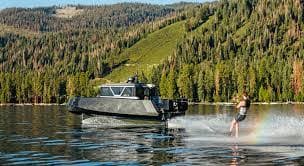
Hydrofoiling electric tenders like the Navier N30 cut typical port-to-anchor transit times and reduce onboard fuel logistics by eliminating gasoline refueling chains, improving turnaround for day trips and yacht tender operations by up to 30% in sheltered coastal routes.
Performance and operational facts
The Navier N30 uses three retractable hydrofoils—two aft and one forward—combined with a proprietary control system to transition from displacement mode to foiling in seconds. With the foils deployed, the hull lifts and the vessel sustains speeds above 30 knots while maintaining a remarkably low vibration profile over wakes. Twin 90-kW electric motors supply propulsion, and the claimed operational range is approximately 75 miles at 20 knots, with drag reductions of more than 80% when foiling.
Draft and adaptability
Draft-adjustment capability is central to the N30’s utility: a foiling draft near 6'3" (1.9 m) transitions to shallow displacement drafts of 18 or 24 inches when needed. That flexibility allows use as both a high-speed shuttle and a practical tender for bays, marinas, and protected anchorages—critical factors for superyacht crews planning transfers or day excursions.
📚 You may also like
Controls, sensors and redundancy
Navier’s operating system ingests sensor data on wave state and vessel motion to adjust foil angles in real time. The software provides redundancy and military-grade reliability claims, with a dashboard showing live charging status to help manage range anxiety on longer passages or repeated shuttle cycles.
Design lineage and team
The N30 program brings together naval architecture and advanced control systems: Paul Bieker—veteran of foiling campaigns in America’s Cup—contributed hull and foil concepts, while Kenny Jensen led autonomy and control-systems work. CEO and co-founder Sampriti Bhattacharyya, who trained at MIT and previously worked on underwater-mapping drones and NASA internships, has positioned Navier to pursue both recreational and urban water-transport use cases from the company’s Alameda, California, base.
Market positioning
Navier markets the N30 as both a cleaner dayboat and a next-generation tender for environmentally conscious superyacht owners. The limited-edition N30 Pioneer II builds on the baseline N30 architecture with more luxury options, convertible layouts (sunbed, optional overnight bed, and fishing layouts), and advanced operational hours of foiling experience built into the control algorithms. Pricing for Pioneer II begins at around $850,000 for invitation-only buyers.
| Specification | Navier N30 / Pioneer II |
|---|---|
| Top speed | 30+ knots |
| Propulsion | Twin 90-kW electric motors |
| Range | 75 miles @ 20 knots |
| Drag reduction (foiling) | >80% |
| Draft (foiling / displacement) | 6'3" / 18–24 in |
| Starting price | Pioneer II: ~$850,000 |
Implications for yachting, tenders and charter operators
Electric hydrofoils change several operational vectors for owners and charter managers. Reduced fuel logistics and lower routine maintenance shift TCO (total cost of ownership) assumptions for tenders, while quiet operation improves guest experience during transfers and daytime excursions. For charter operators and marinas, charging infrastructure and shore-power provisioning become planning priorities—installing fast-charging points at popular marinas or arranging mobile charging options can enable frequent shuttle rotations without downtime.
- Guest experience: smoother rides and near-silent runs enhance onboard comfort for daycharters and transfers.
- Maintenance: fewer moving parts and no internal combustion engine reduce routine service intervals and contamination risks.
- Infrastructure: marinas and superyachts must plan charging strategies and consider berth power upgrades.
Operational recommendations for owners and captains
To integrate an electric foiling tender into a yacht program:
- Survey local marina shore-power capacity and add reserve charging capacity when possible.
- Train crew on foil deployment thresholds and wake-avoidance maneuvers to protect foil integrity.
- Plan routes that leverage foiling efficiency for longer transfers and displacement mode for tight or shallow waterways.
GetBoat always keeps an eye on news related to sailing and seaside vacations, as the team understands what it means to enjoy great leisure and love the ocean. The platform values freedom, energy, and the ability to choose your own course—offering options that match preferences, budgets, and tastes without imposing limits on a good life.
Practical use cases and future outlook
Beyond serving as an advanced tender, Navier’s broader goal is to enable low-emission waterborne transport for passengers and light cargo in cities with waterways. If urban water routes scale, ports and marinas will need to adapt logistic flows for electrified fleets—charging scheduling, berth allocation, and waste-energy management will become part of local marine infrastructure planning.
For the charter and superyacht market, the immediate practical gains are clear: faster transfers, quieter guest experiences, and an attractive sustainability story for charters and private owners. However, adoption will track the pace of marina electrification and operator comfort with foiling technology in varied sea states.
The most interesting aspects of this development are the technical trade-offs and cultural shifts it implies: integrating autonomy and real-time sensor control with recreational boating introduces new skill sets for crew and changes expectations for shore-side support. Experiencing a new coastal destination is a multifaceted process—one learns about the culture, nature, the indescribable palette of local colors, the rhythm of life, and also the unique aspects of service; if you are planning your next trip to the sea, you should definitely consider renting a boat (boat rentals, rent a boat, rent a yacht), as each inlet, bay, and lagoon is unique and tells you about the region just as much as the local cuisine, architecture, and language GetBoat.com
Plan with purpose
Short forecast: regionally, the Navier N30 and similar electric hydrofoils could shift demand toward daycharters and high-end tender services where marinas are prepared to supply power—global tourism maps will adjust locally but are unlikely to be disrupted immediately at scale. However, this development is still highly relevant to customers and operators who prize sustainability and cutting-edge experiences. Start planning your next seaside adventure and make sure to book the best boat and yacht rentals with GetBoat before the opportunity sails away!
Summary: The Navier N30 represents an important step in electric foiling technology for tenders and dayboats—offering high speed, lower drag, and quieter transits thanks to twin 90-kW motors, intelligent foil control, and adaptable drafts. For yacht captains, charter operators, and marina planners the key takeaways are infrastructure readiness (charging and berth power), crew training on foiling operations, and new maintenance paradigms. Platforms like GetBoat.com support these shifts by connecting travelers and owners with available yachts, boats, and tenders worldwide, providing transparent listings of make, model, ratings and charter options for every budget. Embrace the blend of yacht-level comfort and cutting-edge propulsion—yacht, charter, boat, beach, rent, lake, sailing, captain, sale, destinations, superyacht, activities, yachting, sea, ocean, boating, gulf, water, sunseeker, marinas, clearwater, fishing—and set your course today.


