Nice showcase of electric and hybrid boats
Alexandra
Shipyards and refit yards reported multi-month lead times for battery packs and electric drive components at Nice Boating Tomorrow, forcing planners to sequence deliveries, allocate dock space for conversions, and coordinate shore-power upgrades in marinas to meet regulatory inspection windows.
What was on the water: a quick panorama
The event presented a cross-section of the market: production yachts adapted for hybridization, purpose-built electric dayboats, and an expanding roster of conversion and retrofit packages. Exhibitors illustrated how practical constraints — component sourcing, classification society approvals and local berth infrastructures — shape the deployment timeline for cleaner propulsion in both private and charter fleets.
Production yachts moving toward hybrid systems
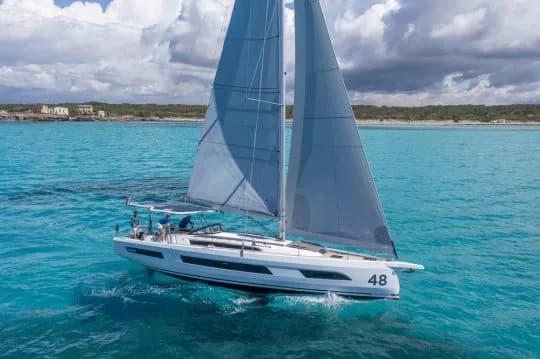
Several builders showed pragmatic hybrid integrations rather than radical redesigns. The Dufour 48 ODSea+ is an example of a mass-production sailing yacht fitted to accept hybrid propulsion and enhanced on-board energy management without altering the hull architecture. Similarly, Fountaine Pajot FP41 ODSea+ targets cruising multihull owners who want assisted electric propulsion and greater self-sufficiency at anchor, while Leopard 52 highlights incremental steps—improved battery storage, optimized alternators and integrated energy-management software—over full electrification.
📚 You may also like
Electric dayboats and coastal workboats
Purpose-designed electric models on display underline that the segment is maturing into defined niches: solar-assisted tenders, day-sailers and coastal service craft. The SRE 23 (Seamagine Eco Navigation / Seazen) uses solar arrays integrated into the deck plan and battery buffers sized for short commercial routes. The E-SOLE 750 and Dhamma Blue DHB-P01 illustrate clean designs for short-run passenger transport, marina transfers, and recreation in restricted-environment areas.
Conversion, retrofit and market structure
Companies such as Naval Transition and Seamagine Eco Navigation promoted conversion kits, feasibility studies and turnkey retrofit programs. Retrofitting remains a commercially logical path given the large existing fleet: owners can amortize investments while extending the operational envelope of proven hulls. However, conversion decisions hinge on local incentives, class approvals and the cost of replacing legacy diesel generators versus installing batteries and electric drives.
Motors and drive systems on show
Propulsion suppliers demonstrated a range of options from mainscale OEMs to specialized system integrators. Mercury Avator outboard electric motors in 7.5e, 20e and 35e variants signal mainstream engine-makers entering the segment, while suppliers like E-NAV Systems highlighted modular solutions such as AXC 36 Oceanvolt, MOLABO ARIES I 50, Momentum outboards and Servoprop 25 Oceanvolt. Bluenav positioned 8–15 kW motors for small craft conversions and modular upgrades, and vendors showed bow thrusters in the 5–10 kW range for close-quarters handling.
Table: Selected models and propulsion approaches
| Model | Propulsion | Intended Use | Key Feature |
|---|---|---|---|
| Dufour 48 ODSea+ | Hybrid (diesel + electric assist) | Cruising yacht | Integrated energy management |
| Fountaine Pajot FP41 ODSea+ | Hybrid | Crewed or owner cruising | Catamaran stability + assisted propulsion |
| Leopard 52 | Hybrid-ready | Cruising multihull | Modular retrofit capability |
| SRE 23 | Solar + battery electric | Coastal/professional dayboat | Onboard solar production |
| E-SOLE 750 / DHB-P01 | Battery electric | Day sailing / transport | Low-noise, low-emissions |
Operational implications for charter fleets and marinas
Adopting electric or hybrid boats changes the logistics matrix for charter operators: berthing allocations must include shore-power or high-capacity charging points, technician skill sets must expand to include high-voltage battery maintenance, and insurance underwriting evolves to account for battery fire mitigation and software-based energy management systems. For marinas, investing in reliable shore power and fast-charging infrastructure increases the attractiveness to sustainable fleets but requires coordination with local utilities and municipal permitting.
Checklist for operators considering conversion
- Assess berth power: verify shore-power capacity and options for fast charging.
- Plan for spare parts: battery modules and power electronics have different lead times than diesel spares.
- Train crew and technicians: high-voltage awareness and thermal-management procedures are essential.
- Factor certification: consult classification societies early in the design-to-refit process.
Context and relevance for recreational sailing and rentals
Purpose-built electric dayboats and retrofitted yachts create new choices for holidaymakers and charter companies. Lower noise, reduced local emissions, and simplified engine handling can attract families, coastal operators, and eco-conscious renters. GetBoat always keeps an eye on news related to sailing and seaside vacations, as we truly understand what it means to enjoy great leisure and love the ocean. The GetBoat service values freedom, energy, and the ability to choose your own course. The platform places no limits on a good life, allowing clients to find a vessel that suits their preferences, budget, and taste.
Practical tips for renters and skippers
When booking a cleaner-propulsion craft for a charter or day trip, confirm charging arrangements at your departure marina, ask about skipper training on electric systems, and review the vessel’s stated range and recharging time. Transparent listings that include make, model, and ratings help match expectations: look for vessels with clear energy-management data and crew briefings on emergency procedures.
The rise of converted yachts and new electric models is likely to have a measured but tangible impact on destination tourism: regionally significant in sensitive bays and popular marinas where noise and emissions restrictions are enforced, but not yet a wholesale global shift. Start planning your next seaside adventure and make sure to book the best boat and yacht rentals with GetBoat before the opportunity sails away!
Highlights: the market now offers clear options across segments—production hybrids for cruising, electric dayboats for short coastal runs, and organized retrofit paths for existing fleets. Experiencing a new location remains multifaceted: one learns about the culture, nature, the indescribable palette of local colors, its rhythm of life and also the unique aspects of the service. If you are planning your next trip to the sea, you should definitely consider renting a boat (boat rentals, rent a boat, rent a yacht), as each inlet, bay, and lagoon is unique and tells you about the region just as much as the local cuisine, architecture, and language GetBoat.com
Summary: Nice Boating Tomorrow underscored a sector in transition — hybridized production yachts, electric dayboats, and a maturing retrofit market are shaping future charters and private ownership. Logistics, supply-chain lead times and marina infrastructure remain the gating factors for wider adoption. For travelers and fleet managers alike, these developments create new charter options and planning considerations across yachts, charter boats and day rentals. Whether you seek a quiet sail along the gulf, a superyacht-style cruise, or a compact boat for fishing and beach hopping, transparent listings and reliable details make the choice easier for captain and crew. GetBoat.com offers a global, user-friendly solution for booking and buying boats, yachts and sailboats with clear listings and honest ratings — transparency that supports unforgettable maritime experiences. Enjoy the voyage.