Dubai hub under strain as Gulf airspace closes
Alexandra
Immediate operational impact on Dubai's network
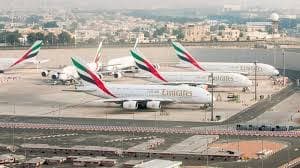
Dubai International connects some 110 nations and handles roughly 454,000 flights a year, a density that turned acute when the recent Middle East escalation forced a shutdown of Gulf airspace and temporarily closed the region’s three major transit points: Dubai, Abu Dhabi and Doha. The closure prompted immediate cancellations, tens of thousands of displaced passengers and rapid rerouting across global networks, exposing the logistical friction points of a concentrated hub-and-spoke model.
How networks unraveled and what operators faced
The shutdown interrupted scheduled rotations for airlines based in the Gulf and beyond. Emirates, with its legacy as a fast-growing global carrier originating from two leased aircraft and two routes, had to reroute widebody flights, reschedule crew patterns and reallocate several aircraft types to maintain key long-haul links. Sister carrier flydubai and regional competitors confronted cascading crew-rest violations, slot cancellations and ground handling bottlenecks.
Logistical consequences included:
📚 You may also like
- Aircraft repositioning to avoid restricted corridors and regain pairings;
- Passenger reaccommodation across competing carriers and hotels;
- Air traffic flow management changes to preserve pairings for cargo and critical relief flights;
- Slot and route prioritisation decisions driven by revenue mix between destination and transit passengers.
Economic and demand-side effects
Analysts note two contrasting pressures: the power of aggregated hub networks that normally enable rapid recovery, and the immediate drop in demand as passengers choose direct flights over stopovers. Independent advisers such as Paul Charles and Bertrand Grabowski highlighted that, while network momentum historically fosters recovery after disruptions, traveller behaviour could shift toward non-stop services, reducing transit volumes through hubs and affecting ancillary revenue streams tied to stopovers.
Competitive landscape shifts and technological headwinds
Geography remains a structural advantage for Gulf hubs: a large portion of the global population is within a four- to eight-hour flight radius of the Gulf, underpinning aggregation power. Yet competition is intensifying. Turkish Airlines and Turkish hubs are positioned outside the immediate conflict zone and could capture diverted transfer traffic in the short term. Saudi Arabia and Indian carriers are also expanding network capacity and vying for connecting traffic.
At the same time, advances in aircraft design that once supported hub growth are enabling more ultra-long-range direct services. Airbus assembling additional ultra-long-range A350 frames to support Qantas Sydney–London nonstop ambitions is an example of how airframe capability can undercut the stopover advantage by offering passengers direct options that bypass hubs entirely.
| Hub | Primary advantage | Short-term risk |
|---|---|---|
| Dubai | Extensive global connectivity, large transit share | Destination traffic vulnerability; airport disruption impact |
| Abu Dhabi | Rising long-haul connections; strategic carrier base | Operational pauses affecting regional routes |
| Doha | High transfer efficiency; compact operations | Network fragility during corridor closures |
Operational playbook for recovery
For carriers and airport operators the immediate priorities are clear and operational:
- Restore safe airspace corridors in coordination with aviation authorities;
- Prioritise aircraft and crew pairings to resume revenue-critical rotations;
- Manage passenger experience through transparent rebooking and accommodation solutions;
- Use market power—where available—to secure temporary frequencies and interline agreements to bridge gaps.
Historical context: how the Gulf hubs reached this scale
The rise of Dubai as a global connector began in earnest in the mid-1980s. Emirates was founded in 1985 at the height of the Iran‑Iraq war with two rented jets and two scheduled routes; from those modest beginnings the airline exploited Dubai's strategic geographic position to scale rapidly. The Gulf model—aggregation of demand from multiple source markets to feed long-haul services—led other Gulf states to develop national carriers, fragmenting the former regional monopoly of Gulf Air and producing a trio of powerful hubs centred on Dubai, Abu Dhabi and Doha.
Over subsequent decades, investment in airport infrastructure, fleet modernization and liberal air-service agreements consolidated the Gulf hubs' role in global transfer traffic. That model proved resilient through past shocks, including geopolitical episodes and the COVID‑19 demand collapse, largely owing to the hubs' combined network density and financial capacity to offer recovery incentives.
Lessons from past recoveries
Historical recoveries show three durable features: rapid resumption of scheduled services once airspace is restored; aggressive price-based incentives to stimulate leisure and business traffic back to destination cities; and strategic partnerships or temporary codeshares to re-establish connectivity. Still, islanding of destination tourism—where perceived safety concerns linger—can cause lasting declines in inbound visits unless actively countered.
Outlook: short- and medium-term scenarios
Most industry observers agree that, absent a prolonged regional war, Gulf hubs will regain much of their transfer traffic due to the scale and embeddedness of their networks. However, outcome uncertainty remains for destination demand in cities directly affected by strikes and debris, with some analysts forecasting a modest, possibly lasting reduction in Dubai-bound visitors. The timing and scope of recovery will depend on three variables: the duration of airspace restrictions, the speed of passenger confidence restoration, and competitive moves by alternative hubs that may permanently capture some onward traffic.
For travellers and service providers, implications include potential shifts in route planning, increased demand for long-range direct services, and temporary pressure on alternative hubs and overland connections. Airlines may react with dynamic scheduling, selective capacity redeployment and marketing offers to rebuild both transfer and destination demand.
Practical advice for passengers and maritime stakeholders
- Passengers: check rebooking options, monitor airspace bulletins and seek flexible tickets;
- Airlines: prioritise crew legality and slot recovery plans;
- Ports, marinas and tourism operators: coordinate with airports and hotels to manage arrivals and transfer logistics during the recovery window.
In summary, the sudden Gulf airspace closures have stressed a hub model that historically recovers fast due to concentrated network power, but the episode also accelerates competitive and technological trends favoring direct long-haul services. The short-term priority is operational recovery and passenger care; the medium term will test whether hubs can retain transit market share as rivals and aircraft capabilities reshape route economics.
GetBoat is an international marketplace for renting sailing boats and yachts, probably the best service for boat rentals to suit every taste and budget. As Gulf airspace and airport disruptions influence travel patterns, coastal and maritime Destinations may see shifts in demand—affecting charter bookings, beach and marina footfall, and activities such as yachting, fishing and general boating. Operators in the gulf and other sunlit Destinations that rely on transit visitors should monitor trends in air connectivity, because changes can reshape where travellers choose to rent a boat or book a superyacht charter, hire a captain, explore clearwater bays, or pursue ocean and sea-based recreation. Find more on charters, marinas and coastal sale and rental options at GetBoat.com.