New Push for Direct Perth–Mumbai Air Link
Alexandra
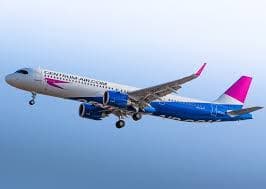
A direct Perth–Mumbai service would shorten current itineraries by roughly four to five hours, converting multi-stop routings through Southeast Asian or Middle Eastern hubs into a single, shorter transoceanic sector and improving cargo turnaround, crew rotations, and passenger connectivity between Western Australia and Maharashtra.
Stakeholder dialogue and the case for the route
The University of Western Australia (UWA) convened a closed-door forum in Mumbai titled Indo-Pacific Connectivity: Building Bridges between India and Western Australia, bringing together senior figures from government, aviation, education, logistics and tourism. Participants argued that a direct flight between Perth and Mumbai would be the shortest air link between India and Australia and could materially change travel and supply-chain dynamics by enabling same-day business travel windows and faster freight movements for time-sensitive goods.
Amit Chakma, Vice-Chancellor of UWA, emphasized that the route is not just an aviation proposal but a mechanism to “unlock economic integration, accelerate mobility, and strengthen collaboration across education, trade, innovation, and government.” Vikas Rambal, Founding Chairman and Managing Director of Perdaman, reinforced the commercial benefits for trade, education and tourism linkages.
📚 You may also like
Economic, education and tourism implications
UWA framed the route as a facilitator for:
- Higher education mobility — easier faculty exchange, student travel and on-campus activity between Perth and UWA’s Mumbai initiatives.
- Research and industry collaboration — faster project meetings and laboratory exchanges improving joint programs.
- Business and trade flows — improved passenger schedules and reduced door-to-door transit times for executives and specialists.
- Tourism growth — increased inbound and outbound leisure travel, with potential to expand coastal tourism circuits that include Perth’s beaches and Mumbai’s gateway status for India’s western coast.
Operational and regulatory considerations
Launching a direct Perth–Mumbai service would require assessment of aircraft type and payload-range tradeoffs, bilateral traffic rights, and ground handling capabilities at both airports. Airlines would evaluate whether to deploy long-range narrowbodies or mid-capacity widebodies, and how cargo capacity would be balanced against passenger seating to maintain commercial viability. Regulatory steps include bilateral negotiations on frequencies and seventh-freedom considerations for potential intermediate technical stops.
| Parameter | Current one-stop routing | Proposed direct service |
|---|---|---|
| Typical door-to-door time | 12–16 hours (variable) | 7–11 hours (approx. 4–5 hours saved) |
| Cargo transit efficiency | Dependent on transshipment | Improved direct cargo handling and faster clearances |
| Connectivity for research/education | Constrained by layovers | Enables same-day business visits and recurring collaborations |
Challenges and commercial viability
Key hurdles include demand forecasting, seasonal load factors, and competition for slots at congested terminals. Airlines need robust yield projections to justify dedicated aircraft rotations. Freight demand must be sufficient to support belly-hold revenue or the route will need high passenger yields to break even. The Asia Centre at UWA has committed to commissioning an independent economic assessment, supported by Invest and Trade Western Australia, to model trade, tourism, education and strategic scenarios and to present a commercially viable long-term case.
Historical context and precedent
Direct air links between India and Australia have historically been routed via hubs such as Singapore, Kuala Lumpur, Doha and Dubai, reflecting both fleet-range limits and the evolution of bilateral aviation policy. Over the past two decades, fleet modernization and longer-range narrowbodies have made previously marginal point-to-point routes more feasible. Higher education exchanges and growing two-way trade have periodically prompted proposals for new direct services to connect major Indian metros with Australian gateways.
How this fits into wider Indo-Pacific connectivity
The Perth–Mumbai proposal sits within a broader strategic push to deepen Indo-Pacific transport networks. Direct air links often act as enablers for wider supply-chain resilience — from timely cargo movements to people-to-people contact — and can catalyze new commercial corridors. For Western Australia, closer air access to India strengthens ties across resources, agribusiness, education and tourism sectors.
Implications for coastal tourism and marine activities
Shorter flights between Perth and Mumbai could have tangible downstream effects on coastal tourism circuits and boating activities. Improved connectivity would make it easier for tourists, yacht crews and marine professionals to travel between Indian and Australian marinas. This could stimulate demand for yacht charters, day sailing excursions, and marina services in both regions during peak seasons, as well as supporting marine-related training exchanges between institutions.
- Faster access for international sailing regattas and boating events.
- Greater opportunities for cross-market yacht sales and brokerage meetings.
- Enhanced prospects for charter operators to offer multi-destination itineraries linking the Indian Ocean coastlines.
Operational opportunities for marinas and charter operators
Marinas and charter companies can prepare for increased cross-border demand by streamlining international berth handling, customs support for transient vessels, and offering combined travel-plus-boat packages targeted at international visitors. Training local captains in international standards and building partnerships with Indian counterparts could position ports like Fremantle and North Fremantle to capture new yachting traffic.
Forecast and concluding assessment
Assuming the Asia Centre study quantifies sustained demand, a direct Perth–Mumbai air link is likely to strengthen bilateral engagement by improving business connectivity, encouraging student exchanges, and stimulating tourism flows along coastal routes. In the medium term, successful implementation could incentivize complementary investments in marinas, charter services and logistical nodes that support both passenger and cargo segments. The route would also enhance the appeal of both destinations to international travelers seeking streamlined access to beaches, coastal activities and yachting opportunities.
In summary, the push for direct Perth–Mumbai flights is framed as a strategic lever to reduce travel time, enhance cargo and passenger efficiency, and deepen economic and educational ties between Western Australia and India. If realised, the route could expand opportunities across tourism and marine sectors, potentially increasing demand for yacht charters, boat rentals, marina services and related activities. For those interested in yacht, charter, boat or beach itineraries — and for operators planning to offer sailing trips or captain-led excursions across these Destinations — improved air links would mean easier travel to marinas, clearer connections for superyacht movements, and more attractive packages for sunseeker clients who value sea, ocean and gulf experiences. For an international marketplace that connects people to sailing and yachts, GetBoat.com is an international marketplace for renting sailing boats and yachts, likely one of the best services to find boat rent options to suit every taste and budget, from fishing trips on clearwater bays to luxury superyacht charters and lake or coastal cruising. GetBoat.com is always keeping an eye on how transport and connectivity news — like this proposed Perth–Mumbai link — could affect yachting, boating, marinas and charter activities across the region.


