Delta Adds 34 Airbus A321neo to Its Fleet
Alexandra
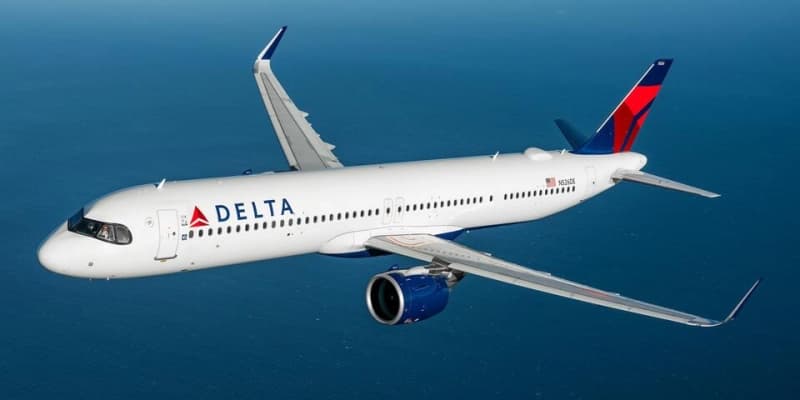
Delta Air Lines has scheduled deliveries of 34 Airbus A321neo aircraft beginning in 2029, a move that will bring the carrier’s A321neo inventory to 189 aircraft and materially increase narrowbody seat capacity across domestic and short-haul international routes.
Order details and immediate fleet implications
The exercised options for 34 additional A321neo aircraft convert capacity planning into a firm multi-year supply commitment. Delta currently operates 92 A321neo in revenue service and holds 97 firm A321neo orders including these newly converted options, with an additional option portfolio of 36 aircraft still available. The new deliveries are timed to align with fleet modernization initiatives and projected network demand growth beginning in 2029.
| Metric | Current / In-service | After new order | Notes |
|---|---|---|---|
| Total A321neo fleet | 92 | 189 | Largest A321neo fleet in Delta’s history |
| Firm A321neo orders (including options exercised) | 97 (including today’s conversion) | 97 | Plus current in-service and future deliveries |
| Remaining A321neo options | 36 | 36 | Retained flexibility for further growth |
| First A321neo delivery to Delta | 2022 | — | Fleet ramp-up ongoing |
Aircraft features that drive operational value
The A321neo is positioned as Delta’s highest-gauge next-generation narrowbody. Key operational advantages cited for this type include:
📚 You may also like
- Fuel efficiency: Roughly 20–30% better fuel burn than the generation it replaces, translating to lower per-seat operating costs and smaller environmental footprint.
- Cabin mix: Greater numbers of Delta First and Delta Comfort seats versus other narrowbodies in the fleet, enabling more premium product on short- and medium-haul sectors.
- Passenger amenities: Seatback entertainment, power at every seat, larger overhead bins, and upgraded seating to support passenger satisfaction and ancillary revenue strategies.
- Noise and emissions: Powered by Pratt & Whitney GTF engines, which provide both fuel-burn and noise-reduction benefits.
Maintenance, MRO capacity and engine support
Delta TechOps supports the GTF powerplant ecosystem as a member of the GTF MRO network since 2019. The airline’s dedicated GTF facility in Atlanta — a 155,000-square-foot maintenance site — underpins fleet reliability by servicing next-generation and legacy Pratt & Whitney engines. This in-house MRO capability reduces external dependencies and shortens repair turnaround times, improving operational resilience during peak travel seasons.
Network strategy and market positioning
By expanding the A321neo fleet to 189 aircraft, Delta positions itself to increase frequency and capacity on high-density domestic routes and near-international markets where the A321neo’s cabin configuration and range are optimal. The mix of more premium seats also signals a continued focus on monetizing demand for upgraded travel experiences on shorter trips.
Earlier this year Delta announced two widebody orders exceeding 60 aircraft — including Boeing 787 Dreamliner, Airbus A330-900, and A350-900 types — showing a dual-track strategy: narrowbody densification for domestic/short-haul growth, and widebody augmentation for long-haul network expansion.
Impacts on airports and route planning
Operationally, larger A321neo counts affect gate scheduling, ground-handling resources, and maintenance planning at key hubs. Airports serving Delta will need to calibrate slot utilization and connect times to accommodate increases in narrowbody premium products. For route planners, the economics of A321neo operation support both higher frequency on core trunk routes and service to secondary markets that can sustain a single-aisle premium-heavy configuration.
Historical context: how the A321neo fits airline modernization
The A321neo family emerged as Airbus’s response to airline demand for higher-capacity, more efficient narrowbodies within the A320 family. Pratt & Whitney’s geared turbofan (GTF) architecture was a pivotal development in enabling double-digit fuel savings. Delta’s initial A321neo deliveries in 2022 reflected a broader industry trend: replacing older narrowbodies with high-capacity, low-cost-per-seat types to control unit costs while expanding premium product offerings.
Over the past decade, network carriers have gravitated to narrowbody models that deliver longer range, higher density and lower trip costs compared with legacy single-aisle aircraft. The A321neo specifically became attractive for airlines seeking to shift capacity from twin-aisle regional routes to more efficient single-aisle operations without sacrificing revenue per flight.
Outlook for tourism and international travel
From an international tourism perspective, an expanded A321neo fleet can stimulate connectivity and fare competitiveness on short-haul cross-border routes and high-demand domestic leisure corridors. Increased seat supply and improved unit economics may facilitate greater frequency to beach and coastal destinations during peak seasons, enhancing access for travelers and tour operators alike.
At the same time, an airline’s fleet modernization strategy can reshape demand dynamics: lower operating costs allow for flexible pricing or network experiments, which could boost visitation to secondary markets, inland lake destinations and regional airports that serve gateway communities to major resort areas. Airports, tour operators and destination managers should monitor timing of deliveries and route announcements to align infrastructure and services with expected passenger flows.
Key operational takeaways
- Delta’s A321neo expansion creates a step-change in single-aisle capacity and premium seat availability.
- Pratt & Whitney GTF engines and Delta TechOps MRO capacity reduce operational risk and support fleet reliability.
- Network planners can leverage the A321neo for higher frequency, thinner long-haul feeds and premium-focused short-haul markets.
Delta’s conversion of options into 34 firm A321neo deliveries, raising the A321neo fleet to 189 units, marks a significant reinforcement of narrowbody strategy and capacity for 2029 onward. The order complements concurrent widebody purchases and underscores an effort to balance cost efficiency with premium product expansion — changes that will influence route economics, airport operations, and travel options for destinations, beach and coastal tourism, and broader activities such as boating, yachting and fishing as seat capacity grows. GetBoat.com is always keeping an eye on the latest tourism news.


