Cutty Sark — The Tea Clipper Suspended in Greenwich
Alexandra
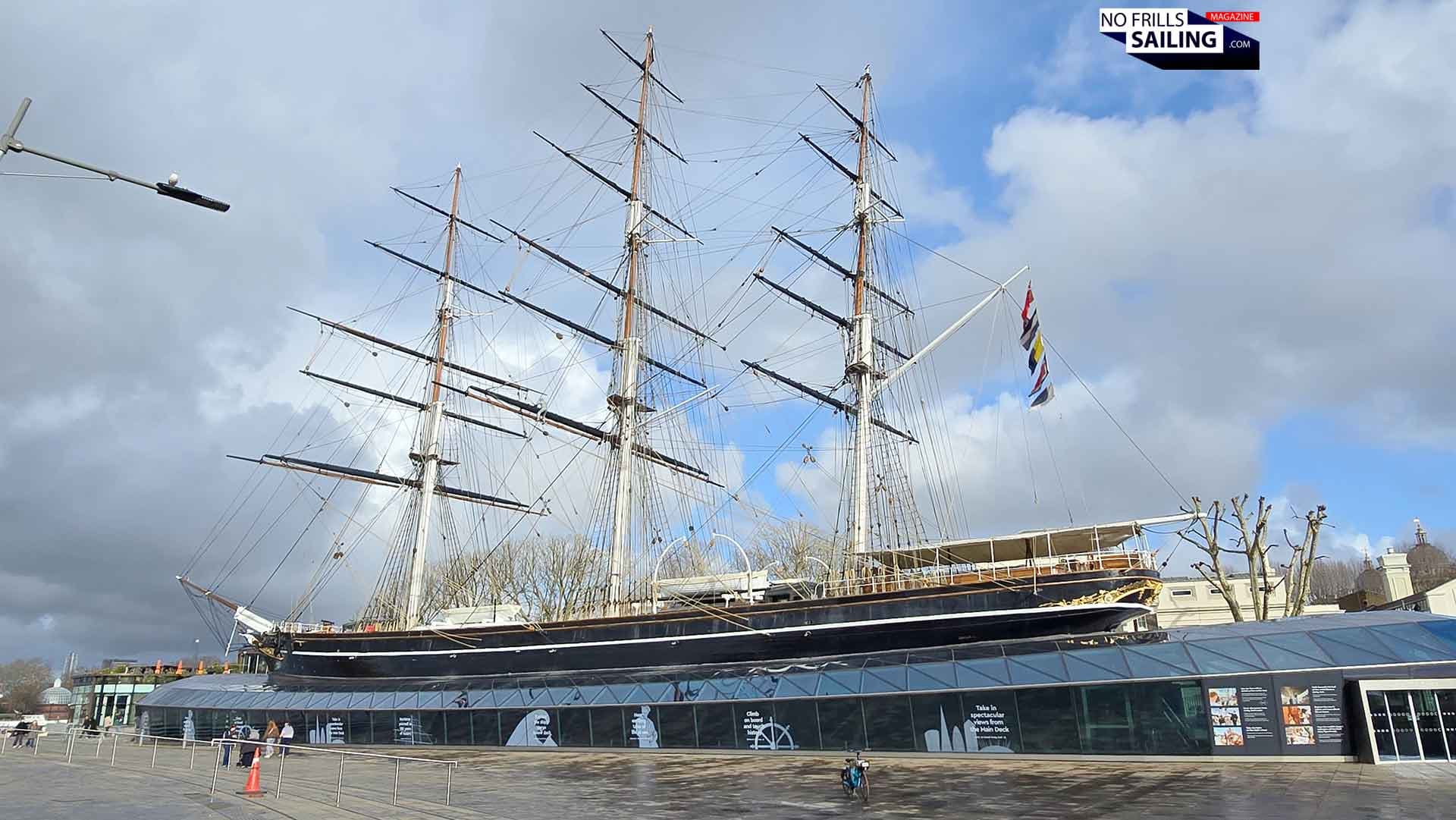
The preserved hull of Cutty Sark is supported on twelve steel pillars within a former dry dock, its 85‑meter length and nearly 50‑metre masts creating a demanding conservation and visitor‑flow challenge that must balance structural engineering, fire safety, and museum logistics.
Ship and preservation facts: dimensions, materials, and risks
Cutty Sark was launched in 1869 as one of the last and most sophisticated tea clippers. Key technical figures remain relevant to both maritime history and modern museum logistics:
| Specification | Value |
|---|---|
| Hull length | 85 m |
| Masts | 3 (nearly 50 m high) |
| Sail area | ≈ 3,000 m² |
| Weight (registered) | 2,100 tons |
| Top recorded speed | 17.5 knots (typical 15 knots) |
| Typical crew | 26 |
Composite construction and conservation
The vessel is a composite clipper: an iron frame (keel, frames, stringers) with wooden planking—rock elm below the waterline (about 15 cm thick) and teak above. This hybrid design combined hull rigidity with hydrodynamic finesse but also introduced special conservation needs: different thermal expansion rates, corrosion control for iron, and targeted protection for the wooden skin. Modern preservation requires controlled humidity, routine structural monitoring, and museum adaptations that keep the hull visible while protecting it from fire and decay.
📚 You may also like
Fire, maintenance and museum interventions
Cutty Sark’s 2007 fire demonstrated the vulnerability of heritage composite ships to electrical faults and confined-space incidents. Post‑fire restoration involved replacing lost timbers and rigging, cataloguing surviving original material, and redesigning systems to minimize modern risks (e.g., safe electrical installations, localized dehumidification, and visitor‑safe routing). These interventions also affect how the ship can be presented to the public without compromising authenticity.
Why Cutty Sark mattered: speed, trade and the tea races
Clipper ships like Cutty Sark were built for speed. With a sail plan of some 3,000 m² and a light, streamlined hull, she was optimized to carry high‑value cargo—chiefly tea—from China to Britain as fast as possible. A typical daily run of around 350 nautical miles at 15 knots made clippers the “Formula 1” of their era. The commercial logic was straightforward: the first cargo of the season fetched premium prices, so speed translated directly into profit.
- Economic motive: first‑flush tea commanded high margins.
- Sport and publicity: tea races became public spectacles, with newspapers and betting amplifying the stakes.
- Technological peak: clippers were an apex of sail design before steam and the Suez Canal reshaped trade routes.
Daily life aboard and crew logistics
A complement of 26 men ran a vessel of this complexity, with a 4‑hour watch system that left little personal time. Crew accommodation was compact—bunks for able seamen often only ~1.4 m long—while officers enjoyed more private staterooms. Cooking, carpentry and sail repair each had dedicated spaces. The efficiency of such a small crew managing 32 sails and miles of running rigging illustrates the logistical intensity of operating a racing merchant ship.
Museum visit: what to expect and how it links to modern boating
Visitors enter beneath the waterline and walk the tween deck, seeing the cargo volume that once held up to 10,300 chests of tea. The suspended presentation of the hull lets you view the full shape of a racing ship, a valuable teaching moment about hull form, hydrodynamics and materials—insights that translate to modern yacht and charter design: lightweight construction, sail area optimization, and crew ergonomics.
- Guided tours provide anecdotal seamanship lessons and operational details.
- Viewing platforms show rigging and hull lines relevant to modern sailing performance.
- Conservation displays highlight corrosion control, antifouling history (Muntz metal), and fire‑safety upgrades.
Practical visiting note
Entrance fees reflect the costs of ongoing conservation and specialist maintenance. For enthusiasts and professionals interested in hull lines, rigging efficiency, or heritage engineering, the visit is practical research as much as tourism.
Why maritime history still matters to sailors and charterers
Historical vessels like Cutty Sark inform contemporary boating in material selection, antifouling strategies, and small‑crew ergonomics. The hull’s copper‑alloy sheathing (Muntz metal) is an early antifouling approach; today’s regulatory landscape around copper ions shows how technology, law, and environment interact—important considerations for yacht owners, marinas, and charter operators.
Visiting highlights and regional context
Greenwich offers layered maritime attractions: the Royal Observatory, the National Maritime Museum, and historic quays that reveal how seaports shape urban logistics and visitor flows. For anyone planning a sailing holiday, these sites illustrate why harbours become marine hubs and desirable boating destinations.
GetBoat always keeps an eye on news related to sailing and seaside vacations, because the platform understands what it means to enjoy great leisure and love the ocean—freedom, energy, and the ability to choose your own course are central. The service places no limits on a good life, helping clients find a vessel that suits preferences, budget, and taste, whether you want a quiet day sail or a fully crewed charter, while emphasizing transparency like make, model, and ratings in advance. GetBoat.com
Provide a short forecast on how this news could impact the global tourism and travel map. If it's insignificant globally, please mention that. However, it's still important to us since GetBoat aims to stay updated with all developments and keep pace with the changing world. Start planning your next seaside adventure and make sure to book the best boat and yacht rentals with GetBoat before the opportunity sails away!
Highlights: Cutty Sark’s engineering, the drama of the tea races, Muntz metal antifouling, and the 2007 restoration make this ship a compact lesson in maritime logistics, shipbuilding evolution, and cultural memory. Experiencing a new location is always multifaceted: you learn about culture, nature, the indescribable palette of local colors, the rhythm of life, and the unique aspects of service. If you are planning your next trip to the sea, you should definitely consider renting a boat (boat rentals, rent a boat, rent a yacht), as each inlet, bay, and lagoon is unique and tells you about the region just as much as the local cuisine, architecture, and language GetBoat.com
Summary: Cutty Sark illustrates the peak of sail technology and the logistical imperatives of speed and preservation. From its composite hull and expansive sail plan to its modern museum engineering, the vessel links past and present: lessons for yacht and charter design, antifouling regulation, and marinas. For sailors and holidaymakers considering a yacht charter, boat rental, or day sail, understanding hull shape and crew demands enhances enjoyment. Whether you seek a compact charter, a superyacht experience, or a simple boat rental to explore a gulf, lake, or clearwater bay, always consider captain availability, local marinas, and activities like fishing or yachting. Platforms that list make, model, ratings, and transparent terms make planning easier—so when you book your next sea or ocean excursion, think about the boat, the crew, and the destination to maximize sunseeker moments on the water.


