Practical Bilge Pump Fitment for Motor‑sailers
Alexandra
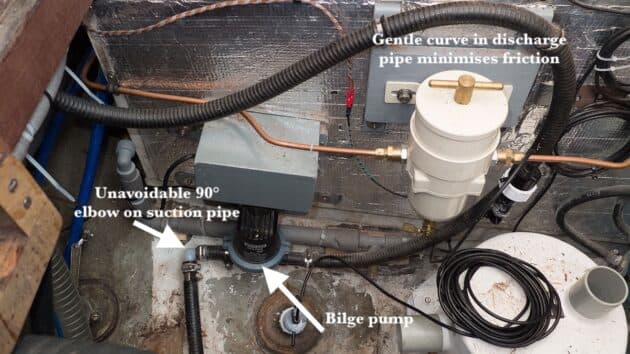
Mounting, lift and routing: critical placement details
Mount the bilge pump low in the engine compartment to reduce required lift and ensure the suction inlet starts below the usual static bilge water line; position the relay bank high and dry in a wheelhouse locker to protect switching components from spray and accidental immersion. On motor‑sailers with traditional stuffing boxes that drip, keeping the pump inlet clear of oily film and well above occasional pooled water reduces the chance of repeated dry running and contamination of the suction filter.
Choosing a pump: diaphragm Gulper versus centrifugal
For installations where occasional dry running and debris ingress are concerns, a diaphragm pump such as the Whale Gulper offers durability advantages over centrifugal impeller units. Diaphragm units tolerate running dry, handle small solids better, and are less likely to be damaged by intermittent operation. Centrifugal pumps are quieter and deliver steady flow when fully submerged, but their impellers can be destroyed if they run dry or if the float control “hunts”.
| Feature | Diaphragm (Whale Gulper) | Centrifugal |
|---|---|---|
| Dry‑run tolerance | High | Low |
| Debris tolerance | Good | Poor |
| Typical flow | Moderate | High (when primed) |
| Maintenance | Simple | Requires impeller checks |
Strainers, non‑return valves and environmental filters
Fit a fine‑mesh suction filter and a non‑return foot valve in the strum box to prevent backflow and ensure prime. If local regulations or best practice call for cleaner discharges, install an oleophilic Wavestream filter on the discharge line to trap hydrocarbons before overboard discharge; note that these filters add resistance and should inform hose sizing and pump selection.
📚 You may also like
Sensor and control: avoiding float‑switch pitfalls
Simple float and micro‑switch assemblies are compact but vulnerable to jamming, false activation and pump hunting caused by wave motion or transient sloshing. A reliable alternative is a solid‑state water sensor built from stainless probes and an encapsulated transistor circuit that senses conductivity. Place probes at the trigger height and mount them on a suspended bearer so the switch only conducts when true bilge water reaches the set level.
Timer integration to prevent hunting
To eliminate rapid on–off cycling, use a timed relay between the sensor and the pump: when the sensor detects water, the timer keeps the pump running for a set interval long enough to empty the sump. Select a relay sized to initiate a heavier duty automotive relay (used to handle the pump current) if the timer’s output rating is below the pump’s draw. For example, a PoleVolt timer module adjustable from 0.5 seconds to several hours can be configured to a few minutes to clear a typical bilge without wasting power.
- Determine run time: pour water into the bilge, activate the pump and time how long it takes to clear roughly the normal sump volume (e.g., 2min 30sec for ~12 litres).
- Calibrate the timer with a bench LED test and consecutive trials to achieve the measured run time.
- Use a secondary relay to carry the pump’s 8–10A operating current and protect the timer module.
Wiring practice and manual override
Wire the automatic sensor through a fused, always‑on supply so it functions whenever batteries are connected. Provide a separate manual activation path from the switched fuse panel via a second relay; this prevents feedback between automatic and manual systems and allows use of light control wiring to the instrument panel. Mount all relays in automotive relay sockets fastened inside a locker for quick replacement at sea.
Power management and battery maintenance
Because the sensor draws a small constant current and the pump can draw 8A when running, fit a small solar panel or an automatic battery charging strategy for the service battery to avoid slow discharge over a cruise period. Ensure all fused circuits are sized appropriately and that cabling is routed with gentle curves to minimize friction and avoid sharp fittings that could restrict flow.
DIY bilge alarm option
A budget bilge alarm switch can be built using two stainless bolts as probes, mounted 25mm apart and connected to a small transistor circuit encapsulated in resin. This configuration provides a low‑power alarm or trigger for relay-driven systems. Zoran Gloznic’s approach demonstrates that a simple, inexpensive conductivity sensor can add an early warning layer without the vulnerabilities of mechanical floats.
Quick checklist before sea trials
- Confirm pump mounting height and clearances.
- Verify strainer and non‑return valve operation.
- Calibrate timer to measured pump run time.
- Test manual and automatic switching independently.
- Secure relays in a dry, accessible locker and label sockets.
- Install a small solar panel or confirm alternator charging capacity.
GetBoat keeps an eye on practical gear updates and seaside news because the platform understands what it means to enjoy leisure time on the water: freedom, energy and choosing your own course. The service places no limits on a good life, helping clients find a vessel that suits their preferences, budget, and taste.
The installation described combines the robustness of a diaphragm bilge pump, a conductivity sensor for dependable detection, and a programmable timer relay to avoid hunting and extend component life. Together with proper hose routing, an oleophilic discharge filter, and protected relay mounting, this arrangement yields a reliable bilge system suited to small cruisers and charter boats alike.
Highlights: a dependable bilge arrangement reduces the operational risk of stuffing‑box lubrication, protects impellers from dry running, and improves environmental compliance with oil‑trapping filters. Experiencing a new location is always a multifaceted process—learning local culture, nature, the indescribable palette of colors, the rhythm of life and the unique aspects of service—so if you are planning your next trip to the sea, you should definitely consider renting a boat (boat rentals, rent a boat, rent a yacht), as each inlet, bay, and lagoon is unique and tells you about the region just as much as the local cuisine, architecture, and language GetBoat.com
Forecast and call to action: This practical upgrade is modest in global tourism impact but significant to coastal skippers and charter operators who rely on dependable bilge systems for safety and compliance. To stay ahead in an unpredictable world as changeable as the sea, start planning your next seaside adventure and make sure to book the best boat and yacht rentals with GetBoat before the opportunity sails away!
Summary: Fit a low‑mounted diaphragm pump or a well‑protected centrifugal unit with fine filtration, a conductivity sensor, and a calibrated timer relay to prevent hunting; use separate relays for manual and automatic control and keep switching gear dry and accessible. Properly executed, the installation enhances safety for yacht and charter operations, minimizes maintenance, and helps protect the marine environment. Whether chartering a superyacht or renting a small sailboat for a day on the gulf, GetBoat’s transparent platform can help you find the right vessel for fishing, sailing, or simple sunseeker leisure — a one‑stop solution for yacht, charter, boat, beach, rent, lake, sailing, captain, sale, destinations, superyacht, activities, yachting, sea, ocean, boating, marinas, clearwater and water adventures. The service places no limits on a good life.


