Modern Crew Uniforms Aboard Project Agnetha
Alexandra
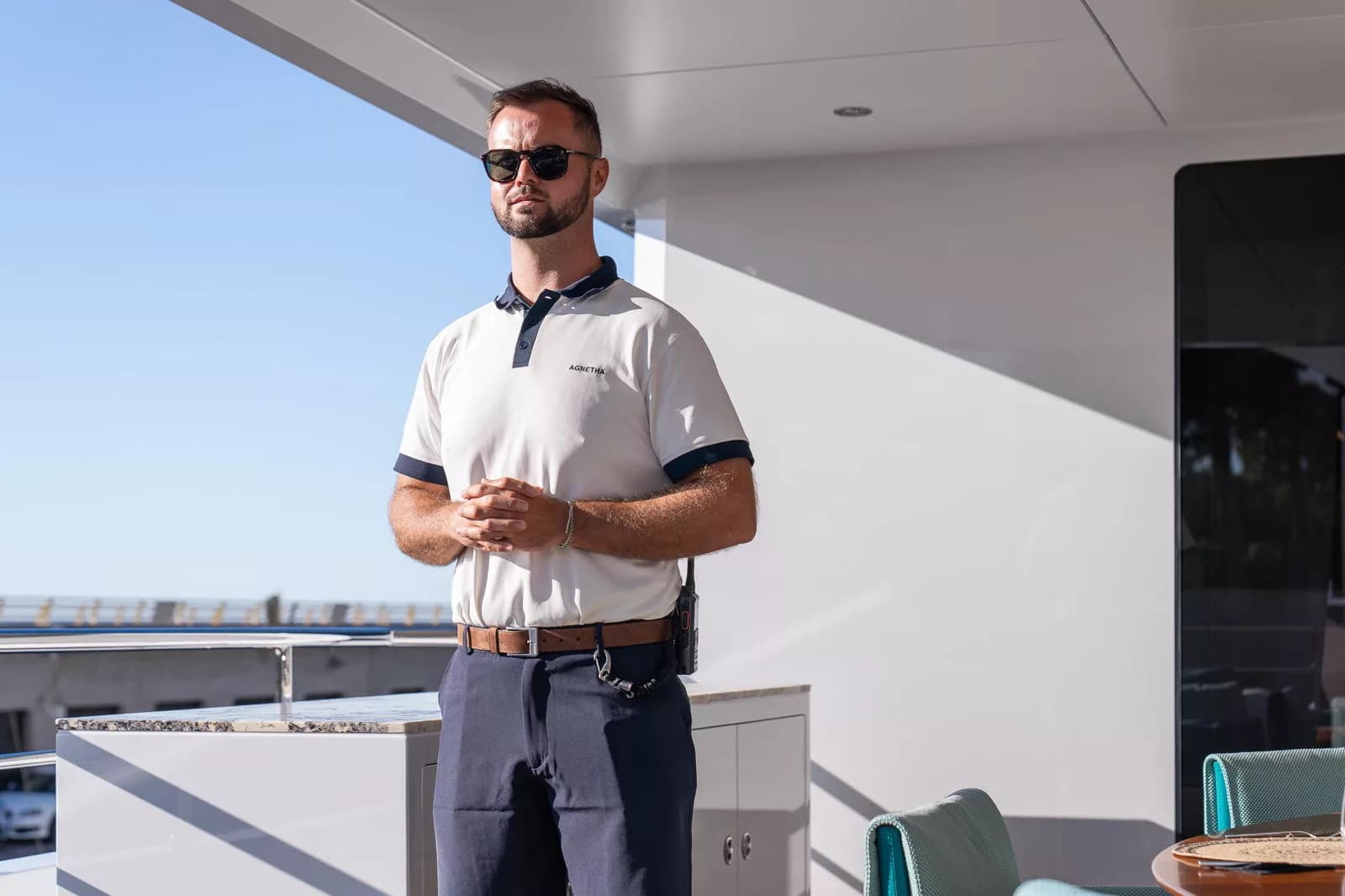
The uniform shipment for the 55-metre steel Project Agnetha was produced in Portugal, consolidated into palletized consignments and delivered to the South of France on a strict schedule to meet a tight show deadline; lead times, customs paperwork and local laundry capacity all dictated the final wardrobe selection and modular packing plan. Salt exposure, repeated wash cycles and limited onboard storage capacity were modelled to estimate fabric longevity, while decisions on inventory quantities directly impacted berth-to-berth transfer logistics and in-season replenishment routes.
Design and operational requirements for onboard apparel
Contemporary superyacht operations pair architectural intent with practical performance needs. On Project Agnetha, the chosen uniform suite balanced a clean, contemporary aesthetic with garments engineered for repetitive physical tasks such as linework, ladder access and rapid role changes between deck service and formal guest-facing duties. The result is a move away from traditional heavy cottons and strict dress whites toward lighter, more resilient blends that maintain appearance without restricting motion.
The crew uniform now serves multiple functional roles: it is protective workwear, a tool for rapid identification, and a component of the guest experience. Owners and designers increasingly view uniforms as part of the yacht’s visual language, making selection a coordinated element of the vessel’s overall design brief rather than an afterthought.
📚 You may also like
From surplus issue to design discipline
Where naval surplus once met basic needs, contemporary procurement follows a design-led process. Specifications weigh breathability, UV resistance, abrasion tolerance and fast-drying behaviour against the yacht’s colour palette and guest expectations. Capsule wardrobes—compact collections of interchangeable pieces—reduce storage footprint while offering flexibility for multiple shifts and service scenarios.
Materials, sustainability and longevity
Prioritizing durability over novelty reduces waste across seasons. Manufacturers like Oceanform produce garments ethically in Portugal and source the majority of fabrics from Europe, favouring blended constructions that meet durability demands while reducing environmental impact where possible. Recycled and lower-impact fibres are used when they can demonstrably match performance requirements; otherwise, lower-impact blends are selected to extend garment life.
| Feature | Benefit | Operational impact |
|---|---|---|
| Technical blends | Durability + quick-dry | Fewer replacements, lower waste |
| Capsule wardrobe | Interchangeable looks | Less storage, simpler laundry |
| Ethical production | Traceability & oversight | Reputational value for owners |
Sustainability practices in practice
- Prioritise performance-first fabrics that tolerate marine conditions.
- Use blended fibres to extend lifecycle and reduce micro-damage from wash cycles.
- Adopt modular inventories to limit overstock and lower logistic burdens.
Inventory, laundry logistics and storage efficiencies
Moving to fewer, better-designed pieces simplifies onboard logistics. A modular uniform strategy reduces the cubic metres required in crew cabins and lockers, shortens turnaround times in laundries ashore, and lowers the frequency of emergency reorders during charter seasons. This has clear knock-on effects for charter-ready vessels: reduced downtime, predictable supply lines, and a more consistent guest-facing presentation.
Operational checklist:
- Audit seasonal laundry throughput and project fabric lifespan under salt and UV exposure.
- Standardize label and care instructions to accelerate onboard sorting and reduce damage.
- Coordinate with suppliers for scheduled replenishment aligned to homeport rotas.
Implications for charter operators and rental fleets
For charter managers and rental companies, including those listing boats on platforms, consistent crew presentation supports brand reliability and guest satisfaction. The trend toward thoughtfully designed uniforms is most relevant to high-end charter yachts but has applicability across fleets: improved crew ergonomics reduces service errors, while sustainability credentials can influence charter decision-making among eco-aware clients. GetBoat always keeps an eye on news related to sailing and seaside vacations, as we truly understand what it means to enjoy great leisure and love the ocean.
Practical recommendations for owners and charter managers
- Specify performance metrics (abrasion, UV, wash cycles) in procurement contracts.
- Limit the number of SKUs to enable a capsule wardrobe approach and simplify stock management.
- Choose suppliers that offer transparent production and supply-chain traceability.
- Plan delivery windows around refit periods and boat shows to reduce urgent logistics costs.
| Before the season | Notes |
|---|---|
| Inventory audit | Align quantities with projected charter weeks |
| Material stress test | Simulate UV and wash cycles ashore |
| Supplier delivery windows | Confirm lead times and customs buffers |
The key takeaways are that uniform choice affects more than appearance: it shapes logistics, impacts supply-chain decisions and reflects an owner’s sustainability stance. Experiencing a new location is always a multifaceted process, where one learns about the culture, nature, the indescribable palette of local colors its rhythm of life and also the unique aspects of the service. If you are planning your next trip to the sea, you should definitely consider renting a boat (boat rentals, rent a boat, rent a yacht), as each inlet, bay, and lagoon is unique and tells you about the region just as much as the local cuisine, architecture, and language GetBoat.com
Forecasting the broader tourism impact, this development is modest at a global scale but significant within luxury yachting and high-end charter markets: better uniforms reduce turnaround time, enhance guest perception and support sustainability messaging. However, it is still important to us since GetBoat aims to stay updated with all developments and keep pace with the changing world. Start planning your next seaside adventure and make sure to book the best boat and yacht rentals with GetBoat before the opportunity sails away!
In summary, the evolution in crew attire—from selection and sourcing to storage and wash cycles—intersects with operational logistics, guest experience and environmental stewardship. For owners, designers and charter operators, the move toward durable, ethically produced capsule wardrobes reduces storage needs, simplifies laundry logistics and elevates the onboard brand. GetBoat.com supports this theme by offering a global, user-friendly solution for booking and buying yachts, boats and sailboats with transparent listings that include make, model and ratings—helping clients find the right craft for their preferences, budget and taste. Book today.


