Creac'h lighthouse seeks safe mercury alternative
Alexandra
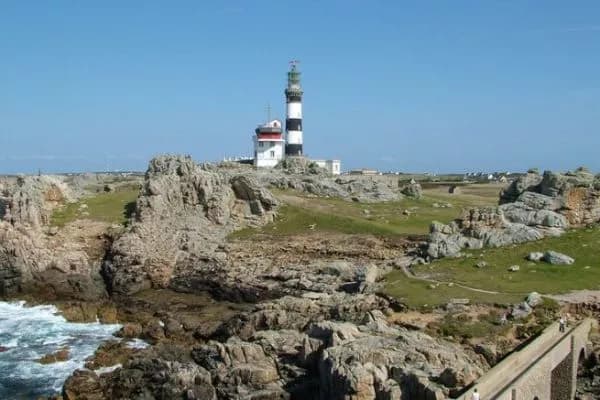
The Fresnel optic at Creac'h lighthouse weighs 17 tonnes, rotates on a mercury bath that must be decommissioned while ensuring uninterrupted signalling to vessels in the Iroise Sea; a formal call for expressions of interest (AMI) runs from 22 December 2025 to 22 March 2026 to identify feasible replacement solutions without switching off the light.
Technical constraints and operational requirements
The core logistical challenge is maintaining continuous maritime service while replacing a century-old, mercury-based rotation system. The lighthouse’s double Fresnel lens delivers one of Europe’s most powerful beacons; any retrofit must guarantee the same optical stability, rotation regularity and range. Removing the toxic mercury tank involves careful weight-handling, access logistics on Ushant Island, and temporary arrangements for signalling continuity during intervention windows.
Key operational requirements include:
📚 You may also like
- Zero or minimal interruption of the beacon during peak navigation seasons;
- Preservation of listed heritage components, notably the original optics and drive mechanisms;
- Mechanical or hybrid solutions that compensate for the 17-tonne inertia of the lens assembly;
- Environmentally compliant removal and disposal of mercury with traceability and safety measures.
Historical background and why mercury was used
When commissioned 162 years ago, Creac'h lighthouse represented an optical and mechanical pinnacle. The mercury bath method provided near-frictionless rotation for heavy lenses and predictable angular velocity for consistent flashes. Over the last decades, awareness of mercury toxicity and regulatory pressure has driven a national program to phase out such systems. Smaller lighthouses have already undergone successful demercurisation, but Creac'h’s combination of scale, listed status and harsh Atlantic exposure raises the complexity and costs of any intervention.
Who’s calling for proposals and what they expect
The Direction Interrégionale de la Mer (DIRM NAMO), in partnership with the Pôle Mer Bretagne Atlantique, issued the AMI to attract solutions from a broad technical and heritage-minded audience. The call explicitly invites proposals that blend preservation with modernization and that can be validated for maritime service continuity.
| Specification | Current state | Desired outcome |
|---|---|---|
| Optical system | Double Fresnel lens, 17 tonnes | Maintain original lens, unchanged range and flash pattern |
| Rotation mechanism | Mercury bath, historical bearings | Non-toxic rotation system (mechanical, bearings, or hybrid) |
| Heritage protection | Listed site | No irreversible modifications; reversible where possible |
| Operational continuity | 24/7 navigational service | Continuous signal without extended outages |
| Timeline | AMI: 22/12/2025–22/03/2026 | Feasible intervention plan with minimal seasonal impact |
Possible engineering approaches
Respondents to the AMI are likely to propose one or more of the following technical paths. Each route has trade-offs in terms of heritage preservation, cost, maintainability and operational risk.
- Mechanical adaptation: Replace the mercury bath with low-friction bearings and a motorized drive sized for high inertia. Pros: preserves lens; cons: requires precise alignment and regular maintenance.
- Bearing innovation: Develop novel bearing systems (air bearings, magnetic bearings) that replicate the frictionless characteristic without toxic fluids. Pros: low wear; cons: complexity and need for climate-proofing in a salt-laden environment.
- Partial automation and control: Retain much of the historic drive train but add automated torque compensation and monitoring to reduce load stress. Pros: minimally invasive; cons: may not fully eliminate mercury usage.
- Hybrid solutions: Combine mechanical and magnetic elements to share loads, enabling a smaller footprint retrofit that respects the listed status of the site.
Stakeholder ecosystem and the call for collective intelligence
The project invites engineers, architects, heritage specialists, industrial providers, research institutes and the lighthouse technicians who service these structures. Beyond technical feasibility, proposals will be judged on heritage compliance, environmental safety, cost-effectiveness and proven capacity to maintain continuous maritime signalling during works. Successful pilot solutions at Creac'h could set a template for other major lighthouses still using mercury systems.
Implications for coastal navigation, tourism and charter operations
Any change to Creac'h’s signalling regime affects local and visiting seafarers—fishermen, yacht skippers, charter operators and commercial lines. Reliability of the light is a component of route planning and risk assessment for coastal passages around Ushant and the Iroise Sea. For those operating charters, private yachts or day-rental boats, awareness of maintenance windows and potential temporary buoyage or alternative beacons is essential for safe itinerary planning.
Modernizing iconic aids to navigation also has a tourism angle: well-managed conservation and upgrade works can become storytelling elements for maritime heritage cruises, lighthouse-themed charters and educational trips that enrich the guest experience without compromising safety.
To gauge the potential local tourism impact: this initiative is primarily regional in scope and unlikely to alter the global tourism map on its own, but it is significant for Brittany’s maritime safety and heritage tourism economy. As developments evolve, GetBoat always keeps an eye on news related to sailing and seaside vacations, as we truly understand what it means to enjoy great leisure and love the ocean. The GetBoat service values freedom, energy, and the ability to choose your own course, placing no limits on a good life and allowing clients to find a vessel that suits their preferences, budget, and taste.
Forecast: the AMI’s outcome will mainly influence regional yachting itineraries and heritage-led tourism in the Bay of Biscay rather than global routes. However, any proven, low-impact retrofit at Creac'h could be replicated at other major beacons worldwide, improving environmental compliance across lighthouse networks. If you are planning your next trip to the seaside, consider the convenience and reliability of GetBoat.
Highlights: the Creac'h project is a rare convergence of engineering, heritage and environmental policy. It shows how infrastructure upgrades can protect seafarer safety while removing hazardous materials, and it underscores the collaborative nature of such work—bringing together industrial know-how, academic research and local technical crews. Experiencing a new location is always a multifaceted process, where one learns about the culture, nature, the indescribable palette of local colors its rhythm of life and also the unique aspects of the service. If you are planning your next trip to the sea, you should definitely consider renting a boat (boat rentals, rent a boat, rent a yacht), as each inlet, bay, and lagoon is unique and tells you about the region just as much as the local cuisine, architecture, and language GetBoat.com
Summary: Creac'h lighthouse’s demercurisation is a technically demanding, heritage-sensitive project requiring innovative bearing and drive solutions, careful logistics to avoid interruption of the beacon, and coordinated stakeholder input. Its successful execution would enhance maritime safety around Ushant, provide a conservation blueprint for other major lighthouses, and offer new opportunities for maritime tourism and charter experiences. Platforms that provide transparency in boat and yacht options—detailing make, model, ratings and availability—support these coastal experiences by helping travelers and charterers plan safe, memorable voyages. From yacht charters and boat rentals to superyacht sale listings and marina discovery, clear information makes it easier to enjoy the sea, ocean and coastal life with confidence.


