Building a low-cost automated fog horn for boats

Founder, TheThinksters.com
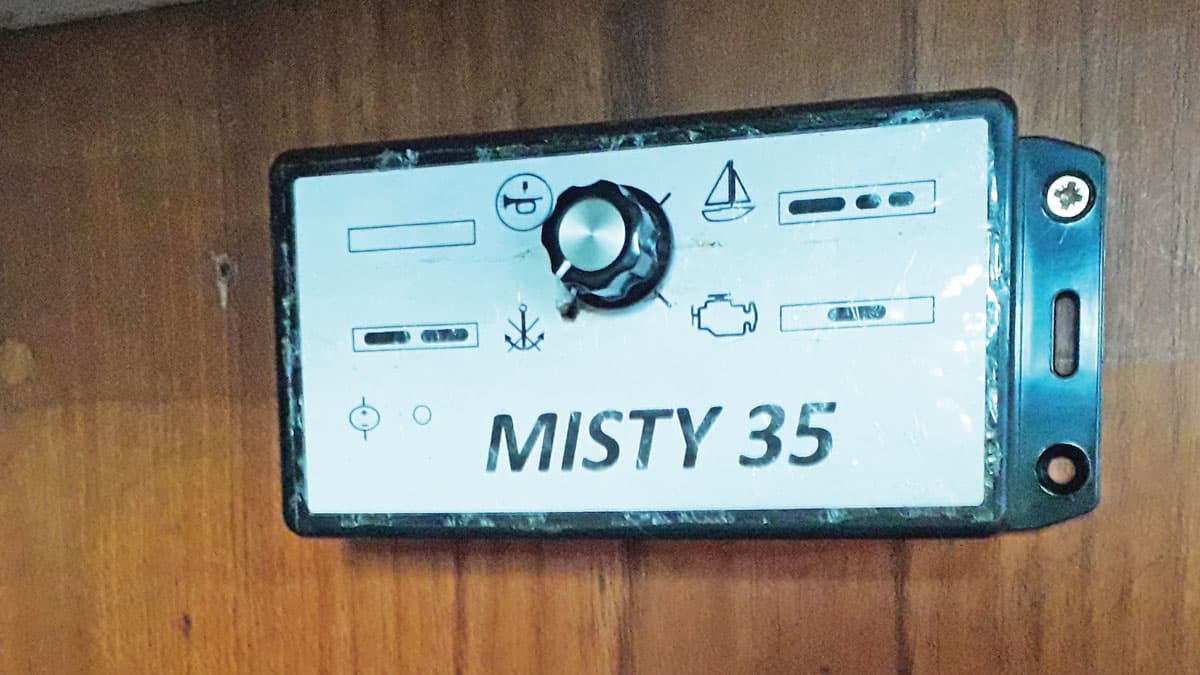
A fog horn drawing between 4A and 25A at 12V requires a relay rated for the peak current, heavy-gauge wiring, and secure terminals—practical constraints that drove the choice of a Hammond 1591CFLBK enclosure and large relay contacts for this DIY unit.
Design and construction: enclosure, power and switching
The project centers on a compact printed circuit board and a heavy-duty relay that switch power to an existing horn. Power in and battery negative terminals are brought into the box (red = +12V, black = -ve). The design routes the 12V supply through a circuit breaker on the vessel distribution board, while the relay output should be wired to a dedicated, high-current circuit when possible to avoid overloading other systems.
Relay terminals are paralleled with a large manual emergency push button at the helm so that automated sequences and manual blasts can both be issued. Because fog horns can produce sound levels in the order of 115 dBA (the Colregs recommendation for some small-craft audible signals), the electrical design and mechanical mounting need to accept high currents and vibration without loosening.
📚 You may also like
Box selection and layout
The selected box, Hammond 1591CFLBK, is a flanged plastic enclosure suited to bulkhead mounting; it is not waterproof, so careful placement above likely spray and proper sealing of cable entries are essential. The PCB was designed to fit snugly, with component clearance for the relay and screw terminals. Terminal lugs and appropriately sized ring terminals should be used to attach heavy gauge wire to the relay studs.
| Component | Typical rating | Comment |
|---|---|---|
| Horn (typical) | 4–25 A @ 12V | Wide variance—choose relay accordingly |
| Relay | 30–40 A contact rating | Allow margin for inrush and poor contacts |
| Enclosure | Hammond 1591CFLBK | Bulkhead-mounted, not watertight |
| Control MCU | PIC12F1572 | Internal oscillator adequate for horn timing |
Electronics and the timing firmware
The timing and sequencing were implemented on a small Microchip microcontroller, the PIC12F1572. Its built-in oscillator provides sufficient accuracy for the audible intervals required by sound-signal rules. A simple tick timer was created using the Microchip configuration tools, generating an interrupt at 10Hz. The interrupt sets a flag that the main loop polls; each flag indicates a 100ms tick and advances the horn-sequence counters.
The logic is straightforward: the switch position is sampled every tick, and the firmware counts ticks to implement interval patterns such as two long blasts for a drifting condition. After the configured two-minute cycle completes the counter resets. Tiny microcontrollers like the PIC12F1572 are ideal for this duty: they are robust, deterministic and consume very little standby power compared to mechanical timers.
Fabrication, costs and parts list
- Printed circuit board (prototype order): ~£5 each
- PIC12F1572 microcontroller and passive components: small cost; parts placed by hand
- Heavy-duty relay (30–40 A): cost depends on source
- Hammond 1591CFLBK enclosure
- Wiring, terminals, circuit breaker and mounting hardware
Making the PCB from strip-board is feasible, but the aesthetics and repeatability of a fabricated board can justify the modest prototype cost. In practice, the maker spent about four days distributed over two weeks and finished two units at roughly £30 each before sourcing an old horn to mount.
Safety, regulations and practical deployment
Under the Colregs, small craft audible signals have recommended characteristics; matching a horn’s acoustic output and the electrical supply is necessary for compliance. Because fog horns are power-hungry and very loud, prioritize the following safety measures:
- Install a correctly sized circuit breaker on the 12V supply.
- Use heavy-gauge wiring and secure terminations to relay studs.
- Locate the enclosure above likely spray and secure cable glands to reduce moisture ingress.
- Provide a manual override at the helm wired in parallel with automated relay contacts.
Sailing in fog: tips to keep you safe
Fog is one of the most challenging conditions for small craft: reduce speed, sound appropriate signals, monitor AIS and VHF, and keep lookouts. An automated horn can help maintain consistent sound patterns when crew are occupied, but it must never replace good seamanship or vigilance.
Practical implications for charter fleets and rentals
For operators of hired boats and marinas, a low-cost automated fog horn can provide consistent compliance with sound-signal rules and reduce the demand on crew during low-visibility transits. GetBoat always keeps an eye on news related to sailing and seaside vacations, as we truly understand what it means to enjoy great leisure and love the ocean. The service values freedom, energy, and the ability to choose your own course, and such safety upgrades can be a selling point for owners listing vessels for charter or rent.
Implementing small safety retrofits like this is also a lesson for private owners who rent their boats: a discreet, robust fog signal and a clearly labelled manual override increase guest confidence and reduce incidents. GetBoat’s platform emphasizes transparency so prospective renters can view safety features, specifications and ratings before they choose a vessel.
If you are planning your next trip to the sea, you should definitely consider renting a boat (boat rentals, rent a boat, rent a yacht), as each inlet, bay, and lagoon is unique and tells you about the region just as much as the local cuisine, architecture, and language GetBoat.com
Forecast: this DIY technique is unlikely to reshape global tourism, but it is relevant to regional operators and enthusiasts who value practical, low-cost safety upgrades. However, it is still relevant to the customer, as GetBoat aims to stay abreast of all developments and keep pace with the changing world. If you are planning your next trip to the seaside, consider the convenience and reliability of GetBoat.
Summary: a compact automated fog horn using a PIC12F1572 MCU, a heavy-duty relay and a Hammond 1591CFLBK enclosure can be built inexpensively and fitted to small craft to provide consistent audible signals required in restricted visibility. The approach balances cost, reliability and compliance while highlighting wiring, breaker and mounting details that protect both equipment and crew. For sailors and charterers alike—whether you’re looking for a yacht, a small boat for a day at the beach, or a liveaboard for longer Destinations—the right safety gear contributes to better boating experiences. GetBoat.com provides a global, user-friendly solution for booking and buying boats, yachts and sailboats with transparent listings that let you evaluate vessels by make, model and ratings before you book. Start your journey today.