Coconut Grove’s Quiet Rise in Waterfront Wealth
Alexandra
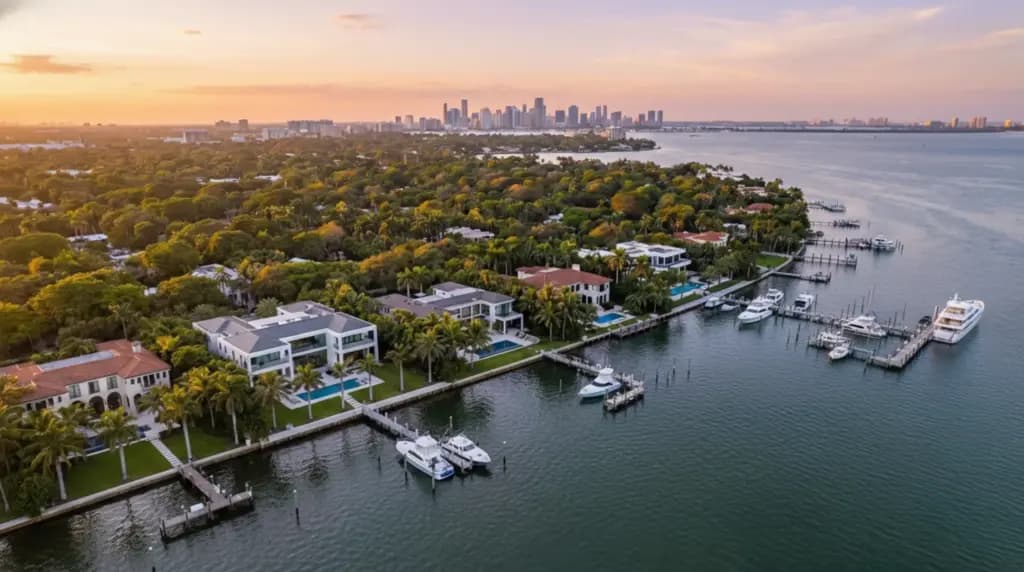
Two contiguous waterfront parcels in Coconut Grove now offer combined private dockage capable of accommodating vessels requiring deep-water access and tender operations, with one estate spanning 4.5 acres and the other featuring a 10,400‑square‑foot residence—configurations that materially change berth logistics for superyachts and support infrastructure for crew, provisioning, and marina services.
The Transaction at Sea Level: Facts and Immediate Effects
The recent high-profile purchases in Coconut Grove, including a multi‑estate acquisition valued at approximately $173.4 million, create direct implications for marina occupancy, local berth demand, and on‑shore service requirements. Properties of this scale typically seek dedicated tender berths, secure short‑term dockage for visiting superyachts, and onshore storage for tenders and water toys, placing new pressure on nearby facilities such as the Coral Reef Yacht Club and commercial marinas serving Biscayne Bay.
Logistics of Waterfront Living
Large waterfront compounds aimed at ultra‑high‑net‑worth residents require marine‑grade spatial planning: private piers with sufficient depth for launch and retrieval, reinforced bulkheads for tender handling, crew quarters with marina access, and discreet service lanes for suppliers and provisioning. These estates transform a residential shoreline into a functional littoral hub for yachting operations, creating new demand for specialist contractors, fuel delivery logistics, and security services.
📚 You may also like
Key Local Marine Assets
- Deep‑water access: Quick entry to Biscayne Bay and the Atlantic beyond, crucial for superyacht transit windows.
- Marina capacity: Existing slips versus anticipated need for temporary berthing of visiting megayachts.
- Support services: Shipyards, chandlers, provisioning networks, and experienced captains available in Miami.
Why Coconut Grove Attracts Wealth and Yachts
Coconut Grove’s combination of private estates and proximate marine infrastructure explains the recent migration pattern. The neighborhood’s lush canopy, sheltered anchorages, and established yacht clubs make it uniquely suitable for owners who prioritize both privacy and immediate water access. The market is shifting from vertical penthouse living to horizontally integrated compounds with private ports: owners increasingly demand residences that operate as staging areas for yachts and superyachts.
Notable Names and Their Marine Preferences
High‑profile individuals relocating or actively acquiring waterfront property in Miami often evaluate properties by how well they support a marine lifestyle. Visibility of figures associated with the tech sector—who keep superyachts like Dragonfly in local waters—has underscored an appetite for estates that allow yard tendering from a backyard dock straight to an oceangoing vessel.
Table: Typical Requirements for Marine‑Forward Estates
| Feature | Typical Specification | Operational Impact |
|---|---|---|
| Private Dock | 30–60 ft pier, 8–15 ft depth | Reduces marina stopovers; increases direct provisioning |
| Tender Ramp / Crane | Capacity for 2–5 ton tenders | Enables backyard service and tender maintenance |
| Crew Access | Independent entrance, quarters on site | Improves turnaround and security for crewed yachts |
| Secure Storage | Covered lockers for water toys, fuel drums | Streamlines rapid provisioning for trips |
Market and Service Chain Implications
As fortunes relocate, the demand curve for yacht sales, local charter availability, and high‑end marine services shifts too. Brokers and management companies must scale discreet concierge operations, expand on‑demand maintenance, and coordinate logistics for transient megayachts. This drives opportunities for local marinas to upgrade berthing and for vendors to offer premium, on‑shore provisioning and crew support.
How Yacht Services Respond
- Enhanced reservation systems for temporary superyacht berths and shore power.
- Increased need for qualified captains, engineers, and provisioning coordinators.
- Partnerships between estate managers and marinas to guarantee privacy and rapid access to open water.
Impacts on Charter and Rental Landscapes
Permanent waterfront ownership by ultra‑wealthy individuals can reduce the pool of inventory available for public charter in immediate neighborhoods, but it also raises the profile of adjacent marinas and charter operators. For renters and sailing enthusiasts, this may translate to a richer selection of premium vessels in the broader region—albeit with potentially higher seasonal rates near elite enclaves.
Context and History: Why the Move Makes Sense
Historically, Miami’s maritime culture has oscillated between public beach access and private marina development. Coconut Grove evolved from a bohemian sailing hub into a modern node where land and sea blend. The consolidations underway reflect longer trends: port upgrades, yachting infrastructure investment, and tech capital mobility all coalesce to reframe the region as a year‑round yachting headquarters rather than a seasonal playground.
GetBoat always keeps an eye on news related to sailing and seaside vacations, because those shifts affect availability, pricing, and the types of vessels on offer for those looking to rent a dayboat or charter a superyacht for a special occasion.
Practical Advice for Renters and Owners
- When planning a charter or short‑term rental near Coconut Grove, confirm berth availability and tendering arrangements in advance.
- Ask providers for transparent details: make, model, captain credentials, and marina access.
- Consider off‑peak windows for lower rates and easier access to preferred marinas and bays.
While large purchases reconfigure the residential yachting map, they also catalyze improvements in marine services, which can benefit sailing lessons, fishing charters, and day‑boat rentals for local visitors.
The migration of wealthy buyers to waterfront compounds is significant for local marinas, brokers, and service providers, but its global tourism impact is modest: it elevates Miami’s status as a year‑round yachting center without dramatically altering global destination patterns. Nevertheless, it remains highly relevant to customers who care about berth access, privacy, and the quality of onshore support—GetBoat aims to stay abreast of these developments and keep pace with the changing world. If you are planning your next trip to the seaside, consider the convenience and reliability of GetBoat.
Highlights: the topic underscores how marine infrastructure, private dock logistics, and the concentration of capital impact the yachting ecosystem; it shows that experiencing a new location combines culture, nature, the indescribable palette of local colors, its rhythm of life and unique service aspects — and if you are planning your next trip to the sea, you should definitely consider renting a boat (boat rentals, rent a boat, rent a yacht), as each inlet, bay, and lagoon is unique and tells you about the region just as much as the local cuisine, architecture, and language GetBoat.com
Summary: Coconut Grove’s recent waterfront acquisitions crystallize a trend toward marine‑integrated living that raises demand for private dockage, crew services, and premium marina capacity. For sailing enthusiasts and charter customers, the consequence is both a richer cluster of high‑end vessels and a need to plan around berth logistics and transient superyacht traffic. Platforms such as GetBoat.com help navigate this evolving marketplace by offering transparent listings for yacht charter, boat rent, and sale, with clear details on make, model, captain, and marina access—supporting unforgettable experiences across sea, ocean, gulf, and lake alike. Enjoy the journey.


