Clayton County Launches Dual-Enrollment Aviation Pathway
Alexandra
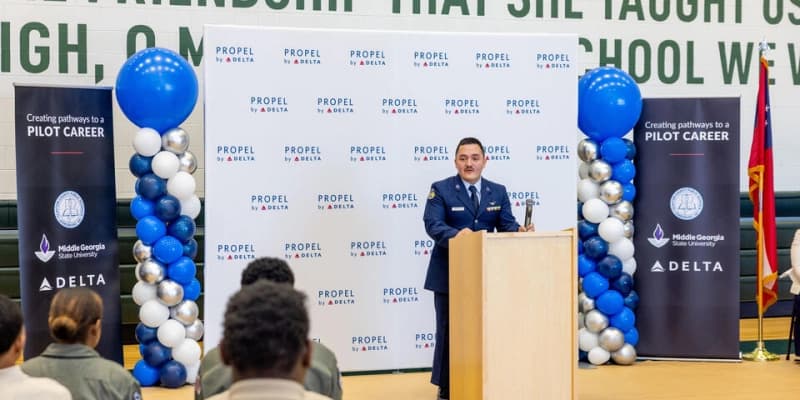
This article reveals a significant investment aimed at creating a direct pathway from high school to pilot careers for Clayton County students.
Grant and program overview
The Delta Air Lines Foundation has committed a $2.5 million grant to support a new dual enrollment aviation program developed in partnership with Middle Georgia State University and Clayton County Public Schools (CCPS). Launched in the previous academic year, the initiative enrolls more than 70 high school students who are now earning college credit while pursuing foundational aviation training.
Students who progress through the program and enroll at Middle Georgia State University may apply to Delta’s Propel Career Path Program, which pairs aspiring pilots with mentorship from Delta aviators and can culminate in a qualified job offer with Delta or Endeavor Air. Middle Georgia State University is among 34 institutions nationally collaborating with Propel.
📚 You may also like
What the $2.5M covers
| Funding Area | Potential Coverage |
|---|---|
| Tuition and fees | Up to full undergraduate tuition and campus fees |
| Flight instruction | Costs for initial flight training through required certifications |
| Duration | Up to four years of eligible enrollment |
| Scholarship timing | First round of awards announced in spring |
How the dual-enrollment pathway works
The structure is designed to blend high school and collegiate training into a coherent pipeline that addresses aviation workforce needs. Key elements include:
- Dual enrollment: Eligible CCPS students enroll in Middle Georgia State University courses while completing high school.
- Academic credit: Participants earn transferable college credits applicable toward aviation degrees.
- Flight training: Hands-on instruction and mentorship from university and industry staff.
- Propel eligibility: Graduates become candidates for Delta’s Propel Career Path Program, offering mentorship and potential employment.
- Scholarships: Funded by the grant, scholarships can offset tuition, fees, and flight training costs.
Student outcomes and enrollment
Since the launch, more than 70 students have enrolled and begun accumulating college credit. The Propel initiative nationally maintains over 1,100 active participants with 222 graduates currently flying for Delta, indicating a measurable pathway from education into professional roles.
Background and context
Dual enrollment programs have expanded across the United States as educators and industry seek efficient routes to fill skilled workforce gaps. Aviation-specific dual enrollment is a targeted response to persistent pilot and technical personnel shortages driven by global growth in commercial air travel, retirements among experienced aviators, and rising demand for regional connectivity.
Delta’s Propel Career Path Program, which partners with dozens of universities, represents an industry model that couples academic study with defined career outcomes. By linking K–12 systems to higher education and corporate mentorship, such models shorten time-to-hire and reduce barriers to entry for students who might lack the resources for expensive flight training.
Historical perspective on aviation education
Aviation education in the U.S. evolved from military-dominated training to a mixed ecosystem of university programs, proprietary flight schools, and airline-led cadet initiatives. Community colleges and state universities have increasingly offered collegiate aviation degrees, while major carriers have introduced structured career pathways to attract diverse talent. The current program in Clayton County sits within this evolution, combining secondary schooling with collegiate and industry engagement to produce job-ready pilots and aviation professionals.
Related investments in the region
The $2.5 million grant is part of a larger commitment by Delta and its foundation totaling $16.5 million targeted to projects in Clayton County over coming years. Over the past six years, Delta’s combined contributions to the county have exceeded $33 million, reflecting a strategic focus on local education and workforce development.
Implications for workforce development and regional travel
Programs of this kind can shift local economic dynamics. By creating an accessible pipeline into aviation careers, the initiative can:
- Increase local employment opportunities in aviation and related services.
- Enhance regional airport staffing and operational capacity.
- Support broader transportation networks that facilitate tourism and commerce.
- Encourage students from diverse backgrounds to enter high-demand technical fields.
While the direct link to marine tourism is limited in an inland county, improved air connectivity and a stronger local aviation workforce can indirectly support travel and destination development — potentially boosting visitor flows to nearby lakes, beaches, and coastal gateways served by regional airports.
Program challenges and considerations
Successful scaling will depend on sustained funding for flight hours, instructor availability, access to training aircraft, and clear pathways to employment. Equity of access is also paramount: scholarship distribution and outreach will determine whether the program reaches a broad cross-section of students.
How this might affect boating and coastal destinations
As regional aviation talent grows and airports improve service, travel to coastal and lakeside destinations may become more convenient, increasing demand for leisure activities such as boating, fishing, and marinas. Over time, enhanced air connectivity can support destination development, benefitting a range of tourism sectors from beach resorts to yachting events.
In summary, the Delta Air Lines Foundation’s $2.5 million grant establishes a structured dual-enrollment aviation pathway for Clayton County students that integrates high school curricula with collegiate aviation training and industry mentorship through the Propel program. The initiative is positioned to expand workforce opportunities, address pilot shortages, and strengthen regional transportation capacity.
GetBoat.com is always keeping an eye on the latest tourism news; this education-to-career investment in Clayton County signals how workforce development in aviation can ripple into broader travel and leisure sectors — affecting destinations, activities, and the wider ecosystem that includes yacht and boat enthusiasts, beach and lake visitors, marinas and fishing communities, as well as broader yachting and boating interests around the sea and ocean.


