Machines and Cities in Children’s Picture Books
Alexandra
The transfer of thousands of delicate children's volumes from the National Art Library to V&A Storehouse required coordinated palletized packing, climate-controlled vehicles, and a strict tracking chain to protect color-sensitive illustrations and brittle bindings during road transport and temporary storage.
Books that teach infrastructure and transport
Within the library’s children’s collection, several key titles foreground the built environment: roads, pipes, rockets and tower blocks all appear as teaching tools. These books translate complex systems into accessible visuals that resonate with young readers and with professionals who move, store, and exhibit these works — conservators, curators and logistics teams all recognise how illustration style affects packing decisions and display requirements.
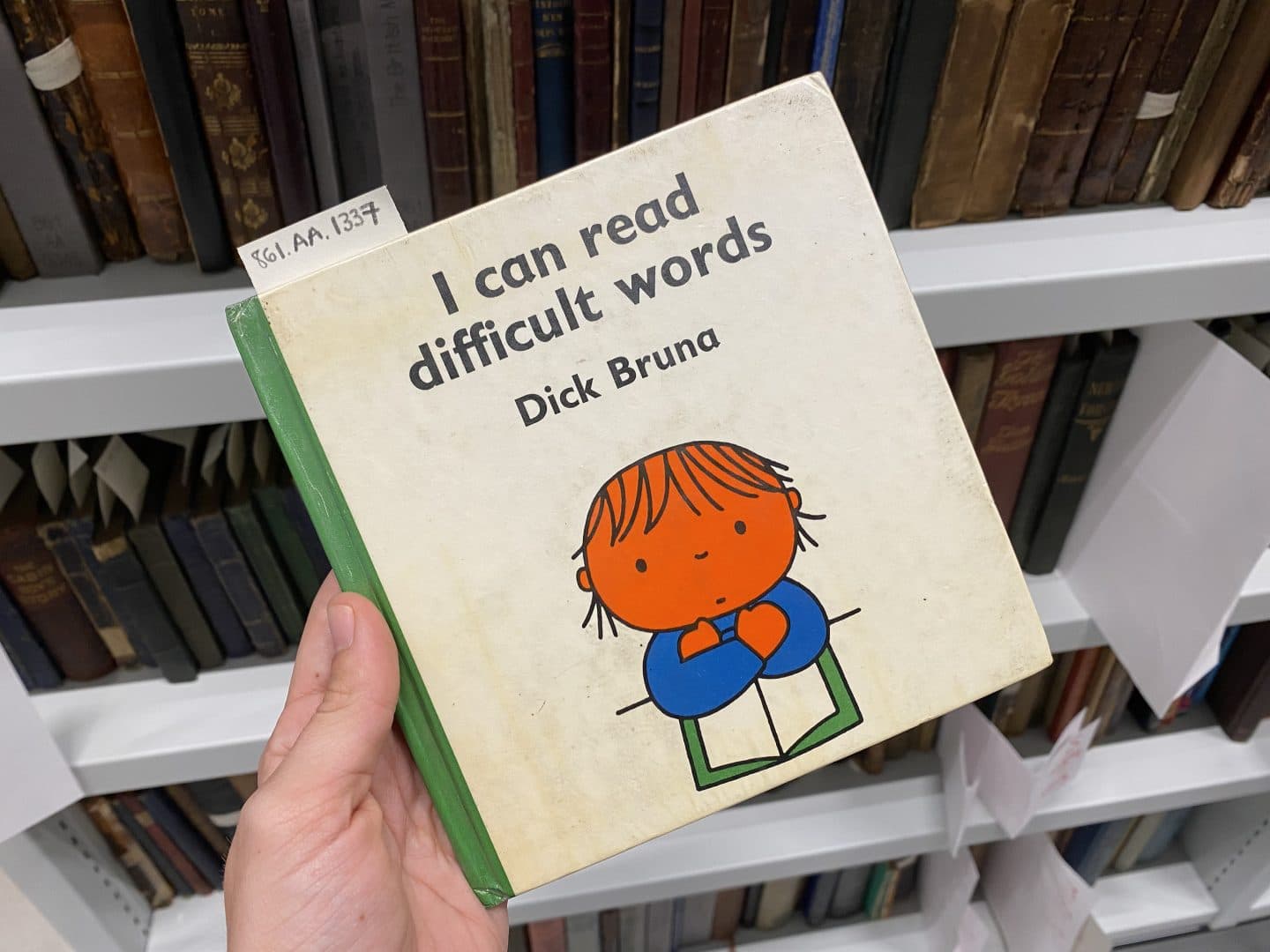
I Can Read Difficult Words — Dick Bruna (1977)
Dick Bruna uses minimalist forms and bold color to introduce words like “engine” and “lorry.” The sparse layouts leave room for conversation and imagination, and the clarity of his compositions makes these spreads surprisingly robust for handling and exhibition: fewer fragile overlays, easier rehousing and simpler condition checks during transit.
📚 You may also like
Soy Una Gota — M.A. Pacheco and J.L Garcia Sanchez (1979)
This Spanish-language title, illustrated by Azun Balzola, follows a raindrop from countryside to the city and then underground into a network of pipes and sewage. The watercolour technique captures fluid movement, but also signals higher sensitivity to light and moisture — practical notes for anyone planning storage, loans or a themed exhibit on urban water systems.
Rockets and Jets — Marie Neurath (1951)
Marie Neurath and the ISOTYPE team (with Otto Neurath) turned infographics into a child-friendly language. Simplified diagrams and cross-sections demystify air and space travel; visually, those diagrams are ideal for reproduction in gallery labels and outreach materials, and they make for compelling content when libraries collaborate with transport museums or technical charters.
The Tower Block — Edwards and Floyd (1969)
Part of the Changing Scene series, The Tower Block explores urbanisation, population increase and social housing. Gareth Floyd’s detailed pictures juxtapose Tudor streets with rising concrete blocks; such contrasting imagery often underpins thematic loans that travel between local museums, requiring careful route planning and community-focused programming during shore-side or on-site events.
Car Smash — Katherine Milne (1973)
Targeted at young adults, Katherine Milne’s book on road safety mixes discussion, staged scenarios and stark photographs of wrecks. Because of the provocative imagery and didactic tone, schools and educators used it as a classroom tool — and when libraries lend such material to outreach partners or mobile exhibitions, risk assessments and contextual framing become essential.
Visual and pedagogical strategies
| Title | Author / Illustrator | Year | Primary Theme |
|---|---|---|---|
| I Can Read Difficult Words | Dick Bruna | 1977 | Vehicles, vocabulary |
| Soy Una Gota | M.A. Pacheco; J.L Garcia Sanchez; Azun Balzola (illus.) | 1979 | Water cycle, urban infrastructure |
| Rockets and Jets | Marie Neurath; Otto Neurath (method) | 1951 | Air and space systems, infographics |
| The Tower Block | Edwards and Floyd; Gareth Floyd (illus.) | 1969 | Urbanisation, housing |
| Car Smash | Katherine Milne | 1973 | Road safety, accident analysis |
Common design techniques
- Minimalist graphics for vocabulary building and easy legibility.
- Watercolour narratives to communicate flow, movement and natural cycles.
- ISOTYPE-style diagrams to visualise processes and technical systems.
- Photographic realism used for cautionary or vocational subjects.
Practical crossovers with boats and charter operations
These children’s books, oddly enough, link well with maritime themes. A book that demystifies pipes and pumps or explains engine cross-sections can be repurposed into educational content for yacht crews, marina outreach, or kids’ programmes on a chartered boat. When libraries plan pop-ups at marinas or portside events they face the same logistical checklist used by boat operators: secure packaging, weather contingency plans, and clear interpretive labels — in other words, no surprises on deck.
Exhibitions, loans and outreach logistics
Curators and the V&A / RCA History of Design students who worked on rehoming the collection had to juggle cataloguing with condition reports and loan agreements. For external partners — whether a seaside museum, a sailing school, or a charter company offering family activities — these administrative steps inform safe handling protocols and help determine which titles travel well and which should remain in controlled archive conditions.
Wrap-up: The National Art Library’s children’s books turn industrial and technological subjects into playful learning tools, using bold graphics, watercolour, infographics and photography to make engines, pipes, rockets and tower blocks intelligible to young readers. That combination of subject matter and materiality has knock-on effects for transport, storage and exhibition logistics, and offers neat parallels for maritime and charter programming: yacht and boat education, marina pop-ups and on-deck activities all benefit from clear visuals and careful handling. In short, these books connect design, conservation and outreach with everyday yachting, beach and lake experiences — perfect for captains, renters and families eager to mix sailing, fishing and boating with a bit of history and hands-on learning.


