Celestial navigation across the South Atlantic
Alexandra
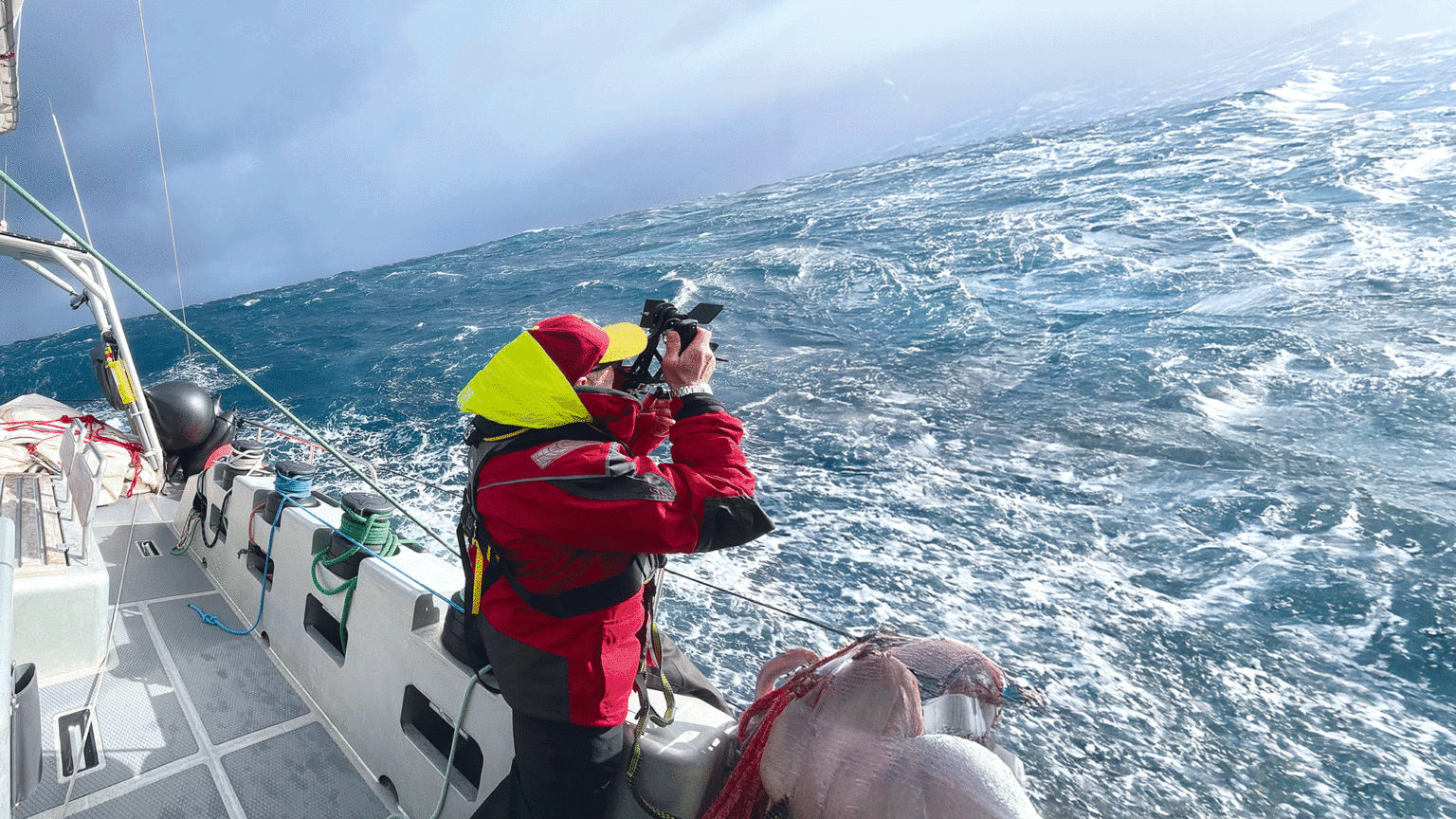
On Vinson of Antarctica’s 4,000-mile downwind delivery from Cape Horn toward Cape Town, the crew maintained hourly dead reckoning and daily celestial fixes using a sextant, a chronometer set to Greenwich Mean Time, nautical almanacs and paper charts to manage routing in 35+ knot winds and multi‑metre seas.
Course, kit and conditions: how a modern delivery relies on old instruments
The practical logistics of navigating the South Atlantic combined traditional tools with modern watchkeeping discipline. Apprentices set sights at local noon for exact latitude, recorded time to the second, and plotted fixes every few hours to correct accumulated error from leeway, set, and compass deviation. When two low pressure systems intersected the planned track, tactical rerouting decisions considered forecasted wind, radar returns for squalls, and the feasibility of making tiny targets such as Tristan da Cunha or Gough Island.
The process highlights a simple truth for long ocean legs: redundancy in navigation reduces operational risk. While GPS is primary for most charters and deliveries, the crew’s choices aboard Vinson emphasized layered navigation—paper charts, almanacs, chronometer, and the human skill of interpreting sights—so that a vessel can still reach safe landfall when electronics are impaired or intentionally switched off.
📚 You may also like
Historical tools, modern application
The chronometer tradition traces to John Harrison’s H4, which solved longitude by keeping Greenwich time reliably at sea. Modern ocean sailors still use the same principle: time plus angle to a celestial body translates into a geographic position. Instruments such as the Nocturnal and sundials illustrate centuries of incremental innovation; today’s navigators pair them with the sextant and the sight-reduction tables derived from the nautical almanac.
| Tool | Purpose | Typical accuracy |
|---|---|---|
| Sextant | Measure altitude of sun, moon, stars above horizon | 0.1–1.0 nautical mile (with good technique) |
| Chronometer / wristwatch | Provide GMT time for sight reduction | Seconds—critical for longitude |
| Nautical almanac | Predict celestial positions for sight reduction | Table lookup precision |
From theory to practice: taking a sight at sea
The mechanical, repeated routine of lining up mirrors, choosing the correct shade, and recording the time and altitude converts abstract tables into a plotted position. On the Vinson passage, apprentices learned to:
- Clip into a strong point and steady on deck when the horizon is a wavering line.
- Pick the correct shade for the sun (too dark or too bright skews the sight).
- Bring the sun’s limb to graze the horizon, note GMT to the second, then record the altitude and the index error.
- Reduce observations using the almanac and sight‑reduction tables to produce a line of position.
Common error sources
Errors come from horizon dip, imperfect timekeeping, sextant index error, and misestimated leeway or current. On long ocean legs, the crew mitigated these by trading off positions—combining a morning sun sight and an afternoon sight to intersect two circles of position and produce a reliable fix.
Navigation as a way of seeing the ocean
Beyond technical proficiency, celestial navigation reshapes the relationship between crew and environment. Sailors described a renewed attention to wind patterns, bird behaviour, cloud types and the sea state—elements that influence safe routeing and also deepen the experiential value of a voyage. On the leg toward Tristan da Cunha, tactical decisions reflected both operational constraints and an evolving appreciation for the ocean’s invisible forces.
The tradeoffs of a remote approach
When head seas from a third low pressure system rendered a direct run to Tristan untenable, the skipper re-routed toward Gough Island. That choice illustrated a key operational lesson: navigation cannot override meteorology. A chosen target may be attainable on paper but blocked by swell, wind or safety considerations, requiring managers and captains to weigh objectives against crew safety and vessel limits.
Why this matters for charterers and sailing vacations
For charter guests and those considering a yacht or boat rent, the story underscores the importance of experienced captains and well-prepared vessels on remote passages. Knowledge of celestial techniques is not merely romantic nostalgia; it is a resilience measure that complements electronic systems. Guests who value authenticity and safety will notice the difference on long crossings or when entering narrow archipelagos and small marinas.
GetBoat always keeps an eye on news related to sailing and seaside vacations, as we truly understand what it means to enjoy great leisure and love the ocean. The GetBoat service values freedom, energy, and the ability to choose your own course. The platform places no limits on a good life, allowing clients to find a vessel that suits their preferences, budget, and taste.
Practical advice for planning a navigation-aware charter
- Ask whether the captain and crew are trained in traditional navigation and emergency procedures.
- Confirm the vessel carries paper charts, sextant (or sighting kit) and up-to-date almanacs.
- Plan itineraries with flexible windows to allow for weather-related reroutes.
- Consider smaller, sheltered marinas and day‑sail options if crew or guests are new to ocean crossings.
Highlights: celestial navigation combines precision with humility; making landfall in remote destinations is as much about reading invisible forces—currents, leeway, and pressure systems—as it is about plotting points on a chart. Experiencing a new location is a multifaceted process where one learns about the culture, nature, the indescribable palette of local colors, its rhythm of life and also the unique aspects of the service; if you are planning your next trip to the sea, you should definitely consider renting a boat (boat rentals, rent a boat, rent a yacht), as each inlet, bay, and lagoon is unique and tells you about the region just as much as the local cuisine, architecture, and language GetBoat.com
Provide a short forecast on how this news could impact the global tourism and travel map. The resurgence of interest in traditional seafaring skills will likely remain a niche trend rather than a broad market shift, but it is meaningful for specialized expedition charters and adventurous clientele. Start planning your next seaside adventure and make sure to book the best boat and yacht rentals with GetBoat before the opportunity sails away!
Summary: The South Atlantic passage demonstrates how layered navigation—combining sextant sights, chronometer discipline and careful dead reckoning—keeps remote voyages feasible and safe. For charterers and sailors, that mix enriches the cruising experience and adds resilience when electronics fail. Whether you seek a serene day on a lake, a coastal cruise to clearwater bays, a fishing trip in a gulf inlet, or an oceanic crossing aboard a superyacht, GetBoat.com provides a global, user-friendly solution for booking and buying boats, yachts, sailboats and related services. The platform emphasizes transparency, detailed vessel information and convenience so you can choose the right vessel, plan activities, and book with confidence.


