Broward 100 Ownership & Refit Guide
Alexandra
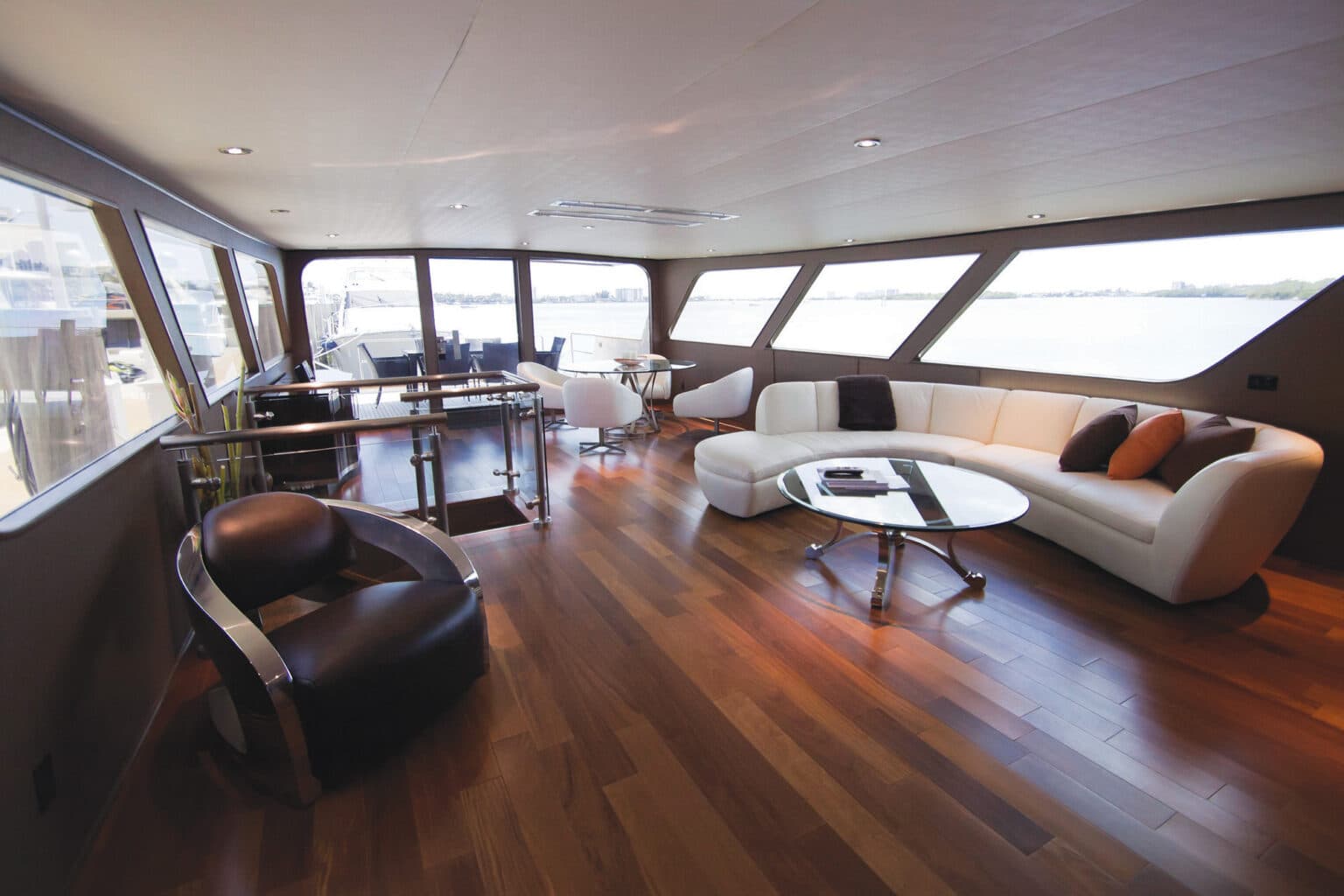
A Broward 100 typically requires a minimum berth length of 110 feet and a beam clearance of at least 25 feet; bunkering logistics must account for a fuel capacity exceeding 3,000 gallons and on-site pump access for safe refueling. Owners and captains should plan crew rotations, provisioning routes, and haul-out windows in advance because aluminum hull maintenance and refit work frequently demand drydock time and specialized welding facilities.
Heritage and Market Position
Broward Marine moved from wood to aluminum construction in the early 1970s, pioneering large semi-custom motoryachts in the 100-foot range. The builder’s reputation rests on straightforward, robust construction and spacious communal layouts: huge saloons, country-style galleys, and forward crew quarters that separate service circulation from owner spaces. On the brokerage market you will find Browards spanning the 70–125 foot spectrum, with the core Broward 100 examples built in the 1980s and maintained or refitted in subsequent decades.
Why buyers seek Browards
- Structural simplicity: uniform aluminum plates and conventional systems make repairs and modifications predictable.
- Comfortable ride: semi-displacement hulls are noted for dry, soft-running behavior underway.
- Large interior volume: sizeable staterooms and communal areas translate into “floating condo” ergonomics desirable for private use or charter.
Refit Strategy and Practical Stages
Refits for a Broward 100 range from cosmetic refreshes to full mechanical overhauls. Given the competitive state of many yards and service providers, carefully phased refits can be more cost-effective than single, large projects. Typical project phases prioritize structural and engineering work before cosmetic upgrades.
📚 You may also like
Common refit sequence
- Hull and structural assessment, plating repairs, and welding of any altered penetrations
- Mechanical overhauls: engines, transmission, shafts, and propeller work
- Modernization of stabilizers, thrusters, and navigation electronics
- HVAC and electrical upgrades with routed wiring and ducting as needed
- Interior refit: joinery, finishes, soft goods, and lighting
- Sea trials, final commissioning, and documentation
Project success often depends on a coordinated team: the owner’s representative or project manager, the captain, naval architect, and reliable contractors. Communication and scope-definition are the most-cited keys to staying on budget and schedule.
Practical refit tips
- Retain a naval architect for structural changes or when adding transom extensions.
- Prioritize mechanical and corrosion-prevention systems to avoid repeated yard time.
- Consider staged refits to spread cost and allow progressive revenue through part-charter options.
Construction, Corrosion Risk, and Survey Priorities
Broward hulls are built from aluminum plates welded to frames. That construction provides a high strength-to-weight ratio and year-round repairability, but it requires attention to stray-current issues and galvanic corrosion. A thorough survey should address the following:
| Inspection Area | Key Concern |
|---|---|
| Hull plating | Peeling bottom paint, pitting at the waterline, localized wastage |
| Welds and seams | Cracks, repairs, and evidence of re-plating; pit gauge measurements |
| Cathodic protection | Use of magnesium anodes and CAPAC or similar systems for stray-current control |
| Bilge condition | Dry, clean bilge—sludge or foreign objects accelerate corrosion |
| Electrical systems | Insulation integrity, chafe protection, and proper bonding |
Dents or “oil canning” should prompt interior inspection; hull distortions may indicate poor blocking during storage. Remember that aluminum responds differently than fiberglass: anodes are typically magnesium, and stray electrical currents are a unique threat.
Engines, Performance, and Docking
Power options across the Broward range commonly include twin Detroit Diesel 71- or 92-series engines, with a fair number fitted with Caterpillar machines. Cruising speeds typically begin near 13 knots and vary with power and displacement. Repowering is usually accomplished without interior disruption by cutting and re-welding hullside plates—an approach that local yards familiar with aluminum fabrication can handle efficiently.
Docking and operational considerations
- Plan for adequate maneuvering room and confirm marina depth to protect the 5'6" draft or specific variant drafts.
- Install or upgrade bow and stern thrusters to improve single-line docking performance.
- Coordinate fuel delivery and intake for large-capacity tanks to avoid delays at smaller marinas.
Buying Checklist and Brokerage Notes
When evaluating a Broward 100 for purchase, documentation and service records matter. Complete records, current surveys, and evidence of a maintained CAPAC or cathodic system reduce risk. Prospective buyers should budget for seasonal maintenance and consider whether the vessel will be used privately or in charter service; insurance underwriters often require professional crew for commercial use.
- Request documented maintenance and refit invoices.
- Confirm anodes and stray-current protection have been in continuous service.
- Have a certified marine surveyor inspect welds, plates, and mechanical systems.
GetBoat always keeps an eye on news related to sailing and seaside vacations, as we truly understand what it means to enjoy great leisure and love the ocean. The platform values freedom and the ability to choose your own course when selecting a vessel that suits personal preferences and budget.
Forecasting the market impact, the niche nature of classic aluminum motoryachts like the Broward 100 makes their influence on global tourism modest but significant within luxury yachting and charter circles. However, these vessels remain relevant to owners and operators who value volume, simplicity, and refit flexibility. Start planning your next seaside adventure and make sure to book the best boat and yacht rentals with GetBoat before the opportunity sails away!
Highlights of this topic show that each Broward 100 brings a blend of American yacht heritage, practical aluminum construction, and ample interior volume—qualities that appeal to owners seeking either private cruising or charter potential. Experiencing a new coastal destination is a multifaceted journey where culture, nature, local colors, and service all intermingle; if you are planning your next trip to the sea, you should definitely consider renting a boat (boat rentals, rent a boat, rent a yacht), as each inlet, bay, and lagoon is unique and tells you about the region just as much as the local cuisine, architecture, and language GetBoat.com
In summary, the Broward 100 combines a durable aluminum hull, adaptable refit potential, and spacious living areas that make it a compelling option for buyers who appreciate traditional system simplicity and retrofit friendliness. Key considerations include hull and anode condition, quality of weld repairs, the CAPAC stray-current protection, and a realistic refit plan executed by a cohesive team. Whether your goal is private cruising, charter income, or a piece of yachting history, these yachts remain viable candidates for sale or charter—yacht, charter, boat, beach, rent, lake, sailing, captain, sale, Destinations, superyacht, activities, yachting, sea, ocean, boating, gulf, water, sunseeker, marinas, clearwater, fishing. Enjoy the voyage.


