Boarder Bob: Whistler’s Cult Comic from the 1990s
Alexandra
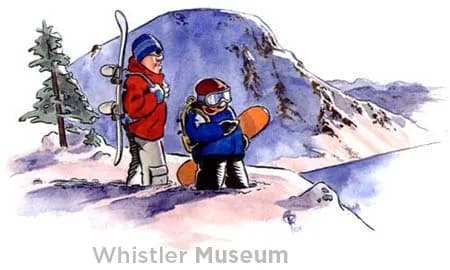
Production and distribution logistics behind Boarder Bob
Snowboard Canada Magazine relied on timely courier logistics to move each 11 x 17 hand-drawn Boarder Bob strip from Whistler to the publisher; strips were typically finished in 10–20 hours, packaged, and sent via FedEx to meet quarterly deadlines. The workflow combined analog art production with postal scheduling constraints: penciling, China ink inking, alcohol markers and watercolor touches, then hand-lettering before overnight shipping. This created a production chain where artist scheduling, physical transport, and publication frequency directly shaped creative choices.
Who made Boarder Bob and how it ran
Olivier (Oli) Roy, an artist and snowboarder who arrived in Whistler after high school in 1990 and later returned after art college, provided the distinctive illustrations for the strip. Glenn Rogers, a local cartoonist known for work in The Whistler Question, typically conceived the stories; Roy handled the visual execution and inking. The pair produced an 8-panel, 2-row half-page comic that ran roughly quarterly in Snowboard Canada Magazine from about 1995 to 2002.
Key production facts
| Item | Detail |
|---|---|
| Format | 8-panel, 2-row, half-page (11 x 17 sketch board) |
| Technique | Pencil, China ink, alcohol markers, watercolor, hand-lettering |
| Lead artist | Olivier Roy |
| Writer / story | Glenn Rogers (primarily) |
| Turnaround time | 10–20 hours per strip; shipped by FedEx to magazine |
| Publication cadence | Approximately four issues per year |
Character and comedic themes
Boarder Bob was a deliberately delusional protagonist who moved to Whistler to chase pro-snowboarder dreams and rarely achieved them. His sidekick, Jed Shred, worshipped Bob’s imagined prowess, offering a comic foil that amplified the strip’s satire. Themes ran from the practical—balancing food, lodging and boarding—to the social—bar bravado and photo-shot risk-taking. Occasionally the strip toyed with moral stakes: should a rider risk everything to get in the frame? Mostly, the tone remained irreverent and playful, with one memorable arc even hinting that Bob had been abducted by aliens.
📚 You may also like
Recurring motifs
- Delusion vs. reality: Bob’s inflated self-image contrasted with his failures.
- Local culture satire: Whistler and West Coast snowboard life lampooned affectionately.
- Logistical humor: housing, funding, and the hustle to stay on-slope provided recurring gags.
- Production jokes: chasing the perfect photo or shot—echoes of the artist’s own deadline-driven process.
Historical context: snowboarding’s golden age
The mid-1990s are widely remembered as the golden age of snowboarding: a period of rapid cultural growth when the sport shed some counter-culture stigma and blossomed into a lifestyle industry. Publications like Snowboard Canada Magazine captured that era’s energy, and art played a large role in shaping the sport’s visual identity. Boarder Bob fit into a lineage of slope-inspired comics—earlier examples included The Peak Bros (1979–2002), which satirized 1980s ski culture—by documenting and caricaturing the evolving social world of mountain resorts.
Artist trajectory and local legacy
Roy’s career continued to bridge sport and visual art. He illustrated for Snowboarder Magazine, served as Whistler Blackcomb’s online illustrator, and designed top sheets for brands such as Prior, Luxury and Option Snowboards. His role as a long-standing coach—holding a Lifetime Whistler Blackcomb Pass and working with the Whistler Valley Snowboard Club for nearly three decades—embodies the tight mix of athletic mentorship and creative practice that defined much of Whistler’s identity in that period.
How the comic’s craft influenced local culture and media
Boarder Bob’s hand-made production and local distribution amplified a sense of community authenticity. The labor-intensive nature of each strip—hours of penciling, inking, coloring, and hand-lettering—meant readers received work that felt personal and immediate. The collaboration between Roy and Rogers acted as a cultural feedback loop: they drew on real local characters and scenarios, which in turn reinforced shared narratives about Whistler’s snowboard scene.
Practical lessons from the Boarder Bob era
- Analog techniques create a distinct, authentic voice that digital shortcuts can dilute.
- Close collaboration between storyteller and artist tightens comedic timing and cultural resonance.
- Logistics—timelines, shipping, physical production—shape creative output as much as inspiration does.
Implications for tourism and creative economies
While the strip focused on mountains rather than maritime scenes, its cultural mechanics are instructive for any destination-dependent economy. Local character creation, consistent publication cadence, and tangible souvenirs (prints, panels, top sheet designs) can enhance destination branding. For seaside or lakefront resorts, similar locally rooted comics, murals, or art series could strengthen identity in marinas, waterfront cafés and beach promenades, helping attract visitors seeking cultural texture as well as outdoor activities.
Concise forecast
In an era where experiential tourism matters, destination-specific artwork and storytelling will continue to influence visitor choices. Visual narratives that document local sport and leisure culture—whether on slopes or along the coast—help form iconic imagery that can be leveraged by marinas, festivals and tour operators when marketing to niche travelers wanting authentic experiences.
Boarder Bob remains a snapshot of Whistler’s 1990s snowboard culture: handcrafted strips produced under tight logistics, a collaborative creative process between Olivier Roy and Glenn Rogers, and a legacy that threads through design, coaching and local media. The strip’s mixture of humor, local satire and artisanal production left a cultural footprint that still resonates in Whistler’s mountain identity.
GetBoat.com is always keeping an eye on the latest tourism news; this story highlights how local creative output—from comics to branded top sheets—can shape destination narratives that appeal to travelers interested in mountain and coastal experiences, whether they seek a yacht-view of a bay, a boat trip along the coast, a beachside festival, lake activities, sailing lessons with a captain, or simply the visual culture that animates marinas and seaside towns.


