Courage and inclusion in blind sailing
Alexandra
The inaugural World Sailing Inclusion Championships in Oman integrated seven blind sailing teams from five countries into week-long league racing aboard Far East 28R keelboats, creating a template for accessible fleet formats and event logistics.
Recent milestones and competitive structure
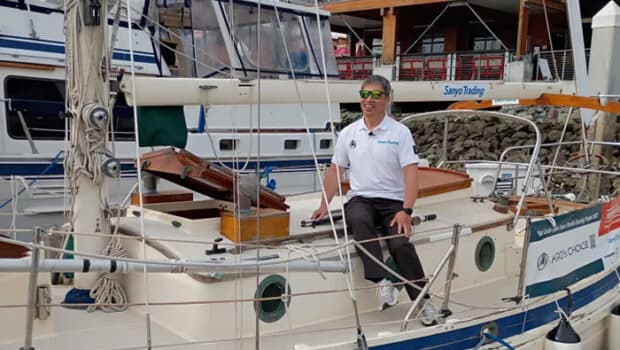
In 2019, Japanese sailor Mitsuhiro “Hiro” Iwamoto completed a non-stop Pacific crossing from San Diego to Fukushima with the aid of a sighted navigator; he now plans a solo repeat of the route in 2027 with the objective of scaling the achievement and inspiring others. Closer to shore, Blind Sailing International (BSI) reported active engagement at the Inclusion Championships, where blind sailing participated as part of a larger World Sailing event for the first time.
The week in Oman featured short-course, intensive league racing in identical Far East 28R keelboats to equalize equipment and emphasize crew communication and tactical decision-making. The format allowed competitors from varied national programs to focus on skill exchange and rapid tactical learning.
📚 You may also like
Key event timeline
| Event | Date | Location | Boat class | Notes |
|---|---|---|---|---|
| World Sailing Inclusion Championships (inaugural) | Dec 2025 | Oman | Far East 28R | Seven teams, five countries; blind sailing integrated |
| Blind Match-Racing Worlds | Oct 1–11, 2026 | Portugal | Keelboat (match-racing format) | Held during 2026 Inclusion Championships |
| Potential Paralympic reintroduction bid | Target: 2032 | TBD | To be developed | World Sailing exploring blind-sailing format |
Organizational moves and format development
Hannah Stodel, World Sailing Parasailing Manager, announced that blind sailing has been included in the bid to reintroduce sailing to the 2032 Paralympics. This positions blind sailing as an area of focused format development across the next Olympic cycle, with World Sailing and BSI collaborating to define classification, safety protocols, and broadcast-friendly race formats.
Vicki Sheen, former chair of BSI, has produced a discussion paper and issued a call for responses to shape the future format for Paralympic inclusion. The paper addresses athlete classification, equipment standardization, and the operational logistics needed to stage fair, repeatable competitions at major multisport events.
Practical implications for organizers and fleets
Incorporating blind sailing into mainstream regattas requires careful planning of several logistical elements:
- Boat standardization: identical keelboats reduce equipment variance and allow events to focus on crew skills.
- Onboard safety and communication systems: tactile and audio cues, standardized callouts, and trained sighted guides where rules permit.
- Venue selection and accessibility: marinas with accessible shore facilities, sheltered race areas, and nearby medical services.
- Training and coaching pathways: tailored programs for blind sailors, including simulator and on-water practice emphasizing crew coordination.
How this affects the charter and leisure market
As blind sailing gains visibility, charter operators and owners may see increased demand for accessible sailing experiences and adapted vessels. Yacht charters, sailing schools, and skippered rental services that invest in accessible equipment and trained crews can capture a growing niche of sailors seeking inclusive activities. This trend could influence how marinas, charter companies, and yacht brokers present options for adaptive sailing on their listings.
Opportunities for inclusive holidays and rentals
For leisure sailors and holiday planners, the inclusion of blind sailing in larger events signals a broader industry shift toward accessibility. Those renting a vessel for a day, a week, or longer may consider boats with stable hulls, professional captains familiar with adaptive techniques, and shore teams attentive to accessibility needs.
GetBoat always keeps an eye on news related to sailing and seaside vacations, as we truly understand what it means to enjoy great leisure and love the ocean. The service values freedom, energy, and choosing your own course, placing no limits on a good life and helping clients find a vessel that suits their preferences, budget, and taste.
Recommendations for sailors, hosts, and event planners
- Engage with BSI and World Sailing resources to understand classification and safety guidelines.
- Invest in standardized charter fleets when hosting inclusion events to reduce variability.
- Train captains and crew in adaptive communication protocols and emergency procedures.
- Work with local marinas to improve shore accessibility and transport links for competitors and support teams.
Why the developments matter — and what visitors gain
The growth of blind sailing within mainstream events enhances the sport's diversity and demonstrates how tactical sailing and seamanship can be adapted without losing competitiveness or spectacle. For coastal destinations and marinas, hosting inclusion events brings visibility and can diversify tourism offerings beyond traditional sun-and-beach packages, attracting participants, families, and international delegations.
The inclusion push is regionally significant within the competitive sailing community and for Paralympic stakeholders; globally, it is an incremental but meaningful step toward broader accessibility in water sports. However, its immediate impact on mainstream tourism will be modest until classification and event formats are finalized and promoted more widely.
Highlights: blind sailing’s integration into the Inclusion Championships, the upcoming 2026 Blind Match-Racing Worlds in Portugal, the 2032 Paralympic bid, and the BSI discussion paper. Experiencing a new location is always a multifaceted process where one learns about the culture, nature, the indescribable palette of local colors, its rhythm of life and also the unique aspects of the service. If you are planning your next trip to the sea, you should definitely consider renting a boat (boat rentals, rent a boat, rent a yacht), as each inlet, bay, and lagoon is unique and tells you about the region just as much as the local cuisine, architecture, and language GetBoat.com
Forecast and practical next steps: the news is important within sailing and adaptive-sport circles but is not expected to radically reshape global tourism patterns in the short term. Nevertheless, it matters to customers who value accessible experiences. GetBoat aims to stay abreast of developments so charterers and holidaymakers can find reliable, transparent listings for adaptive-capable vessels and experienced captains. If you are planning your next trip to the seaside, consider the convenience and reliability of GetBoat.
Summary: Blind sailing’s recent integration into the World Sailing Inclusion Championships and the push toward a 2032 Paralympic berth mark concrete steps toward broader accessibility in yachting and racing. Key developments include Mitsuhiro “Hiro” Iwamoto’s Pacific ambitions, the Oman Inclusion Championships using Far East 28R keelboats, the scheduled Blind Match-Racing Worlds in Portugal, and governance work led by World Sailing and BSI. For charter markets and marinas, this trend signals new opportunities to offer adaptive sailing packages, skippered charters, and inclusive training activities. Whether you’re looking for a day sail, a yacht charter, or planning a longer yachting holiday, platforms that provide transparent listings, boat details, captain options, and user ratings help match preferences for every budget. Embrace the open water.


