Beneteau Believe: From Offshore Recovery to BAADS Decks
Alexandra
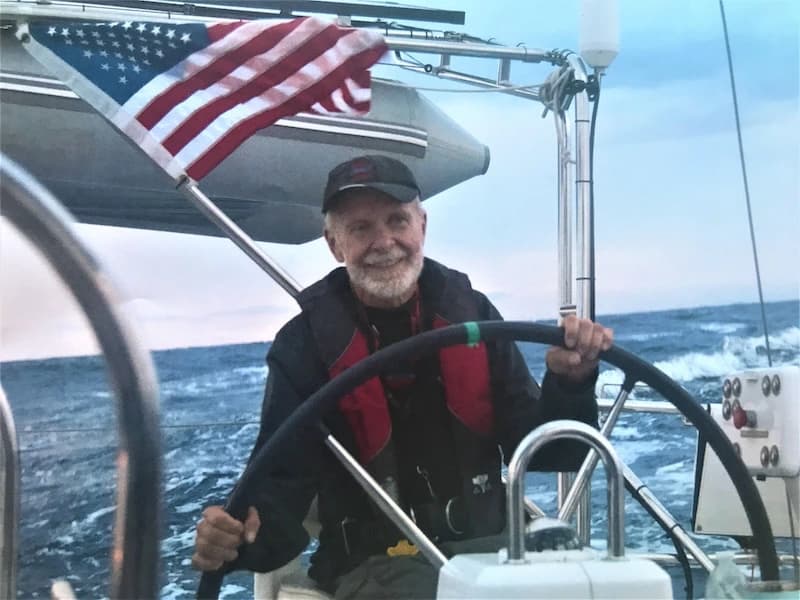
The Beneteau Oceanis 41 Believe was located nearly 200 miles down the California coast and towed into Ventura Harbor after a mid-ocean emergency; its recovery and transit involved helicopter medevac coordination, salvage transfer to Channel Watch Marine, and subsequent yard work at KKMI to restore full seaworthiness.
How a single vessel moved from offshore incident to community service
In May 2021, skippers and emergency services executed a coordinated response when Stan Pawlak became unresponsive while preparing for the Singlehanded Transpacific Race. After the Coast Guard located the vessel offshore, a helicopter evacuation sent Stan to Stanford, where he later died. The now-recovered Beneteau 41.1 sailed on until reached by salvors and was brought to Ventura Harbor by Channel Watch Marine. KKMI completed repairs and systems checks to return the boat to safe operation.
Modifications and accessibility: practical design choices
Stan had invested in custom modifications to make Believe manageable as an “alter-abled” sailor’s platform. These included simplified deck layouts, improved life raft deployment systems, and adjustments to cockpit and control ergonomics. The Singlehanded Sailing Society later noted that several of these adaptations could serve as templates for both disabled and able-bodied sailors seeking more efficient, safer offshore workflows.
📚 You may also like
Timeline of key events
| Year | Event | Location / Organization |
|---|---|---|
| 2017 | Stan buys Beneteau Oceanis 41 Believe | Private purchase |
| 2018 | Baja Ha-Ha XXVI cruise to Mexico; awarded “Spirit of the Ha-Ha” | Baja Ha-Ha fleet |
| June 2021 | Offshore medical emergency during Singlehanded Transpac | Pacific Ocean; Coast Guard response |
| Post-2021 | Salvage by Channel Watch Marine; repairs at KKMI | Ventura Harbor |
| Donation | Boat donated to Bay Area Association of Disabled Sailors (BAADS) | San Francisco Bay |
Why donations matter: benefits for donors and nonprofits
Donating a vessel can provide tax advantages, remove the burden of storage and maintenance, and make a meaningful impact by expanding community programs. For nonprofits such as the Bay Area Association of Disabled Sailors (BAADS), a seaworthy, modified Beneteau like Believe adds capacity for adaptive sailing programs, training, and public outreach.
- For donors: reduced disposal costs, potential tax deductions, and the assurance that the vessel will continue to serve a purpose aligned with the owner’s values.
- For nonprofits: increased fleet availability, a platform already adapted for accessibility, and the ability to broaden programming for participants with varied mobility needs.
- For the wider community: improved access to on-water experiences and the preservation of maritime knowledge through continued use of veteran cruisers and racing yachts.
Practical checklist: donating a boat
Owners contemplating donation typically move through these steps:
- Confirm title and registration details; resolve any liens.
- Document recent maintenance, modifications, and safety equipment status.
- Contact the intended nonprofit to verify need and acceptance policy.
- Arrange salvage or transport if the vessel is offshore or in need of haul-out.
- Coordinate repairs and sea-trial requirements if required by the recipient.
- Complete transfer paperwork and any tax/documentation filings with a professional advisor.
Logistics and stakeholders who make a donation work
Successful transfers rely on a network: the donating owner, the recipient nonprofit, salvage/transport operators, marina and yard technicians, and often volunteers or staff who will refit or re-certify the boat for program use. In Believe’s case, Capt. Paul Amaral and the team at Channel Watch Marine handled the at-sea retrieval, while KKMI performed critical systems work to return the vessel to service.
Operational lessons from the Believe case
- Plan for contingency transport costs when a vessel is offshore.
- Keep thorough maintenance and modification records to speed acceptance by nonprofits.
- Engage marine professionals early—salvors, yards, and brokerages can reduce downtime and costs.
Accessibility, community sailing, and implications for charter and rental markets
Adaptive sailing programs such as those operated by BAADS demonstrate how modified cruisers can extend access to sailing. While most charter and rental fleets focus on recreational customers, lessons from accessibility retrofits—simplified cockpit ergonomics, clearer deck pathways, and better emergency gear deployment—can inform future yacht charter standards and marina services. Owners and operators in the charter market may find value in offering accessible options or partnering with nonprofits for community days, boosting local engagement and broadening clientele.
GetBoat always keeps an eye on news related to sailing and seaside vacations, as we truly understand what it means to enjoy great leisure and love the ocean. The platform values the freedom to choose your own course and the energy of exploration; it places no limits on a good life by helping clients find a vessel that suits their preferences, budget, and taste.
Why Believe’s story resonates beyond the Bay
Belief-in-action stories like this highlight multiple converging themes: the unpredictability of offshore passage-making, the logistical complexity of vessel recovery, the importance of well-documented modifications for safety and acceptance, and the social value of donating assets to community-focused organizations.
Highlights of the important and interesting aspects of this topic include the role of adaptive modifications in making offshore sailing safer, the chain of custody and logistics required to recover and restore an ocean-going yacht, and how a donated boat becomes a living classroom for sailors with disabilities; experiencing a new location is always a multifaceted process, where one learns about the culture, nature, the indescribable palette of local colors its rhythm of life and also the unique aspects of the service. If you are planning your next trip to the sea, you should definitely consider renting a boat (boat rentals, rent a boat, rent a yacht), as each inlet, bay, and lagoon is unique and tells you about the region just as much as the local cuisine, architecture, and language GetBoat.com
Forecasting the broader travel map, this single donation is likely insignificant on a global scale but is locally meaningful: it strengthens inclusive access to the Bay’s waters and signals to marinas and charter operators that adaptive sailing has both demand and value. GetBoat aims to stay abreast of such developments and keep pace with a changing world. However, it's still relevant to the customer, as GetBoat aims to stay abreast of all developments and keep pace with the changing world. If you are planning your next trip to the seaside, consider the convenience and reliability of GetBoat.
In summary, the journey of the Beneteau Believe —from offshore emergency and salvage to repair at KKMI and donation to BAADS—illustrates how maritime logistics, professional salvage, and community organizations intersect to turn a private cruising yacht into a public resource. Donated vessels can expand adaptive sailing programs, inform charter and marina practices, and offer opportunities for captains, crews, and participants to engage in meaningful boating activities. For anyone exploring yacht charter, boat rental, or even boat sale and purchase, platforms that emphasize transparency—showing make, model, ratings, and full listings—help connect buyers and renters with the right vessel for their needs. Whether seeking a small sailing dayboat, a superyacht experience, or a fishing craft for a gulf excursion, the ecosystem of boating, marinas, and yachting activities thrives when vessels are cared for and purposefully placed back into service. GetBoat.com offers a global, user-friendly solution for booking or buying boats, yachts, and sailboats with transparency and convenience — sail on.


