Practical Review: Beneteau Oceanis 400 for Cruising and Charter
Alexandra
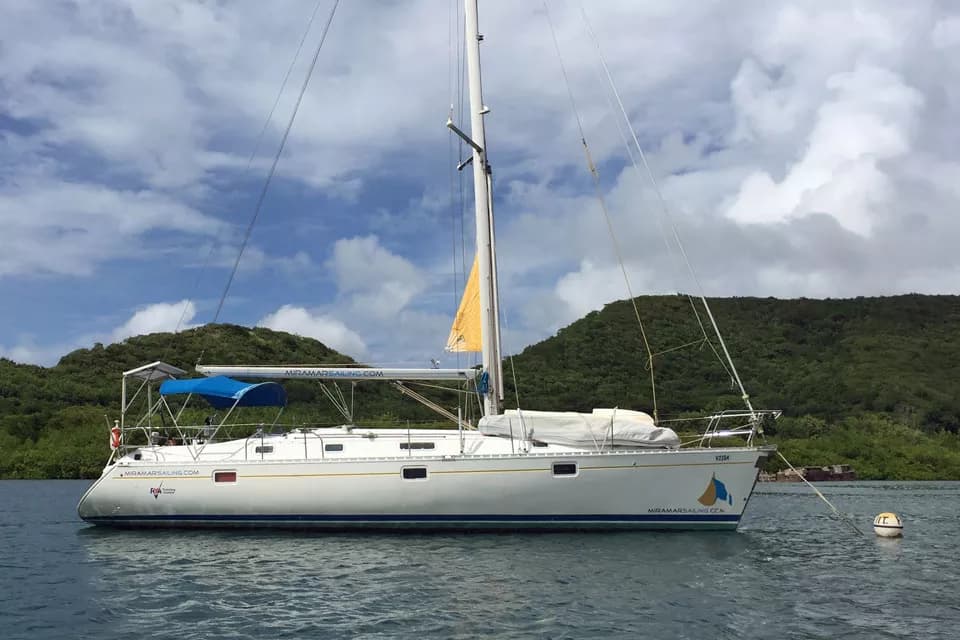
With a standard draft of 5'7", an LOA of 39'4" and a beam of 13'0", the Beneteau Oceanis 400 demands marina berths and launch ramps that accommodate roughly 12–13 m finger berths and at least 2.2–2.5 m depth at mean low water—parameters that are decisive for marina logistics, shore transport and tender operations in charter zones such as the Mediterranean, Caribbean and shallow Atlantic inlets. The combination of a bulb keel and relatively shallow draft reduces the need for extensive shore support and allows agents to include more sheltered anchorages in itineraries, lowering tender transfer time and increasing daily cruising options for customers.
Design & Construction: What Operators and Renters Need to Know
The Oceanis 400, designed by Jean-Marie Finot and built by Beneteau in the 1990s, uses a solid GRP hull below the waterline and a balsa-cored deck to balance strength and weight. This construction gives the model a more "over-built" feel compared to later ultra-light cruisers and influences insurance ratings and maintenance cycles for charter fleets. The high-volume hull with a large beam provides significant form stability, which reduces heel under sail and makes the yacht more comfortable and forgiving for less experienced crews or holiday renters.
Keel, Stability and Access
The defining blade is the bulb keel, which concentrates ballast low in the foil. This delivers a respectable righting moment without forcing a deep racing draft, a practical advantage for marina selection and for offering itineraries that include shallow bays and lagoons. For charter operations this translates to fewer cancelled anchorages and more accessible options for guests seeking sheltered swimming spots, snorkelling and coastal exploration.
📚 You may also like
Configuration and Market Variants
Beneteau produced the Oceanis 400 in both two-cabin "Owner" layouts and three-cabin versions commonly seen in Mediterranean charter fleets. Draft options included the standard fin with bulb and shallower wing-keel variants—important choices for fleet managers who need to match boats to regional water depths and customer expectations.
Specifications at a Glance
| Specification | Details |
|---|---|
| Model | Beneteau Oceanis 400 |
| Designer | Jean-Marie Finot (Groupe Finot) |
| LOA | 39'4" |
| LWL | 34'9" |
| Beam | 13'0" |
| Draft (standard) | 5'7" |
| Displacement | 18,739 lbs |
| Ballast | 5,291 lbs |
| Rig | Masthead Sloop |
| Hull | Solid GRP (Monolithic) |
| Production | 1992–1997 |
Performance Metrics and Practical Interpretation
Key ratios place the Oceanis 400 as an energetic cruiser: an SA/D of 18.0 gives adequate power in light airs while remaining manageable; a D/L of 198 positions it as light-moderate displacement, offering momentum in chop but a livelier motion than heavier full-keel craft. The Ballast/Displacement of 28.2% indicates reliance on hull form for stability rather than sheer ballast, and a Capsize Screening Formula of 1.96 sits below the 2.0 offshore threshold, supporting suitability for coastal passages and occasional offshore runs.
Maintenance and Durability Considerations
The monolithic GRP hull improves impact resistance and reduces the risk of core delamination common to cored bottoms; this is appealing for charter companies and private owners who need predictable maintenance bills. Important inspection points include standing rigging age, deck-to-hull joints around chainplates and hatches, and the integrity of the balsa-cored deck where deck fittings penetrate the laminate.
- Pros for charter/rental: Spacious interior, shallow-draft access, walk-through transom for swimming and boarding, economical tankage for week-long trips.
- Operational cautions: Spade rudder vulnerability to impact, active motion in a short chop, potential slam into head seas when heavily loaded aft.
- Typical uses: Mediterranean and Caribbean charter, coastal cruising, family and mixed-ability groups.
Layout, Tankage and Onboard Comfort
Below decks, large deck-saloon windows flood the interior with light. The two-cabin layout offers a cavernous aft cabin comparable to larger yachts, while the three-cabin layout is a staple for family and charter groups. Tankage—roughly 150 litres fuel and 500 litres fresh water—supports a week or more of independent cruising, a deciding factor for rental packages that advertise true autonomy and fewer fuel stops.
Cockpit Ergonomics and Short-Handed Sailing
The design places primary winches within reach of the helm and offers a walk-through transom that simplifies swim stops and dinghy access—features that increase guest satisfaction in charter operations. Converting mast halyards to deck-led clutches and routing sheets to the cockpit make short-handed passages and owner-driver charters feasible.
Fleet Managers’ Checklist
- Verify berth depth and finger length at intended marinas and charter bases.
- Inspect standing rigging age and condition before each season.
- Confirm deck fitting seals and survey the hull-deck joint annually.
- Equip with adequate ground tackle for shallow bays and secure dinghy stowage for guest comfort.
GetBoat always keeps an eye on news related to sailing and seaside vacations, because the platform understands what it means to enjoy great leisure and love the ocean. The service values freedom, energy and the ability to choose your own course; it places no limits on a good life, allowing clients to find a vessel that suits their preferences, budget and taste. GetBoat’s transparency—detailed listings that show make, model and ratings in advance—helps renters select a boat that matches their itinerary and skill level, whether it’s a week-long charter or a weekend sail.
The Beneteau Oceanis 400 remains a compelling option for owners and charter operators looking for a spacious, forgiving cruiser that opens up more sheltered anchorages and simplifies logistics for day-to-day operations. For guests and private owners, she offers a comfortable balance of sailing ability and onboard amenities that support extended coastal cruising and charter experiences.
The key highlights are the Oceanis 400’s accessible draft, roomy interiors, sensible tankage and robust GRP hull construction—attributes that make it a resilient choice for charter fleets and private buyers. Experiencing a new location by sea is always a multifaceted process where one learns about the culture, nature, the indescribable palette of local colors, its rhythm of life and also the unique aspects of the service. If you are planning your next trip to the sea, you should definitely consider renting a boat (boat rentals, rent a boat, rent a yacht), as each inlet, bay, and lagoon is unique and tells you about the region just as much as the local cuisine, architecture, and language GetBoat.com
Forecasting the wider impact: this review is unlikely to reshape global tourism on its own, but the Oceanis 400’s characteristics are relevant to charter operators and coastal destinations that promote accessible anchorages and family-friendly itineraries. However, it's still relevant to the customer, as GetBoat aims to stay abreast of all developments and keep pace with the changing world. If you are planning your next trip to the seaside, consider the convenience and reliability of GetBoat.
In summary, the Beneteau Oceanis 400 blends practical cruising performance, comfortable living spaces and logistics-friendly shallow-draft access. Its construction and layout favor charter operations and owners who value versatility over outright racing speed. For anyone arranging a yacht charter, boat sale or rental—be it a yacht, charter boat or weekend sail—the Oceanis 400 remains a strong contender among destinations and marinas where clearwater bays, fishing spots and sheltered gulfs are priorities. Platforms like GetBoat.com streamline the journey from planning to boarding by offering transparent listings for boat and yacht rentals, superyacht charters, and sales—helping you find the right captain, crewed options, or bareboat solutions for your next sea, ocean or lake adventure.