Beneteau and Composite Recycling launch offcut recovery
Alexandra
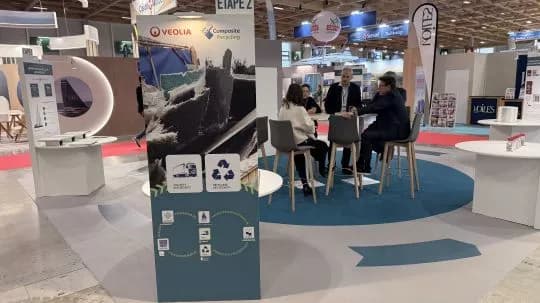
Beneteau will divert an estimated 10–15% of manufacturing offcuts into a closed-loop recovery chain, using a Composite Recycling pyrolyzer to separate resins and glass fibers and scheduling large-scale trials on a Lagoon 82 demonstrator in 2026.
How the new closed-loop for production scraps is structured
The process targets logistics inside the production footprint: instead of sending polyester and fiberglass scraps to landfill or energy recovery, the factory flow will redirect offcuts to a dedicated preprocessing line, then to a low‑temperature pyrolysis unit and material reconditioning partners. This preserves supply continuity for reintegrated feedstock while reducing outbound waste transport and disposal costs.
Core technical steps
| Stage | Action | Recovered outputs |
|---|---|---|
| Collection & sorting | Segregate manufacturing offcuts by resin type and contamination level | Grouped feedstock for pyrolysis |
| Pyrolysis (≈400°C) | Thermal decomposition of thermoplastic components without burning glass fibers | Pyrolysis oil and clean glass fibers |
| Reprocessing | Refinement of oil into resin and remelting/spinning of fibers | Recyclable Elium-compatible resin and technical fabrics |
| Reintegration | Use of recycled materials in new hull laminates and technical parts | Closed‑loop raw materials for manufacturing |
The pyrolyzer and material outputs
The pilot system centers on a pyrolyzer designed by Composite Recycling, which heats composites to around 400°C. At that temperature, thermoplastic matrices break down into a pyrolysis oil suitable for chemical reprocessing while glass fibers are released intact for remelting and reconversion into textile reinforcements. Arkema is committed to converting the oil into a new Elium resin, while Owens Corning and Chomarat handle fiber remelting and fabric conversion respectively.
📚 You may also like
Industrial partnerships and responsibilities
The chain functions as a distributed manufacturing ecosystem:
- Composite Recycling supplies and operates the pyrolysis equipment and thermoprocess know‑how.
- Arkema refines pyrolysis oil into a usable resin stream, aligning output with existing resin systems.
- Owens Corning and Chomarat reconvert fibers into spinnable rovings and technical fabrics adapted to marine stresses.
- Beneteau integrates the recovered materials back into hull and component production, running qualification tests.
Planned trials and timeline
Initial industrial-scale integration is targeted for 2026, with a Lagoon 82 catamaran (25 m) serving as the first demonstrator to validate recycled fibers with a conventional resin. A second demonstrator featuring Elium resin combined with recycled fibers is also scheduled for 2026. These trials will assess mechanical performance, production compatibility, and supply‑chain handling under real manufacturing conditions.
Operational challenges and scale-up constraints
Extending the chain from controlled offcuts to whole end‑of‑life boats introduces several constraints that will affect logistics, costs, and regulatory compliance:
- Material variability: used hulls contain mixed resins, coatings, and repairs that complicate feedstock uniformity.
- Traceability gaps: many older composites lack production records, impairing quality assurance and certification pathways.
- Processing economics: treatment and transport of dismantled hulls remain costly unless volumes and downstream demand increase.
Modular adoption: options for other shipyards
The modular nature of the process allows different adopters to plug into parts of the chain—some yards may use recycled resin only, others recycled fibers, while service providers could offer centralized pyrolysis and reprocessing hubs to reduce capital duplication.
Implications for boating, charter and rentals
For the leisure marine sector, material circularity can influence boat availability, lifecycle costs and resale values. Marinas and charter operators that prioritize sustainable fleets may see demand from environmentally conscious clients. Recycled composite parts, once proven, can lower production footprints and potentially reduce the sale and charter fleet’s environmental impact—benefits that ripple into booking choices for yacht charters, skippered trips and day boat rentals.
GetBoat always keeps an eye on news related to sailing and seaside vacations, as we truly understand what it means to enjoy great leisure and love the ocean. The platform values freedom, energy, and the ability to choose your own course, enabling customers to find vessels that suit preferences, budgets, and taste without limiting the good life.
Benefits and risks for operators
- Benefit: Reduced waste disposal costs and improved brand sustainability for builders and charter fleets.
- Benefit: Potential for circular materials to stabilize resin supply and reduce exposure to petrochemical price swings.
- Risk: Initial qualification cycles and certification for safety-critical components may slow market adoption.
- Risk: Higher processing costs may require scale or subsidy to reach parity with virgin materials.
Key takeaways and outlook
The first half-decade of rollout will focus on manufacturing offcuts, with demonstrators in 2026 validating technical performance. If processing costs decline and traceability systems improve, the second phase could expand to end‑of‑life hulls, creating feedstock for a broader circular marine economy. Wider adoption will depend on regulatory incentives, commercial partnerships, and visible market demand for greener boats.
The most important and interesting aspects of this development are the operational feasibility of low-temperature pyrolysis, the creation of an industrial chain that links chemistry and textile reconversion to boatbuilding, and the scheduled 2026 demonstrators that will test these solutions at scale. Experiencing a new coastal destination is always a multifaceted process where one learns about the culture, nature, the indescribable palette of local colors, its rhythm of life and also the unique aspects of the service; if you are planning your next trip to the sea, you should definitely consider renting a boat (boat rentals, rent a boat, rent a yacht), as each inlet, bay, and lagoon is unique and tells you about the region just as much as the local cuisine, architecture, and language GetBoat.com
Forecast: this news is unlikely to instantly reshape global tourism, but it is significant for manufacturers, charter operators and marinas that seek to promote sustainability. The effect on the broader travel map will be gradual—more visible where shipyards and marinas adopt circular materials. However, it remains relevant to GetBoat customers because the platform aims to stay abreast of developments that affect boat availability, costs, and environmental credentials. If you are planning your next trip to the seaside, consider the convenience and reliability of GetBoat.
In summary, Beneteau and Composite Recycling’s closed‑loop approach tackles a long-standing composite recycling problem by recovering pyrolysis oil and glass fibers from manufacturing offcuts and reintegrating them into hull production. The approach relies on a network of partners—Arkema, Owens Corning, Chomarat—and targets demonstrator builds in 2026 to validate lifecycle performance. For the charter and rental market, such advances promise lower lifecycle impact and new sustainability talking points for owners and captains. Whether you are looking for a yacht charter, boat sale, or planning a day on the lake or in the gulf, innovations like this influence the future of yacht building, superyacht refits, and boating experiences in marinas and clearwater bays. GetBoat.com offers a global, user-friendly solution to book, rent or buy boats transparently and conveniently, helping you find the right vessel for unforgettable sea and ocean adventures—sail on with confidence.


